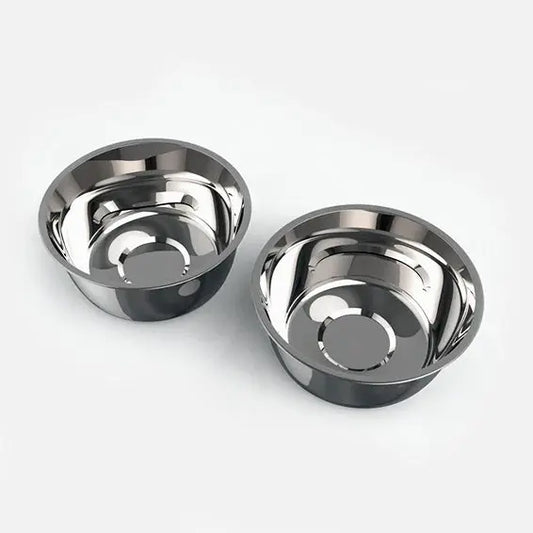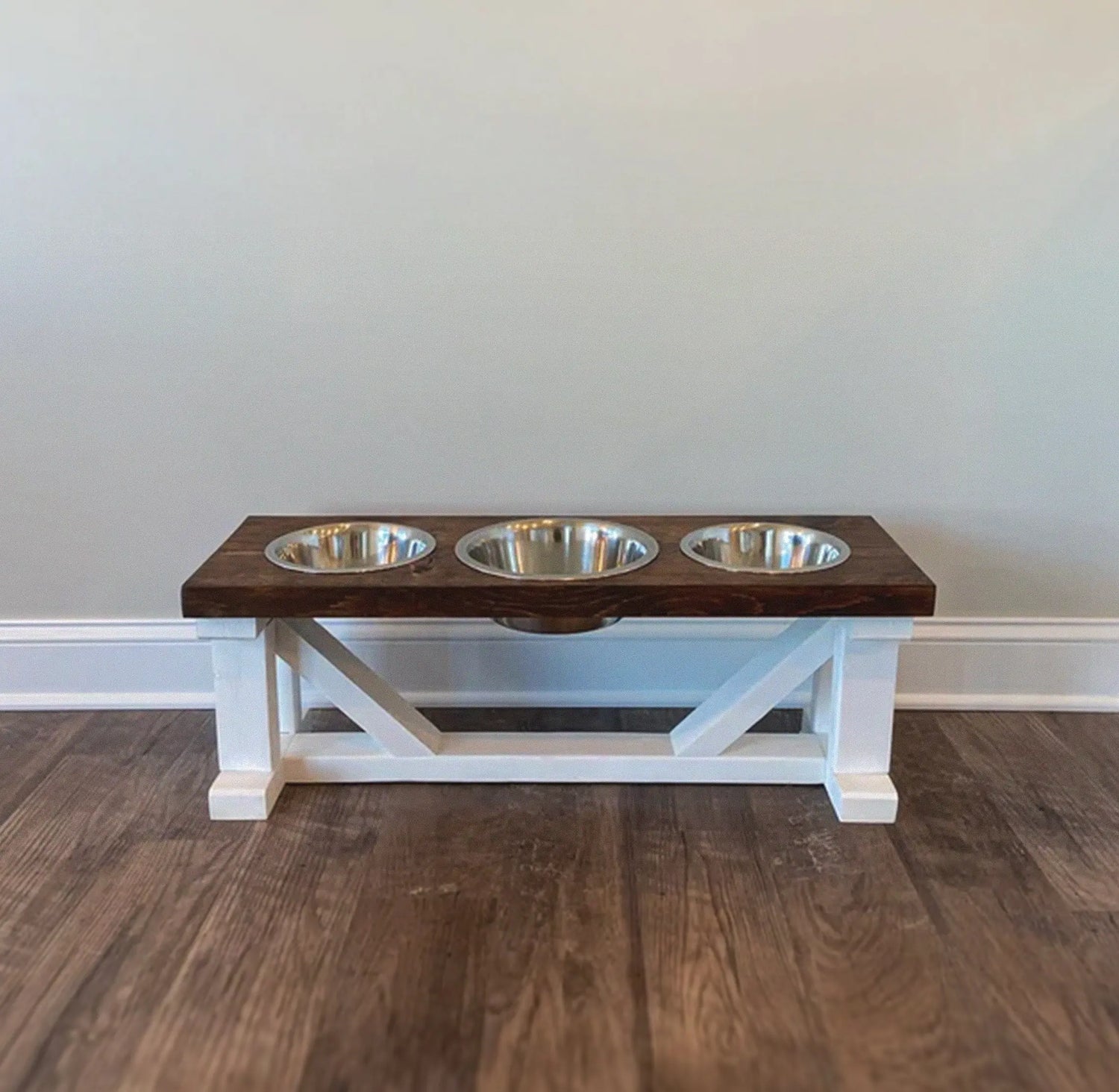

Elevated feeders are everywhere in pet stores, and the marketing often makes them sound like a must-have for aging dogs. The promise is simple: raise the bowl, reduce the strain, and your senior dog eats more comfortably. But the reality is more nuanced than that. For some dogs, elevated feeding genuinely improves mealtime comfort and supports joint health. For others, it can increase the risk of a life-threatening condition. Understanding which side of that equation your dog falls on is the most important step you can take as a caring owner.
Table of Contents
- Why consider elevated feeding for senior dogs?
- Potential risks: GDV and breed-specific concerns
- Special scenarios: Megaesophagus and protocol-driven upright feeding
- Practical steps and choosing the right elevated feeder
- Elevated feeding: What most dog owners miss
- Explore ergonomic feeders for senior dogs
- Frequently asked questions
Key Takeaways
| Point | Details |
|---|---|
| Ergonomics matter | Raised feeders can reduce strain for senior dogs with mobility or orthopedic issues. |
| GDV risk is real | Elevated feeding should be avoided in high-risk breeds unless advised otherwise by your veterinarian. |
| Protocol is crucial | Feeding for conditions like megaesophagus requires strict, upright techniques and adherence to veterinary guidance. |
| Monitor and adjust | Observe your pet’s response and consult your vet to tailor feeding solutions as your dog ages. |
Why consider elevated feeding for senior dogs?
Now that we’ve challenged conventional wisdom, let’s explore why elevated feeding frequently appeals to those caring for older pets.
As dogs age, their bodies change in ways that directly affect how they eat. Arthritis, degenerative joint disease, and general stiffness make bending down to floor-level bowls increasingly uncomfortable. Every meal becomes a small physical challenge, and over time, that discomfort can discourage eating or cause compensatory posture problems. This is the core reason so many veterinarians and pet owners turn to raised feeders as part of a senior care routine.
The mechanical logic is straightforward. When a dog eats from a floor-level bowl, it must lower its head significantly, creating deep flexion in the neck and additional load on the front joints and shoulders. For a young, healthy dog, this is no big deal. For a senior dog managing cervical arthritis or shoulder pain, that repeated motion adds up across every single meal.
“Mechanically, elevated feeding is intended to change the dog’s head/neck angle during eating: in senior orthopedic scenarios, owners try to avoid craning downward repeatedly, aiming for a more neutral or slightly angled-down head posture rather than a deep neck flexion.” (The Benefits of Raised Bowls for Senior Dogs)
A raised dog feeder positions the bowl closer to your dog’s natural head height, reducing the need for that deep neck drop. The result is a more comfortable, sustainable eating posture that puts less stress on aging joints and muscles.
Here are the key ergonomic benefits that make elevated feeding worth considering for senior dogs:
- Reduced neck and shoulder strain during meals, especially for dogs with cervical arthritis
- Improved posture alignment that supports the spine rather than stressing it
- More comfortable eating pace, which can reduce gulping and improve digestion
- Easier access for dogs with limited mobility in the front legs or shoulders
- Better bowl stability, which matters for dogs who have tremors or coordination challenges
That said, these benefits are not universal. A dog without orthopedic issues may not gain anything meaningful from an elevated feeder. And for some dogs, elevation can actually create new problems. The right choice depends on your dog’s specific health profile, not on general marketing claims.
Pro Tip: Ask your veterinarian to assess your dog’s neck and shoulder range of motion before investing in an elevated feeder. A quick physical exam can confirm whether a raised bowl would genuinely reduce strain or simply add an unnecessary variable to your dog’s routine.
If your dog does benefit from elevated feeding, the material and design of the feeder matter too. A ceramic food bowl for seniors offers a hygienic, easy-to-clean surface that holds up well over time. For dogs who eat and drink at separate stations, a dual bowl elevated feeder keeps both food and water at a consistent, comfortable height throughout the day.
Potential risks: GDV and breed-specific concerns
While ergonomic solutions are valuable, they aren’t without risk. Let’s examine when elevated feeding may pose medical dangers.
Gastric dilation and volvulus, commonly called GDV or bloat, is one of the most serious conditions in veterinary medicine. It occurs when the stomach fills with gas and then twists on itself, cutting off blood supply. GDV can be fatal within hours if not treated surgically. It is not a minor concern. It is a genuine emergency.
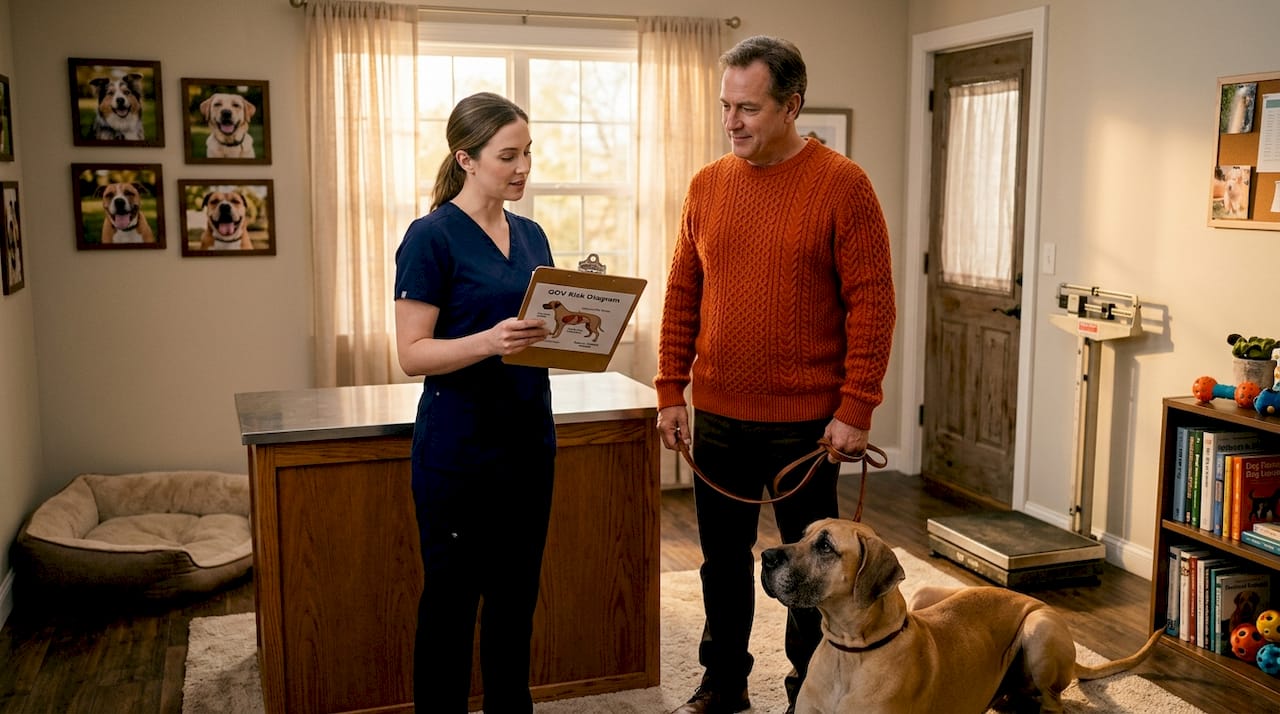
The connection between elevated feeders and GDV has been studied and debated for years. The current understanding is that GDV risk is breed-dependent, with large, deep-chested breeds carrying the highest baseline risk. Established veterinary references prioritize GDV risk mitigation in these breeds, including recommending avoidance of elevated feed bowls.
Breeds with elevated GDV risk include:
- Great Danes (highest risk of any breed)
- Irish Setters and Gordon Setters
- Standard Poodles
- Weimaraners
- Saint Bernards
- Basset Hounds
- German Shepherds
For these breeds, the risk-benefit decision for elevated bowls is context dependent: raised bowls may be helpful ergonomically for some senior and orthopedic cases, but can be discouraged or require special caution for high-risk GDV dogs. This is not a decision to make based on a product description alone.
Here is a clear comparison to help you understand the trade-offs:
| Factor | Elevated feeder benefit | GDV risk consideration |
|---|---|---|
| Neck strain | Reduces deep neck flexion | No direct GDV connection |
| Eating speed | May slow gulping | Fast eating increases GDV risk |
| Breed type | Helpful for small/medium dogs | High-risk for large, deep-chested breeds |
| Medical history | Supports orthopedic recovery | Avoid if prior bloat episodes |
| Vet guidance | Recommended for arthritis cases | Often discouraged for GDV-prone breeds |
Key steps before choosing an elevated feeder for a large breed senior dog:
- Confirm your dog’s breed-specific GDV risk with your veterinarian
- Review your dog’s personal medical history for any prior bloat or digestive issues
- Discuss whether the orthopedic benefits outweigh the GDV risk in your dog’s specific case
- If approved, select a feeder at an appropriate height, not excessively elevated
- Monitor your dog closely during and after meals for signs of bloating or distress
Important: A metal bowl stand with a stable base and well-fitted replacement dog feeder bowls can give you flexibility to adjust height over time as your dog’s needs change. Adjustability is a key feature to prioritize.
The bottom line is that GDV risk is real, breed-specific, and serious enough to warrant a direct conversation with your vet before introducing any elevated feeding setup for a large dog.
Special scenarios: Megaesophagus and protocol-driven upright feeding
Evolving from the broader risks, let’s look at medical situations where elevation can be lifesaving, but only when applied correctly.
Megaesophagus is a condition where the esophagus loses its ability to move food into the stomach through normal muscular contractions. Food and liquid pool in the esophagus rather than passing through, leading to regurgitation, aspiration pneumonia, and malnutrition. It is a serious, chronic condition that requires a very specific feeding approach.
For dogs with megaesophagus, upright feeding using a Bailey chair is treated as a cornerstone management technique because gravity assists food movement into the stomach. A Bailey chair holds the dog in an upright, seated position during and after meals, allowing gravity to do the work the esophagus cannot. This is not the same as using a raised feeder.
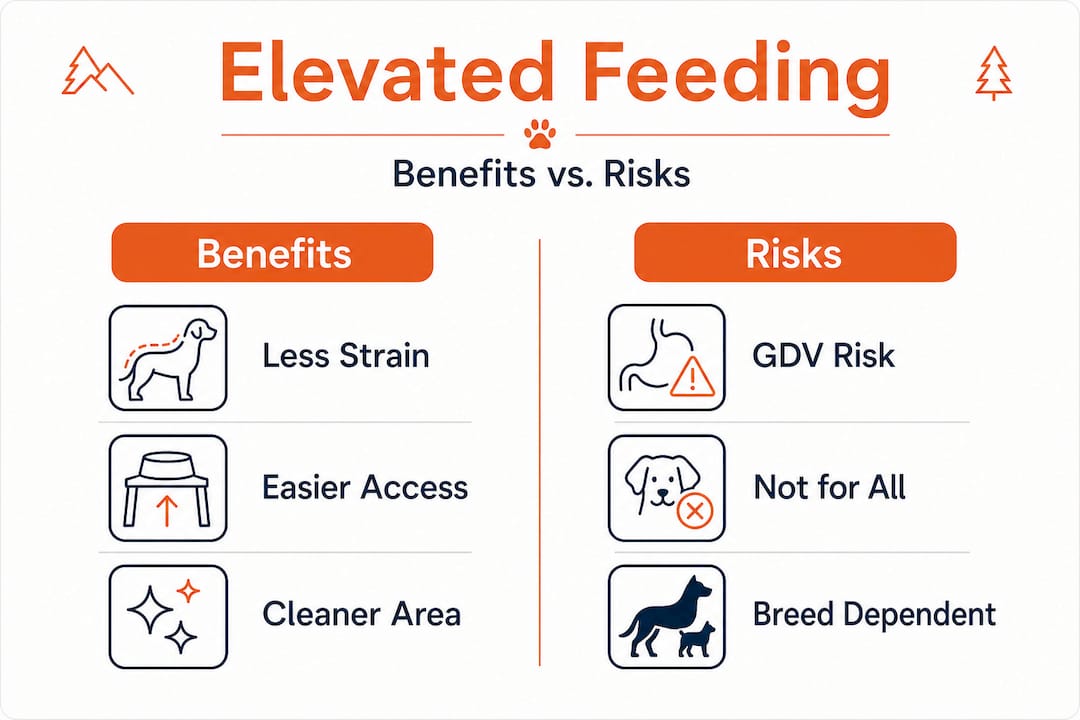
Here is how these two approaches compare:
| Feature | Standard elevated feeder | Bailey chair / upright feeding |
|---|---|---|
| Bowl height | Raised 6-12 inches from floor | Dog positioned fully upright |
| Mechanism | Reduces neck flexion | Uses gravity for esophageal transit |
| Target condition | Arthritis, mobility issues | Megaesophagus |
| Post-meal positioning | Not required | 10-30 minutes upright after eating |
| Protocol-driven | Generally flexible | Strict, vet-prescribed routine |
“Even when elevation is used for medical reasons like megaesophagus, the approach is typically upright and vertical and protocol-driven rather than simply raising the bowl to a generic height.”
This distinction matters enormously. A well-meaning owner who hears “elevated feeding helps dogs with esophagus problems” and simply raises a standard bowl is not addressing the actual mechanical need. The angle required for megaesophagus management is nearly vertical, something a standard raised feeder cannot achieve.
Pro Tip: If your dog has been diagnosed with megaesophagus, ask your veterinarian for a referral to a veterinary internist or a detailed written feeding protocol. Managing this condition successfully requires consistency, the right equipment, and close monitoring for signs of aspiration.
The takeaway here is that elevation is not a single concept. It covers a spectrum from a modest 6-inch raise to fully vertical positioning. The right approach depends entirely on the medical reason behind it.
Practical steps and choosing the right elevated feeder
Understanding the specific needs and risks, you’re now ready for actionable guidance on selecting and customizing elevated feeding solutions.
Choosing the right elevated feeder starts with a clear picture of your dog’s health. Before you shop, gather the following information:
- Your dog’s current diagnosis: Arthritis, hip dysplasia, cervical spondylosis, or other orthopedic conditions all support the case for elevation. No diagnosis? Talk to your vet before assuming elevation is needed.
- Your dog’s breed and GDV risk: Large, deep-chested breeds require extra caution. Confirm risk level before purchasing.
- Your dog’s shoulder height: The general guideline is to position the bowl at or just below the dog’s lower chest level, allowing a slight downward angle of the head without deep neck flexion.
- Your dog’s current mobility: A dog with significant front-leg weakness may actually struggle with a feeder that is too high. Observe how your dog naturally stands and moves before setting a height.
The risk-benefit decision for elevated bowls is always context dependent, and that context is something only you and your vet can fully assess together.
Once you have that clarity, look for these features in a feeder:
- Adjustable height settings so you can fine-tune the bowl position as your dog ages
- Non-slip base to prevent the feeder from sliding during meals
- Smooth, rounded edges with no sharp corners that could injure an older dog
- Durable, non-toxic materials such as solid wood, stainless steel, or food-safe ceramic
- Stable bowl fit so the bowl does not tip or rattle, which can startle or stress a senior dog
A best raised dog feeder built from quality hardwood offers both stability and a clean aesthetic that fits naturally into your home. For owners who prefer metal construction, a handmade raised feeder in welded steel provides long-term durability with a modern look.
Pro Tip: Introduce the elevated feeder gradually. Place it next to the existing floor bowl for a few days and let your dog investigate it at their own pace. Forcing the change abruptly can cause mealtime anxiety in sensitive senior dogs.
Monitor your dog closely after switching to an elevated feeder. Watch for improved eating posture and comfort, but also for any signs of bloating, discomfort after meals, or changes in digestion. If anything seems off, return to the floor bowl and consult your vet promptly.
Elevated feeding: What most dog owners miss
Here is the honest truth that most product pages will not tell you: many owners adopt elevated feeders based on general advice without ever asking whether their specific dog actually needs one. The assumption is that if it sounds ergonomic, it must be better. But ergonomics only help when there is a problem to solve.
We see this pattern often. An owner reads that elevated feeders reduce joint strain, buys one for their 10-year-old Labrador, and never considers whether that dog has any joint issues to begin with. Or worse, an owner buys a raised feeder for a Great Dane because it looks sleek and stylish, without knowing that their breed carries one of the highest GDV risk profiles in veterinary medicine.
The other mistake is treating the feeder as a permanent, set-it-and-forget-it solution. Senior dogs change. A dog who benefits from a modest elevation at age 10 may need a different height at age 13. Mobility changes, muscle mass shifts, and new diagnoses can all alter what works best. Regular reassessment, ideally at each annual or semi-annual vet visit, keeps your approach aligned with your dog’s actual current needs.
Veterinary advice should always override generic product marketing. A well-crafted, beautifully made stained wood elevated feeder is a genuinely useful tool when it is the right tool for the right dog. The craftsmanship matters. The materials matter. But none of that matters if the feeder is not appropriate for your dog’s health profile.
The most responsible thing you can do is stay curious and stay connected with your veterinarian. Ask questions. Revisit the decision as your dog ages. Treat the feeder as one part of a broader senior care strategy, not as a standalone solution.
Explore ergonomic feeders for senior dogs
If your veterinarian has confirmed that an elevated feeder is a good fit for your senior dog, the next step is finding one that is built to last and sized correctly for your pet.
At Bearwood Essentials, we design and handcraft elevated feeders with senior dogs in mind. Every feeder is built from quality materials, finished to a smooth surface, and sized to support comfortable, stable mealtime posture. Whether you need a modern metal elevated feeder for durability or a wooden dog feeder that blends beautifully into your home, our collection gives you options matched to your dog’s size and ergonomic needs. Browse the full range at Bearwood Essentials and find the feeder that fits your dog’s life.
Frequently asked questions
Should all senior dogs use elevated feeders?
No, elevated feeders are helpful for senior dogs with orthopedic or mobility issues but may be risky for breeds prone to GDV. The risk-benefit decision is context dependent, so always consult your veterinarian before making the switch.
What breeds have the highest risk for GDV with elevated feeding?
Large, deep-chested breeds like Great Danes and Setters are considered most at risk for GDV when using elevated feeders. Established veterinary references recommend avoidance of elevated feed bowls for these high-risk breeds unless a veterinarian advises otherwise.
How is feeding for megaesophagus different from standard elevated feeding?
Feeding for megaesophagus requires upright or vertical positioning using a device like a Bailey chair and a strict protocol, not simply raising the bowl. Gravity assists food movement into the stomach in a way that a standard raised feeder cannot replicate.
How do I know the right height for my dog’s feeder?
The right height is typically level with your dog’s lower chest or shoulders, allowing a slight natural downward angle without deep neck flexion. Always tailor this to your dog’s posture, mobility, and vet advice, since the goal is a neutral head angle rather than a forced position.