
Most dog owners pick a bowl based on size and price, never stopping to consider that the height of that bowl could affect their dog’s spine, digestion, and long-term joint health. The truth is, raised bowls are one of the most discussed and debated feeding tools in canine care, and the research points in two directions at once. Some dogs genuinely benefit from elevated feeding. Others face real health risks. This guide cuts through the noise so you can make a confident, informed decision for your specific dog.
Table of Contents
- Understanding raised bowls: What are they and how do they help?
- When are raised bowls recommended for your dog?
- Risks and controversies: Raised bowls and bloat (GDV)
- Best practices and choosing the right bowl for your dog
- Why the best raised bowl setups balance comfort with safety
- Find the ideal elevated feeder for your dog
- Frequently asked questions
Key Takeaways
| Point | Details |
|---|---|
| Ergonomics matter | Raised bowls can reduce neck and back strain, especially for aging or large dogs. |
| Not for every breed | Bloat-prone breeds may be at higher risk with elevated bowls—check with your vet. |
| Medical exceptions | Dogs with conditions like megaesophagus often need elevated feeding for safety. |
| Choose height carefully | The ideal raised bowl lets your dog eat with a level, comfortable neck posture. |
| Form and function | A handcrafted elevated feeder can support your dog’s health and enhance your home’s style. |
Understanding raised bowls: What are they and how do they help?
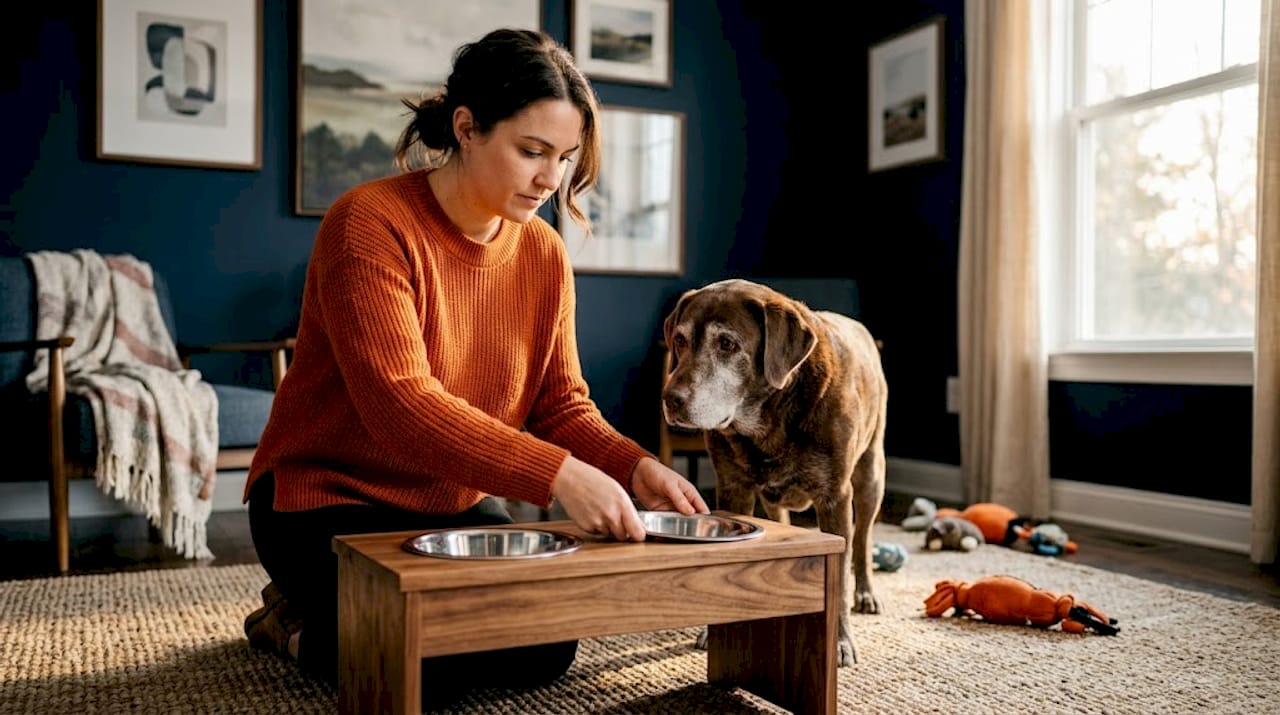
A raised or elevated dog bowl sits on a stand or platform that lifts the feeding surface off the ground, anywhere from a few inches to over a foot, depending on your dog’s size. The core idea is simple: instead of bending their neck all the way down to floor level, your dog eats from a position that keeps their spine and neck in a more neutral posture.
Elevated bowls can ease neck and back strain for some dogs by letting them eat from a more comfortable posture instead of forcing them to hunch over a floor-level bowl. For a healthy young dog, this might seem like a minor perk. For a senior dog with arthritis or a large breed with a long neck, it can make a meaningful difference in daily comfort.
Here are the core ergonomic and wellness benefits that draw owners to elevated feeders:
- Neutral neck and spine alignment during meals, reducing strain on cervical vertebrae
- Reduced joint stress in the front legs and shoulders, especially during longer eating sessions
- Easier swallowing for dogs with certain medical conditions (more on this shortly)
- Cleaner eating area, since raised bowls are less likely to be pushed across the floor
- Improved posture for older dogs who struggle to lower their head comfortably
Size and breed matter a great deal when choosing the right height. A Great Dane needs a very different setup than a Beagle. The general rule is that the bowl rim should sit a few inches below your dog’s shoulder height, keeping their neck level or only slightly angled downward during eating.
“The goal of an elevated bowl is not to make feeding look stylish. It’s to support the body in a posture that reduces unnecessary physical effort with every meal.”
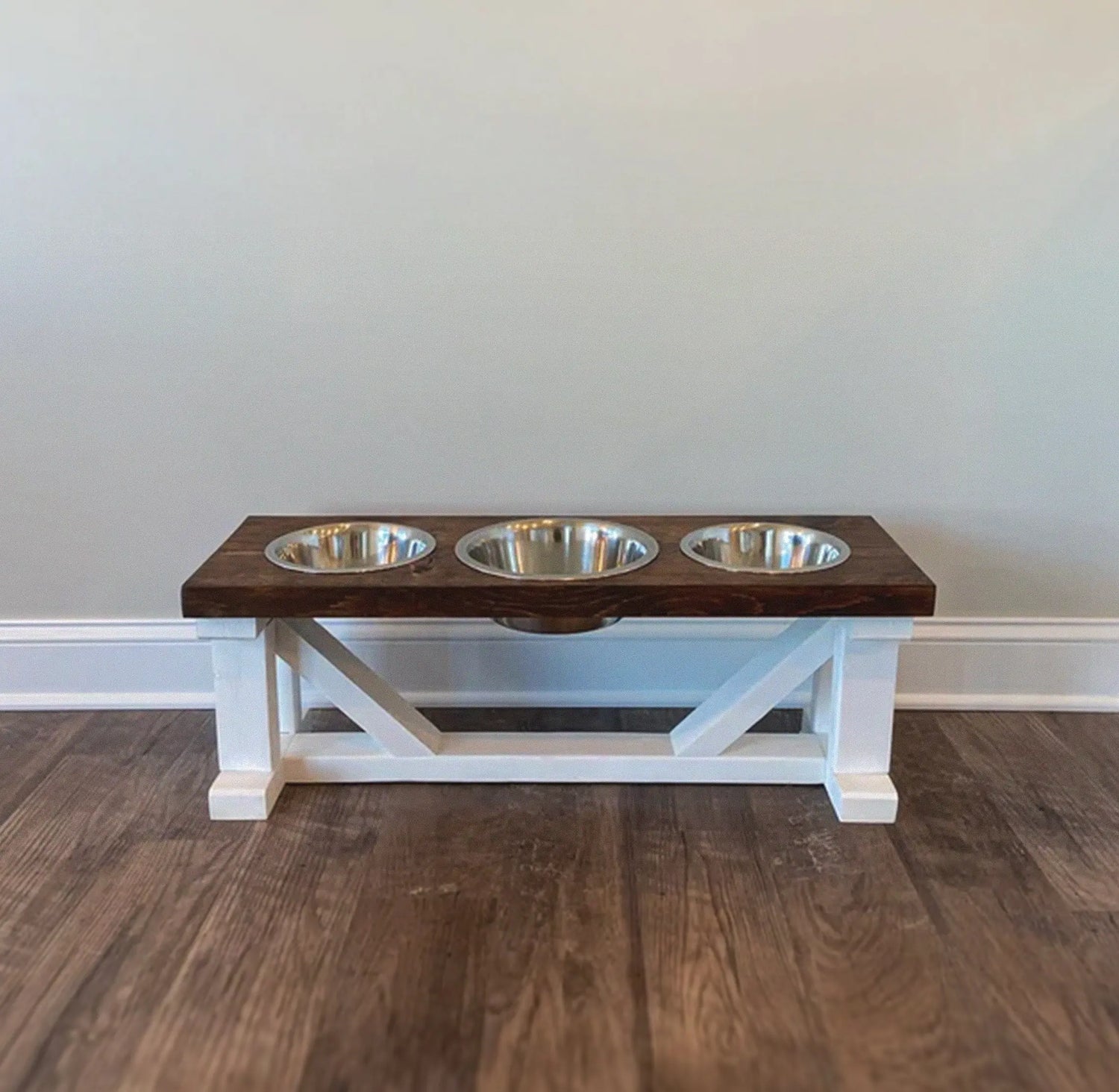
Owners who care about both wellness and home aesthetics are increasingly drawn to options like a wooden elevated dog bowl or a two-bowl raised feeder, which combine ergonomic function with beautiful craftsmanship. The best elevated dog feeders do double duty: they support your dog’s health and look right at home in your living space.
| Dog size | Approximate shoulder height | Suggested bowl height |
|---|---|---|
| Small (under 20 lbs) | 8 to 12 inches | 4 to 8 inches |
| Medium (20 to 50 lbs) | 13 to 18 inches | 8 to 12 inches |
| Large (50 to 90 lbs) | 19 to 25 inches | 12 to 16 inches |
| Giant (90+ lbs) | 26+ inches | 16 to 24 inches |
When are raised bowls recommended for your dog?
Having established the ergonomic benefit, it’s important to know when a raised bowl is more than just a comfort. Sometimes, it’s a health recommendation from your veterinarian.
The clearest medical case for elevated feeding is megaesophagus, a condition where the esophagus loses muscle tone and cannot move food efficiently into the stomach. Dogs with this condition need gravity to assist swallowing, and elevated feeding is a key part of megaesophagus management. Some owners even use a specially designed “Bailey chair” that keeps the dog in an upright, seated position during and after meals to maximize gravity’s effect.
Beyond megaesophagus, raised bowls are commonly recommended in these situations:
- Arthritis and joint disease in the neck, shoulders, or front legs, where bending down repeatedly causes pain
- Post-surgical recovery, especially after neck or spinal procedures where range of motion is limited
- Senior dogs who have developed stiffness and find floor-level bowls uncomfortable
- Large and giant breeds whose natural posture makes floor bowls awkward and physically taxing over time
- Dogs recovering from certain throat or esophageal conditions where swallowing mechanics are affected
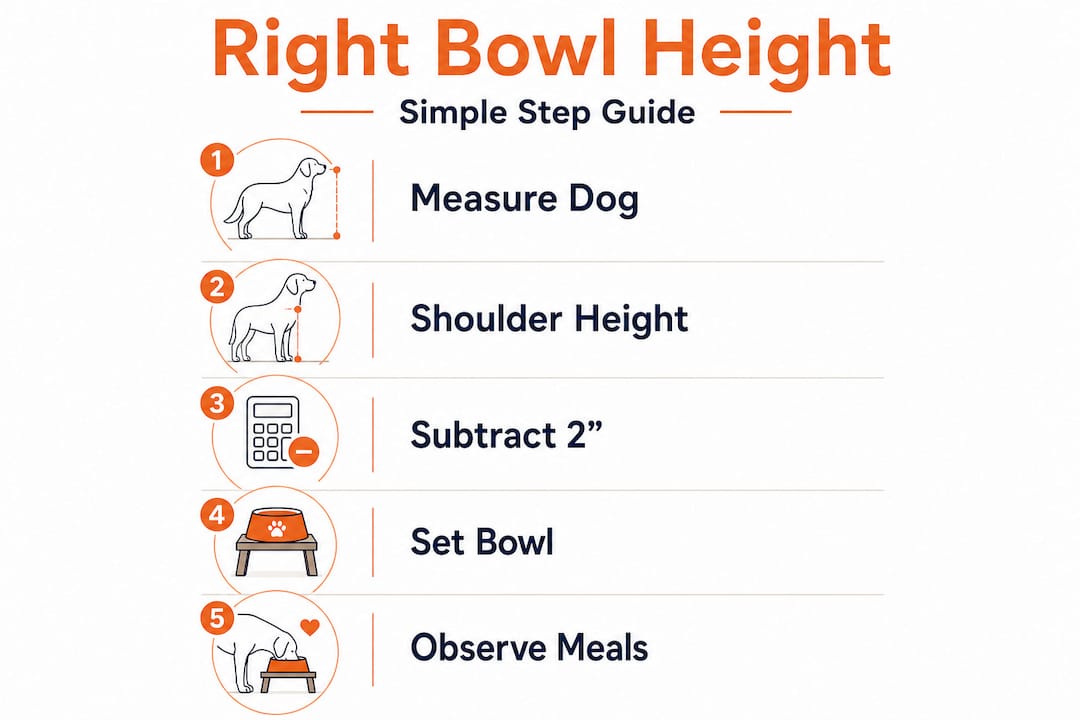
To find the right bowl height for your dog, measure from the floor to the top of their shoulder (called the withers). Then subtract roughly 6 to 8 inches to find a good starting bowl rim height. This keeps the neck in a natural, relaxed position rather than forcing it up or down.
Pro Tip: After setting up a new elevated bowl, watch your dog eat for the first few meals. If they seem to stretch their neck upward or hunch their shoulders, adjust the height. The right setup should look effortless and natural.
Pairing a raised bowl with smart dietary choices also matters. Giving your dog treats for healthy dogs that support joint and digestive health is a great complement to an ergonomic feeding setup, especially for older or medically managed pets.
Risks and controversies: Raised bowls and bloat (GDV)
But comfort isn’t the whole story. There’s a key medical concern that all conscientious owners must consider before choosing an elevated bowl, and it’s serious enough that veterinarians actively warn about it.
Bloat, or gastric dilatation-volvulus (GDV), is a life-threatening condition where the stomach fills with gas and can twist on itself. It can kill a dog within hours if not treated with emergency surgery. GDV is not a minor digestive upset. It is one of the most dangerous conditions a dog can face.
Important: GDV is most common in large, deep-chested breeds such as Great Danes, German Shepherds, Standard Poodles, Weimaraners, and Irish Setters. If your dog falls into this category, this section is especially critical reading.
Studies link elevated bowls to increased bloat risk in certain breeds, according to the AKC. The theory is that eating from a raised position may cause dogs to swallow more air, which contributes to the dangerous gas buildup that precedes GDV. While the research is not entirely conclusive across all breeds, the risk is significant enough that it cannot be dismissed.
Elevated feeding is listed as a bloat risk factor by the Whole Dog Journal, which advises against using elevated food or water bowls as a bloat-prevention measure. This is a notable caution, because some owners mistakenly believe that raised bowls prevent bloat by improving digestion. The evidence does not support that belief for at-risk breeds.
Key risk factors that compound the danger include:
- Breed predisposition: Deep-chested, large, and giant breeds carry the highest GDV risk
- Eating speed: Dogs that eat very quickly swallow more air regardless of bowl height
- Exercise timing: Vigorous activity right before or after meals increases risk
- Age and weight: Older, heavier dogs face elevated risk compared to younger, lighter dogs
- Genetics: Dogs with a first-degree relative who experienced GDV are at higher risk
A modern elevated feeder may be a beautiful and functional choice for many dogs, but for large, deep-chested breeds, the decision should always involve a conversation with your veterinarian first. No aesthetic benefit is worth a preventable health emergency.
Best practices and choosing the right bowl for your dog
Equipped with nuanced evidence, how do you decide the best and safest bowl for your own dog? The answer is that raised bowls are not universally good or bad. They are the right choice for some dogs and the wrong choice for others, and the key is knowing which category your dog falls into.
Follow these steps to make a well-informed decision:
- Identify your dog’s breed and body type. Deep-chested, large breeds need veterinary input before switching to an elevated setup. Smaller breeds and dogs without GDV risk factors can typically use raised bowls safely.
- Consult your veterinarian. This is not optional advice. Your vet knows your dog’s full health history and can flag any conditions that make elevated feeding risky or beneficial.
- Measure for proper height. Use the shoulder measurement method described earlier. A bowl that’s too high is just as problematic as one that’s too low.
- Observe your dog’s eating behavior. Fast eaters benefit from slow-feeder inserts regardless of bowl height. Pair your elevated setup with a slow-feeder bowl if your dog tends to gulp their food.
- Reassess as your dog ages. A setup that works at age three may need adjustment at age ten. Senior dogs often develop new joint or mobility issues that change what’s most comfortable for them.
Raised bowls are ergonomically useful for some dogs and can support neutral neck posture and specific medical conditions like megaesophagus, but they can be risky for dogs predisposed to GDV. Height choice and veterinarian guidance are the two most important variables in this decision.
Pro Tip: If your dog is a fast eater and you’re using a raised bowl, place a slow-feeder insert inside the elevated stand rather than switching to a floor-level bowl. You get the ergonomic benefit without the added air-swallowing risk that comes with speed eating.
For households with multiple dogs of different sizes, a two-bowl raised dog feeder can be a practical and elegant solution. Look for feeders built to last through daily use, with stable bases that won’t tip during enthusiastic eating sessions.
Aesthetics matter too. A handcrafted feeder that fits your home’s style is one you’ll actually use consistently, and consistency in feeding routines is genuinely good for your dog’s digestion and stress levels. You can also complement your dog’s routine with smart dog exercise tips that support overall health alongside proper feeding habits.
Why the best raised bowl setups balance comfort with safety
Here’s a perspective worth sitting with: the conversation around elevated bowls tends to split into two camps. One side promotes them as an obvious health upgrade. The other warns about bloat and dismisses them entirely. Both positions miss the point.
The real answer is that feeding setup decisions are deeply individual. A raised bowl for a 12-year-old Labrador with arthritis is a compassionate, well-reasoned choice. The same bowl for a young, healthy Great Dane whose owner hasn’t spoken to a vet is a gamble. The product is not the variable. The dog is.
We’ve seen owners spend significant time choosing the right artisan elevated feeder for their home, only to realize later they hadn’t measured their dog properly or checked in with their vet. The feeder was beautiful. The height was wrong. That’s a fixable mistake, but it illustrates a broader truth: thoughtful purchasing requires more than visual appeal.
The owners who get this right are the ones who treat the feeding setup as a living decision, not a one-time purchase. They measure, consult, observe, and adjust. They think about their dog’s current age and health, and they revisit the setup as things change. That kind of attentiveness, combined with a quality product built to last, is what actually supports a dog’s long-term wellbeing.
Style and safety are not opposites. A well-crafted, properly sized elevated feeder can be both gorgeous and genuinely good for your dog. You just have to do the work to make sure it’s the right fit.
Find the ideal elevated feeder for your dog
Ready to upgrade your dog’s feeding experience with something built to last and designed with care?
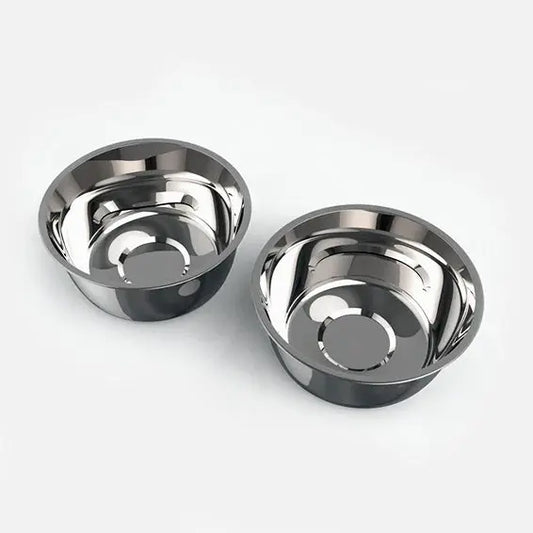
At Bearwood Essentials, every feeder is handcrafted to balance ergonomic function with real aesthetic appeal. Whether you’re looking for a metal dog bowl feeder for a sleek, modern look or a wooden raised dog feeder that brings warmth and craftsmanship to your space, there’s an option designed for your dog’s size, needs, and your home’s style. Multi-bowl setups, single feeders, and custom heights are all available. Shop elevated feeders and find the setup that puts your dog’s comfort and health first, without compromising on quality or design.
Frequently asked questions
Do all dogs benefit from raised bowls?
No. Dogs with joint issues, arthritis, or megaesophagus often benefit, but bloat-prone breeds face higher risk with elevated feeders, making veterinary guidance essential before switching.
How do I know what height raised bowl is best for my dog?
Measure your dog’s shoulder height and choose a bowl rim that sits a few inches below that point. This keeps their neck neutral while eating, which reduces strain on the neck and back during meals.
Are raised bowls good for dogs that eat too fast?
Raised bowls alone won’t slow down a fast eater. Pairing them with a slow-feeder insert is more effective, since elevated feeding can be a bloat risk factor when combined with rapid eating and air swallowing.
Should puppies use raised bowls?
Most puppies do well with floor-level bowls during their growth phase. Unless your veterinarian recommends an elevated setup for a specific health condition, a standard floor bowl is the safer default for young dogs.
How do raised ceramic, metal, and wooden feeders compare for daily use?
Ceramic bowls can chip over time and are heavier to clean. Metal and wood stands offer superior stability and durability for daily use, and handcrafted versions in both materials tend to hold up better than mass-produced alternatives while adding a polished look to your home.