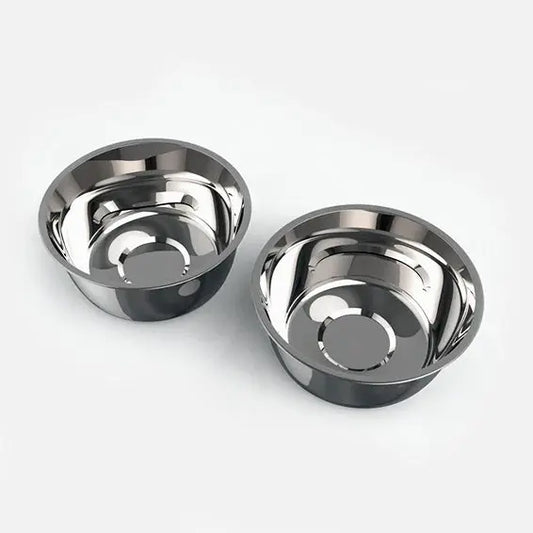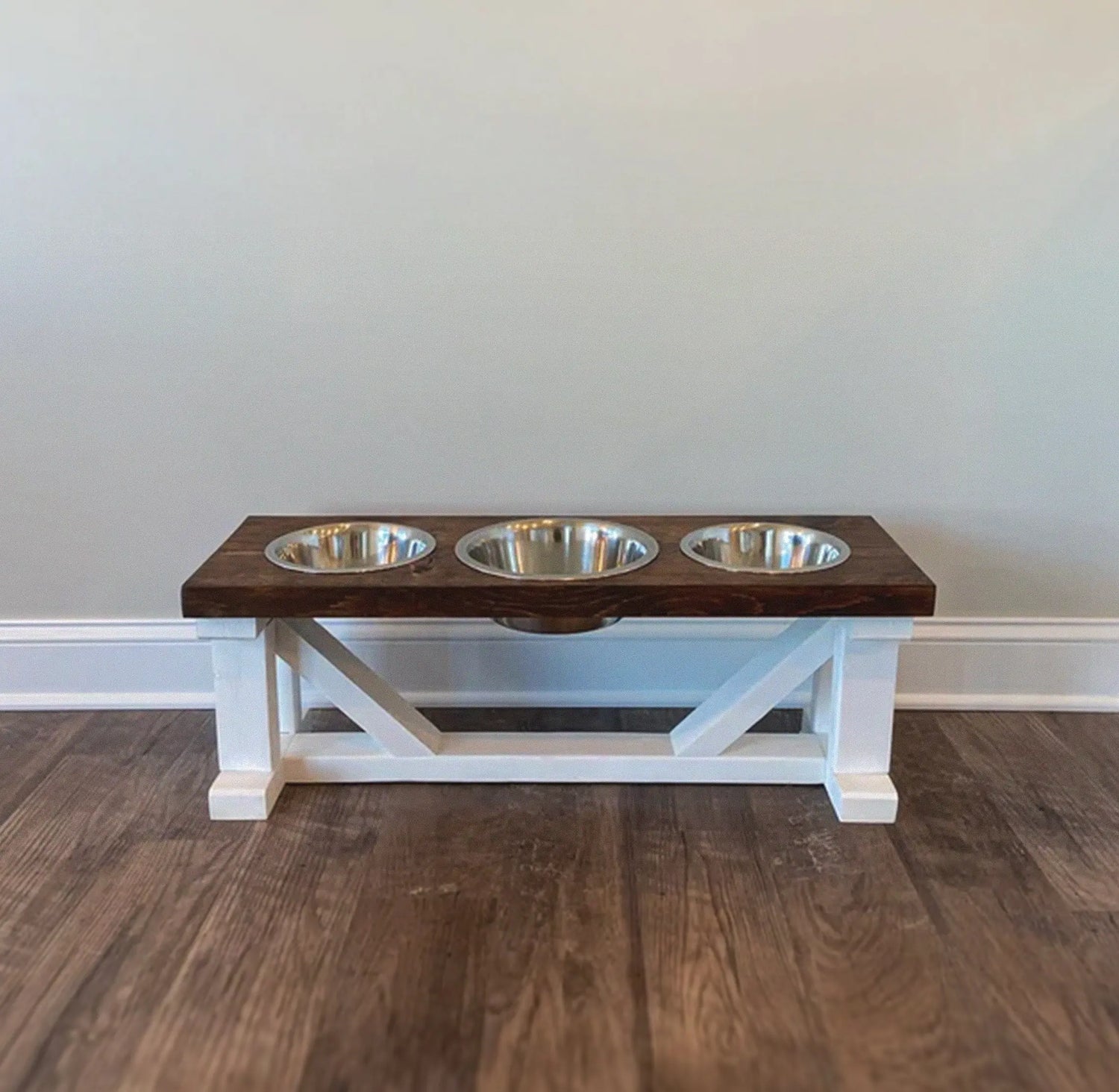


Stainless steel bowls are defined as the most durable and hygienic feeding option for dogs, outlasting plastic by a decade or more in real-world use. Veterinarians at PuppySimply and Dogster consistently name stainless steel the gold standard for dog bowls because of its resistance to bacteria, warping, and physical damage. Plastic bowls degrade within 12–24 months, while stainless steel survives daily dishwasher cycles for over a decade. If you are researching why stainless steel bowls outlast plastic, the answer comes down to three factors: material toughness, a nonporous surface that resists bacteria, and long-term cost savings that plastic simply cannot match.
Why stainless steel bowls outlast plastic: material strength explained
Stainless steel is physically harder than plastic, and that hardness is the foundation of its longevity. Plastic bowls warp under heat, crack from drops, and develop surface scratches within weeks of regular use. Stainless steel holds its shape through dishwasher cycles, outdoor temperatures, and the daily abuse of an enthusiastic dog.
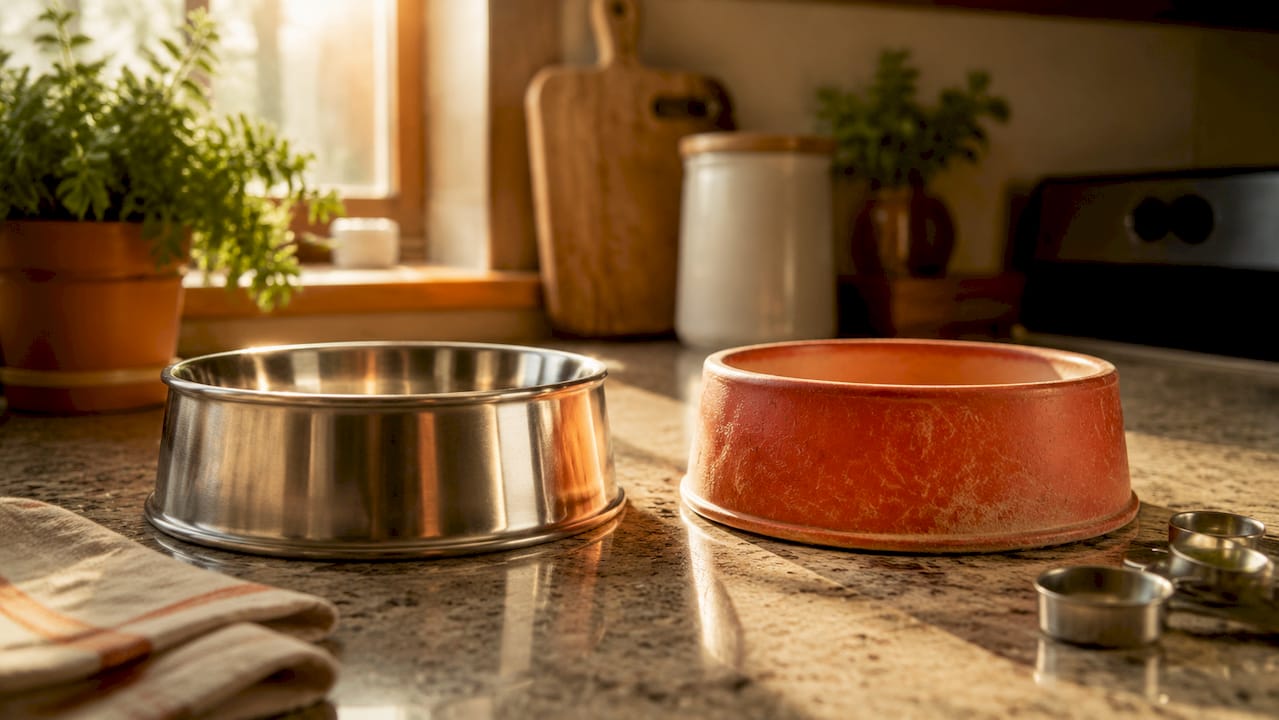
The grade of steel matters significantly here. 304-grade food-safe stainless steel resists corrosion and denting better than lower-grade alternatives. Bowls made from inferior steel can rust at the rim or dent under pressure, which defeats the durability advantage entirely. When you shop for a stainless steel bowl, the grade label is the single most important specification to check.
Dishwasher safety is another area where the durability of stainless steel proves itself. Plastic bowls lose structural integrity after repeated high-heat washing cycles. Stainless steel does not. The material survives the same cleaning routine for years without warping, discoloring, or developing weak spots.
Key durability advantages of stainless steel over plastic:
- Scratch resistance: The hard surface does not develop grooves from dog claws or utensils.
- Heat tolerance: Stainless steel holds its shape in hot dishwashers and direct sunlight.
- Impact resistance: Drops that crack plastic bowls leave stainless steel undamaged.
- Corrosion resistance: 304-grade steel does not rust, even with daily washing.
- Odor neutrality: Stainless steel does not absorb odors or food flavors the way plastic does.
Pro Tip: Always check the bowl’s grade marking before purchasing. A bowl labeled “18/8 stainless steel” is 304-grade and the right choice for long-term pet feeding use.
How does stainless steel’s surface protect your dog’s health?
The hygiene difference between stainless steel and plastic is not subtle. Plastic bowls scratch easily, and those scratches create hidden grooves where bacteria, mold, and biofilm accumulate even after washing. Pathogens like E. coli and Staphylococcus aureus hide in those micro-grooves and survive standard cleaning. Stainless steel’s nonporous surface gives bacteria nowhere to anchor.
This is why stainless steel is used in medical facilities and commercial food-service kitchens. The same property that keeps a hospital surface clean keeps your dog’s bowl clean. Hot water and soap remove residue completely from stainless steel. With plastic, embedded contaminants remain even after a thorough wash.
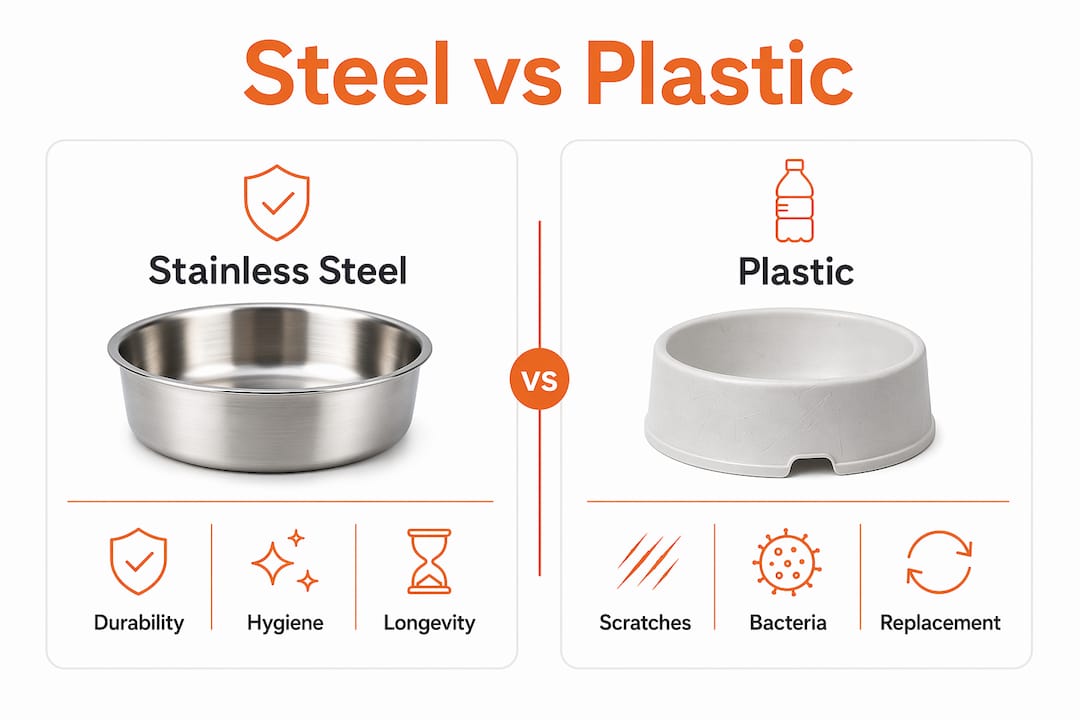
One health consequence that surprises many dog owners is muzzle acne. Plastic bowls cause muzzle acne in dogs because bacteria hiding in micro-scratches make repeated contact with the dog’s face during feeding. Switching to stainless steel often clears up this condition quickly. If your dog has recurring chin or muzzle irritation, the bowl material is the first thing to examine.
| Feature | Stainless steel | Plastic |
|---|---|---|
| Surface porosity | Nonporous, no bacterial anchor points | Porous and scratch-prone |
| Bacterial risk | Very low with basic washing | High due to embedded grooves |
| Odor retention | None | Retains food smells over time |
| Muzzle acne risk | Minimal | Elevated from bacteria in scratches |
| Dishwasher safe | Yes, repeatedly | Degrades with heat exposure |
Pro Tip: Wash your dog’s stainless steel bowl daily with hot water and dish soap. That simple routine is all it takes to maintain a fully hygienic surface, unlike plastic where daily washing still leaves bacteria behind in scratches.
Pet care specialists at petcares.biz note that maintenance shifts entirely when you switch from plastic to stainless steel. With plastic, you monitor for damage and replace bowls frequently. With stainless steel, you focus only on simple sanitation. That is a meaningful reduction in effort and worry for any dog owner.
Stainless steel vs plastic bowls: which costs less over time?
Plastic bowls appear cheaper at the register, but that upfront price is misleading. Plastic bowls need replacement every 1–2 years due to warping and bacterial buildup. Stainless steel bowls last 5–15 years with basic care. Over a dog’s lifetime, the replacement costs for plastic bowls add up and surpass the one-time investment in quality stainless steel.
Here is how the math works in practice:
- Year 1: You buy a plastic bowl for $8. It works fine initially.
- Year 2: Scratches and odors accumulate. You replace it. Another $8.
- Years 3–10: You replace the bowl roughly every 1–2 years. Total spend: $40–$80.
- Stainless steel alternative: A quality 304-grade bowl costs $15–$25 and lasts the same 10-year period with no replacement needed.
The savings are real, and they grow with each year you avoid a replacement purchase. For multi-dog households, the difference compounds quickly.
The environmental case for stainless steel is equally strong. Plastic bowls end up in landfills every 1–2 years. Stainless steel is fully recyclable at the end of its long life. For pet owners who care about eco-friendly bowl options and reducing household waste, stainless steel is the clear choice. You get long lasting kitchenware that does not contribute to plastic waste cycles.
Choosing stainless steel also means fewer trips to the pet store and less time spent evaluating whether a bowl is still safe to use. That convenience has real value for busy dog owners who want reliable feeding solutions without constant maintenance decisions.
What features make a stainless steel bowl easier to use every day?
Durability and hygiene matter most, but practical usability determines whether a bowl works well in your home day after day. Non-slip rubber bases and rolled rims solve two of the most common complaints about stainless steel bowls: sliding across the floor and the clanking noise of dog tags hitting the rim. These features are worth prioritizing when you select a bowl.
Practical features to look for in a quality stainless steel dog bowl:
- Non-slip rubber base: Keeps the bowl in place during feeding, especially for larger or more enthusiastic dogs.
- Rolled or smooth rim: Reduces noise from tags and is gentler on your dog’s muzzle.
- Wide, stable base: Prevents tipping in active dogs or outdoor settings.
- Appropriate depth: Flat-faced breeds like Bulldogs and Pugs do better with shallow, wide bowls.
- Correct capacity: Match the bowl size to your dog’s breed and portion size to avoid overfilling.
Stainless steel also performs well in outdoor and travel settings where plastic fails fastest. Heat from a car or direct sun warps plastic quickly. Stainless steel holds its shape and stays safe regardless of temperature. For road trips, camping, or backyard feeding, a durable stainless steel bowl handles the conditions without degrading.
Pairing a stainless steel bowl with a raised feeder adds another layer of practical benefit. Elevated feeding positions reduce neck strain, support better posture during meals, and keep the feeding area tidier. Many Bearwoodessentials feeders are designed specifically to hold stainless steel bowls securely, combining the hygiene advantages of steel with the ergonomic benefits of an elevated stand.
Key Takeaways
Stainless steel bowls outlast plastic because they resist scratches, bacteria, and physical damage for 5–15 years, while plastic degrades and requires replacement every 1–2 years.
| Point | Details |
|---|---|
| Material durability | 304-grade stainless steel resists warping, denting, and corrosion for over a decade. |
| Hygiene superiority | Nonporous surface prevents E. coli and Staph buildup that plastic scratches harbor. |
| Long-term cost savings | Stainless steel’s lifespan makes it cheaper than repeated plastic bowl replacements. |
| Health protection | Switching from plastic reduces muzzle acne and lowers BPA exposure risk for dogs. |
| Usability features | Non-slip bases and rolled rims make daily stainless steel use quieter and more stable. |
What I’ve learned after years of watching dog owners choose the wrong bowl
Most dog owners I talk to underestimate how much the bowl material affects their dog’s health. They focus on size, color, and price. The material gets almost no attention until a problem shows up, usually in the form of a dog with recurring chin irritation or a bowl that smells no matter how many times it gets washed.
The plastic bowl problem is not obvious at first. A new plastic bowl looks clean and functions fine. The damage happens gradually, through micro-scratches that accumulate invisibly over weeks of use. By the time the bowl looks worn, it has been harboring bacteria for months. That is the part most owners miss entirely.
I also see a common mistake with “BPA-free” plastic bowls. Owners assume that label solves the safety concern. It addresses one chemical but does nothing about the physical scratches that trap bacteria. The surface problem exists regardless of the plastic formulation.
My honest recommendation is to treat the bowl as a health tool, not just a container. A quality replacement stainless steel bowl costs less than a single vet visit for a skin infection. The math is straightforward. Prioritize 304-grade steel, look for a non-slip base, and pair it with a raised feeder if your dog is a medium or large breed. You will not replace it for years, and your dog will eat from a genuinely clean surface every single meal.
— Kim
Feed your dog better with Bearwoodessentials
If you are ready to move away from plastic for good, Bearwoodessentials builds handcrafted feeders designed to hold quality stainless steel bowls securely and beautifully. Every feeder is made with the same care and attention to materials that your dog’s health deserves.
The raised metal dog feeder at Bearwoodessentials pairs a durable stainless steel bowl with a handmade stand that keeps feeding stable, clean, and elevated. It is built for dog owners who want a feeding setup that lasts, looks great in the home, and supports their dog’s well-being at every meal. Browse the full collection at Bearwoodessentials and find the right feeder for your dog today.
FAQ
Why do stainless steel bowls last longer than plastic ones?
Stainless steel resists scratching, warping, and corrosion, giving it a lifespan of 5–15 years compared to plastic’s 1–2 years. Its physical hardness and dishwasher durability make it far more resistant to the daily wear that destroys plastic bowls.
Is stainless steel safer for dogs than plastic?
Yes. Stainless steel’s nonporous surface prevents bacteria like E. coli and Staphylococcus aureus from accumulating, while plastic scratches trap pathogens that survive washing. Veterinarians consistently recommend stainless steel as the safest bowl material for dogs.
What grade of stainless steel is best for dog bowls?
304-grade stainless steel, also labeled 18/8, is the recommended choice for dog bowls. It offers high corrosion resistance and food safety, while lower-grade steel can rust or dent and lose its hygiene advantages over time.
Can plastic bowls cause skin problems in dogs?
Plastic bowls are a known cause of muzzle acne in dogs because bacteria hide in microscopic scratches and make repeated contact with the dog’s face during feeding. Switching to stainless steel often resolves this condition quickly.
Are stainless steel bowls worth the higher upfront cost?
Yes. Though stainless steel costs more initially, it eliminates the 1–2 year replacement cycle of plastic bowls. Over a dog’s lifetime, the total cost of replacing plastic bowls exceeds the one-time price of a quality stainless steel bowl.