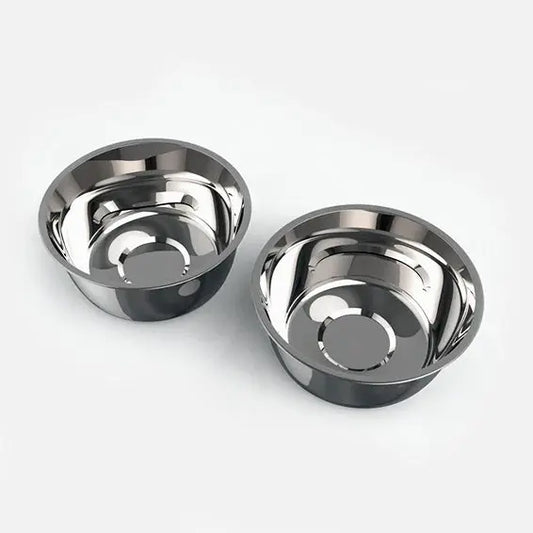

Flat bowls cause discomfort in dogs primarily because the bowl’s rim and walls press directly against a dog’s muzzle and whiskers during feeding, triggering sensory irritation and forcing an unnatural eating posture. This physical contact is not a minor annoyance. For sensitive dogs and especially flat-faced breeds like pugs, French bulldogs, and Shih Tzus, repeated rim contact turns every meal into a stressful experience. Understanding why flat bowls cause discomfort in dogs gives you the knowledge to make one simple change that can meaningfully improve your dog’s relationship with mealtime. The fix is often a different bowl shape, not a different dog.
Why flat bowls cause discomfort in dogs: the sensory and physical mechanics
The core issue with flat bowls is repeated tactile contact. Dogs have whiskers, known scientifically as vibrissae, that are deeply embedded in nerve-rich follicles. Unlike decorative fur, whiskers are precision sensory tools that detect air movement, spatial boundaries, and physical pressure. When a dog eats from a deep or narrow bowl, the whiskers brush against the vertical walls with every bite. That contact sends a constant stream of sensory signals to the brain, and over time, sensory overload from rim contact leads to avoidance behaviors and feeding stress in sensitive dogs.
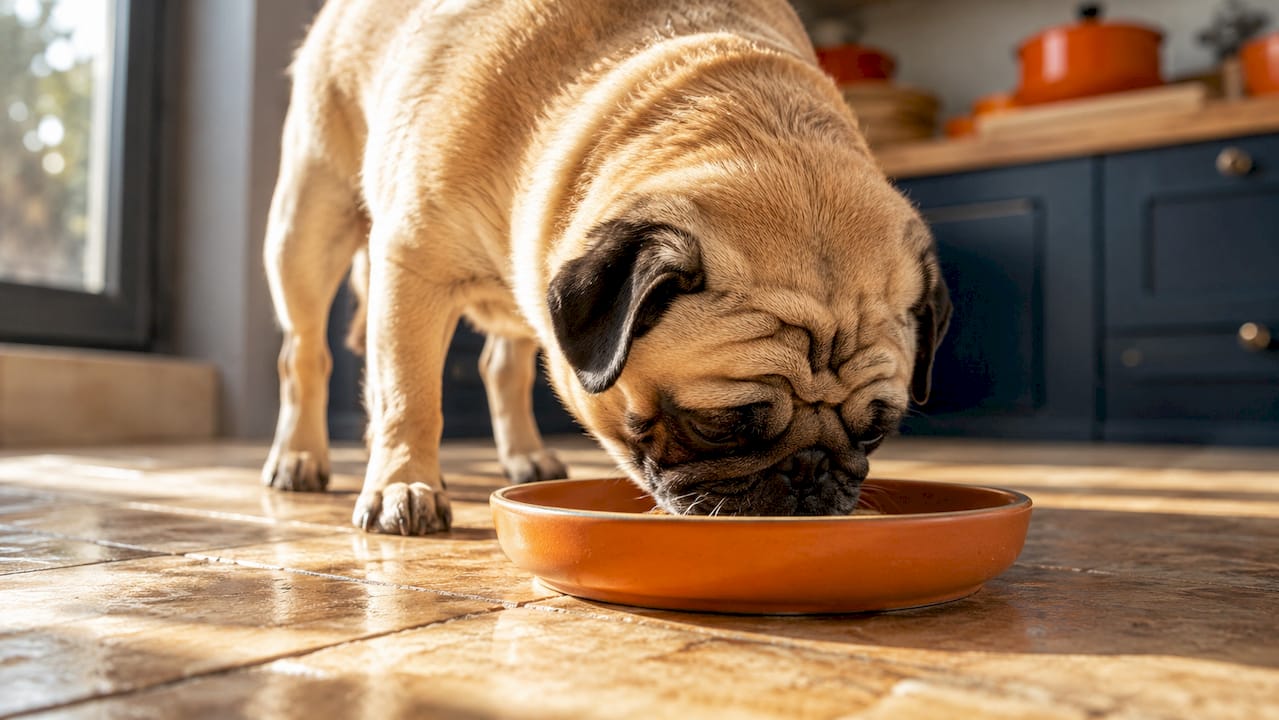
This condition is often called whisker fatigue, though the more precise term is whisker stress or tactile overstimulation. It is well documented in cats but applies equally to dogs with sensitive vibrissae. The problem is not pain in the traditional sense. It is more like the irritation of someone repeatedly tapping your shoulder during a meal. You can tolerate it briefly, but it degrades the experience fast.
Bowl geometry matters more than most owners realize. A bowl that is too deep forces the dog’s muzzle down into a confined space, compressing the whiskers against the sides. A bowl that is too narrow produces the same result even at shallow depths. Wide, shallow bowls at least 5 inches across and under 1.5 inches deep keep whiskers and muzzle clear of vertical walls, reducing tactile discomfort significantly. This shape prevents the repetitive contact that causes stress.
Understanding how bowl depth affects eating is the first step toward choosing a design that actually works for your dog’s anatomy.
- Deep, narrow bowls force whisker contact on every bite
- Vertical bowl walls amplify the frequency of rim contact
- Sloped or flat-sided bowls reduce the angle of contact
- Wide openings give the muzzle room to move freely
Pro Tip: Try placing your dog’s food on a ceramic appetizer plate for one week. If your dog eats more eagerly, finishes the bowl, and stops pawing food onto the floor, bowl geometry was the problem all along.
Why flat-faced breeds suffer the most from standard bowl shapes
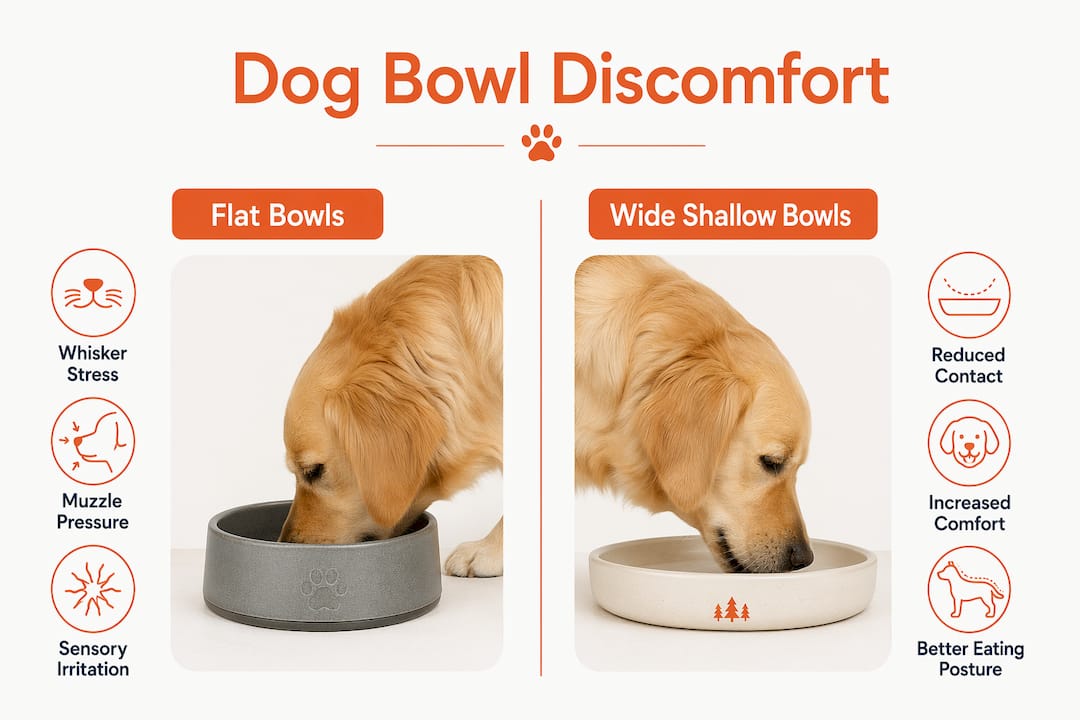
Brachycephalic breeds experience dog bowl discomfort at a different level than other dogs. The term brachycephalic describes dogs with shortened skull bones that produce a flat facial profile. Pugs, French bulldogs, Boston terriers, Shih Tzus, and Cavalier King Charles Spaniels all share this anatomy. For these dogs, the issue is not just whisker contact. It is the bowl rim pressing directly against the soft tissues of the cheeks and muzzle with every single bite.
A standard bowl is designed around a typical canine muzzle that extends forward and downward into the bowl. A flat-faced dog’s muzzle does not project in the same way. Instead, the face meets the bowl rim almost perpendicularly. The result is that bowl rim pressure on cheeks and muzzle tissues causes direct physical discomfort, not just sensory irritation. This is a structural mismatch between bowl design and dog anatomy.
Switching flat-faced dogs to wide, shallow, or flat plate bowls can quickly reveal if rim pressure was causing discomfort, as improved behavior appears fast. — Furwell Pet Shop
For brachycephalic breeds, a wide, shallow dish or flat plate is not a luxury. It is the correct feeding tool. The bowl opening needs to be wide enough that the face never contacts the rim, and the depth needs to be shallow enough that food stays accessible without the dog having to push its face into a confined space. Typical dogs whose muzzles extend forward rarely experience this rim pressure issue, which is why the impact of flat bowls on dogs varies so much by breed.
Affected breeds to watch closely include:
- Pugs
- French bulldogs
- Boston terriers
- Shih Tzus
- Cavalier King Charles Spaniels
Elevated bowls: do they actually solve the problem?
Raised feeders address a different dimension of dog bowl discomfort: posture. When a dog eats from a bowl on the floor, it flexes its neck downward significantly. For large breeds and senior dogs, this posture strains the neck and shoulders over time. Elevated bowls reduce this neck flexion by bringing food up to a more natural head height, which is why raised bowls can improve postural comfort for many dogs.
The tradeoff is real, though. The American Kennel Club warns that elevated bowls may increase bloat risk in some cases, particularly in large, deep-chested breeds like Great Danes, Weimaraners, and Standard Poodles. Bloat, or gastric dilatation-volvulus, is a life-threatening condition, and the relationship between bowl height and bloat risk is taken seriously by veterinarians.
| Bowl type | Best for | Key concern |
|---|---|---|
| Flat floor bowl | Small breeds, young healthy dogs | Neck strain over time |
| Wide shallow bowl | Brachycephalic breeds, whisker-sensitive dogs | None significant |
| Elevated bowl | Large breeds, senior dogs, dogs with arthritis | Potential bloat risk in susceptible breeds |
| Tilted or angled bowl | Dogs with megaesophagus or swallowing issues | Requires vet guidance |
Pro Tip: Before switching to an elevated feeder, consult your veterinarian, especially if your dog is a large, deep-chested breed. The correct bowl height for large breeds depends on shoulder height, age, and health history, not just breed size.
Elevated feeding reduces neck strain but introduces a tradeoff with bloat risk, and bowl height decisions should be tailored after veterinary consultation. The best bowl for dog health is the one that fits your specific dog’s anatomy and medical profile.
How to choose the best bowl for your dog’s comfort and health
Selecting the right bowl starts with your dog’s muzzle. A narrow-muzzled breed like a Greyhound or Whippet does well with a smaller, deeper bowl because the muzzle extends forward without pressing the whiskers against the sides. A wide-muzzled breed like a Labrador Retriever or Boxer needs a wider opening to avoid rim contact. Matching bowl size to muzzle width directly improves feeding comfort and posture.
Here is a practical selection process:
- Measure your dog’s muzzle width at its widest point. The bowl opening should be at least twice that measurement.
- Choose a depth under 1.5 inches for flat-faced breeds, and no more than 2 to 3 inches for most other dogs.
- Select sloped or gently curved sides rather than vertical walls to minimize whisker contact.
- Prioritize ceramic or stainless steel over plastic. Plastic bowls harbor bacteria, scratch easily, and can cause allergic skin reactions around the muzzle. Ceramic and stainless steel are easier to clean and far less likely to cause secondary irritation.
- Observe your dog for the first week with any new bowl. Look for changes in eating speed, food spillage, and overall enthusiasm at mealtime.
The best bowl for dog health is not the most expensive or the most stylish. It is the one that fits your dog’s face, keeps whiskers clear of walls, and is made from a material that stays clean. Shallow, wide, sloped-sided bowls that keep whiskers clear of vertical walls are the design standard that reduces feeding discomfort most reliably.
Pro Tip: A ceramic appetizer plate from your kitchen cabinet is a free, immediate test for whisker sensitivity. If your dog’s eating behavior improves noticeably within a few days, you have confirmed the bowl was the problem.
Signs your dog is uncomfortable with its bowl
Dogs cannot tell you the bowl hurts, but they show it clearly through behavior. Recognizing these signs early prevents weeks or months of unnecessary feeding stress. The following behaviors are directly linked to bowl discomfort, not food preference or stubbornness:
- Pawing food out of the bowl before eating it. The dog is moving food to a flat surface where it can eat without rim contact.
- Eating only from the center of the bowl and leaving food around the edges. This is the dog avoiding the zone where whisker contact is most intense.
- Hesitating before eating, especially from a full bowl where food sits close to the rim.
- Refusing to eat or drink from a specific bowl while accepting food from other surfaces.
- Tilting or nudging the bowl with the nose. Dogs nudging their bowls are often trying to reposition food so they can access it without pressing their face against the rim.
These behaviors indicate sensory irritation and feeding stress, not behavioral problems. The fix is almost always a bowl change, not training. If you notice two or more of these signs consistently, conduct a simple test: place your dog’s next meal on a flat plate or wide, shallow dish. If the behavior improves immediately, the original bowl was the source of discomfort.
Reducing repeated tactile rim and wall contact during feeding significantly improves comfort, and the behavioral improvement after switching bowls is often visible within a single meal.
Key takeaways
Flat bowls cause dog discomfort because repeated rim and wall contact irritates whiskers and muzzle tissue, and the right bowl shape resolves this quickly.
| Point | Details |
|---|---|
| Whisker contact is the core problem | Deep, narrow bowls press whiskers against walls on every bite, causing sensory stress. |
| Flat-faced breeds need special bowls | Pugs, French bulldogs, and similar breeds need wide, shallow dishes to avoid rim pressure on facial tissue. |
| Bowl material matters | Ceramic and stainless steel are safer than plastic, which harbors bacteria and can cause allergic reactions. |
| Elevated bowls carry tradeoffs | Raised feeders reduce neck strain but may increase bloat risk in large, deep-chested breeds. |
| Behavioral signs are reliable indicators | Pawing food out, eating only from the center, and nudging the bowl all signal bowl-related discomfort. |
What I’ve learned watching dogs eat from the wrong bowls
I’ve spent years watching dogs interact with their feeding setups, and the pattern I see most often surprises new owners every time. The dog is not being picky. The dog is not bored with its food. The dog is physically uncomfortable, and it is communicating that as clearly as it can.
The most telling moment is always the plate test. You put the same food on a flat ceramic plate, and a dog that was hesitating and pawing suddenly eats with focus and speed. That behavioral shift happens in seconds. It confirms that the bowl was the problem, not the food, not the dog’s mood, not some mysterious appetite issue.
What I find most underappreciated is how much breed anatomy shapes this experience. Owners of brachycephalic dogs often spend months trying different foods when the real answer is a different dish. The muzzle geometry of a French bulldog is simply incompatible with a standard round bowl. Once you see that clearly, the solution is obvious.
My consistent advice is to observe your dog at mealtime with the same attention you would give any health concern. Watch where the dog positions its head, whether it pauses mid-meal, and whether food ends up outside the bowl. Those details tell you everything. And when in doubt, talk to your vet, especially before making any changes to bowl height.
— Kim
Find the right feeder for your dog at Bearwoodessentials
If your dog shows any signs of bowl discomfort, the right feeder makes a measurable difference from the very first meal.
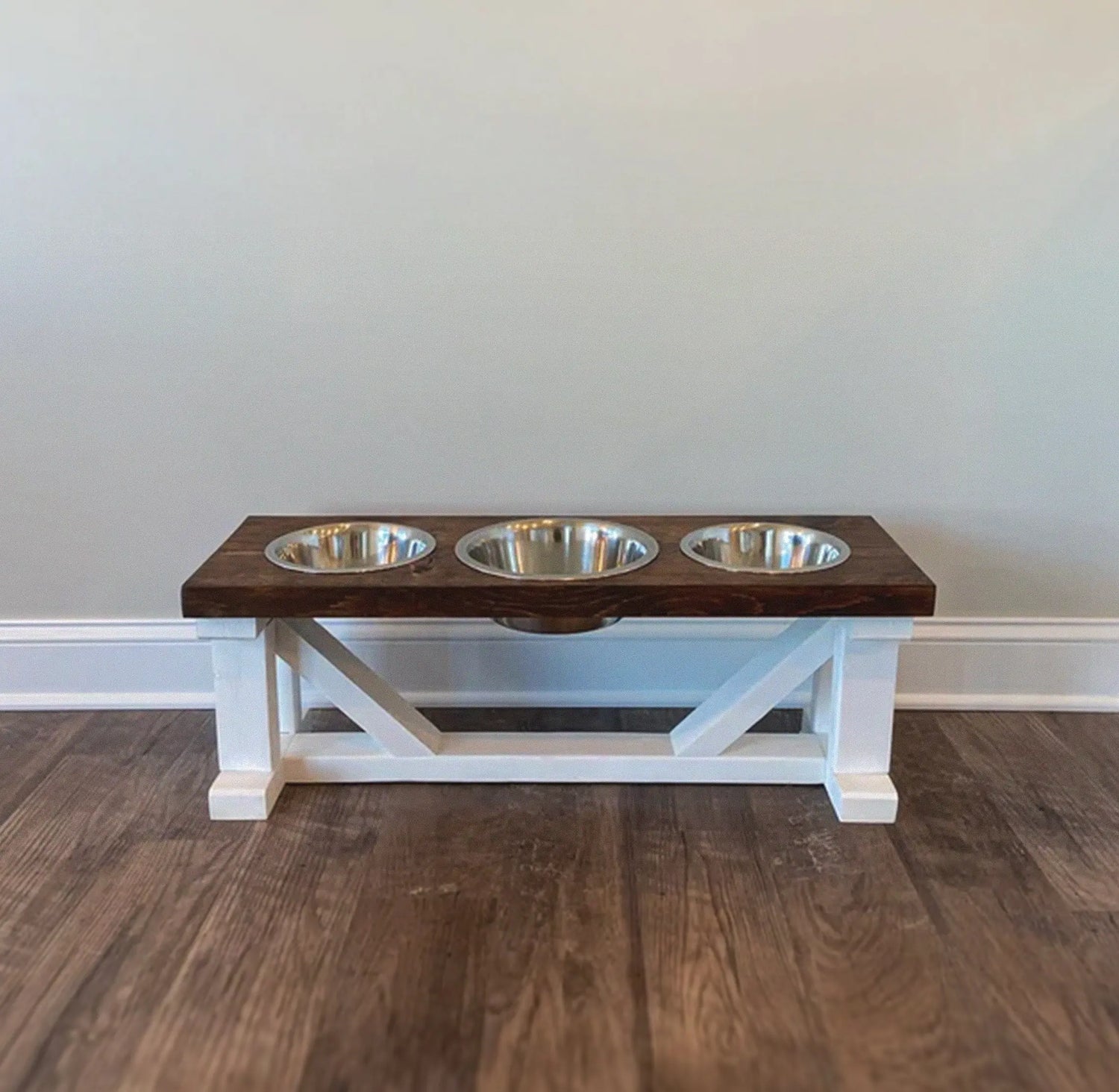
Bearwoodessentials designs handcrafted elevated feeders built around real dog anatomy and feeding comfort. The wooden raised dog feeder with stainless steel bowls combines ergonomic height with wide, easy-access bowls that keep muzzles and whiskers clear of tight walls. For owners who want a more rustic aesthetic without sacrificing function, the handmade metal dog bowl feeder offers the same thoughtful design in a durable, easy-to-clean format. Every feeder ships free within the U.S. on qualifying orders. Your dog deserves a mealtime that feels good, not just adequate.
FAQ
Why do flat bowls cause discomfort in dogs?
Flat bowls cause discomfort because the rim and vertical walls press against a dog’s whiskers and muzzle during feeding, triggering sensory irritation known as whisker stress. Wide, shallow bowls with sloped sides eliminate this contact and reduce feeding stress significantly.
Which dog breeds are most affected by bowl discomfort?
Brachycephalic breeds including pugs, French bulldogs, Boston terriers, Shih Tzus, and Cavalier King Charles Spaniels are most affected because their flat facial structure causes the bowl rim to press directly against cheek and muzzle tissue.
What bowl shape is best for reducing dog feeding discomfort?
A wide, shallow bowl at least 5 inches across and under 1.5 inches deep with sloped or flat sides is the most effective design for reducing whisker and muzzle contact during feeding.
Are elevated dog bowls safer than flat bowls?
Elevated bowls improve neck posture and reduce strain, but the American Kennel Club cautions that they may increase bloat risk in large, deep-chested breeds. Veterinary consultation is recommended before switching bowl height.
How can I tell if my dog dislikes its bowl?
Watch for pawing food out of the bowl, eating only from the center, hesitating before meals, or nudging the bowl with the nose. These behaviors consistently indicate bowl-related sensory discomfort rather than food preference issues.