

Pet product quality testing is the systematic process of evaluating materials, construction, and chemical composition to confirm a product is safe, durable, and fit for animal use. How quality pet products are tested spans multiple stages, from raw material inspection to final laboratory verification, and follows standards modeled on frameworks like ASTM F963 and ISO 17025 accreditation. The nearly $3 billion pet toy market currently lacks binding international safety standards, which means voluntary testing protocols and retailer requirements carry enormous weight. Understanding this process helps you make confident, informed choices for your pet.
How quality pet products are tested: the main stages
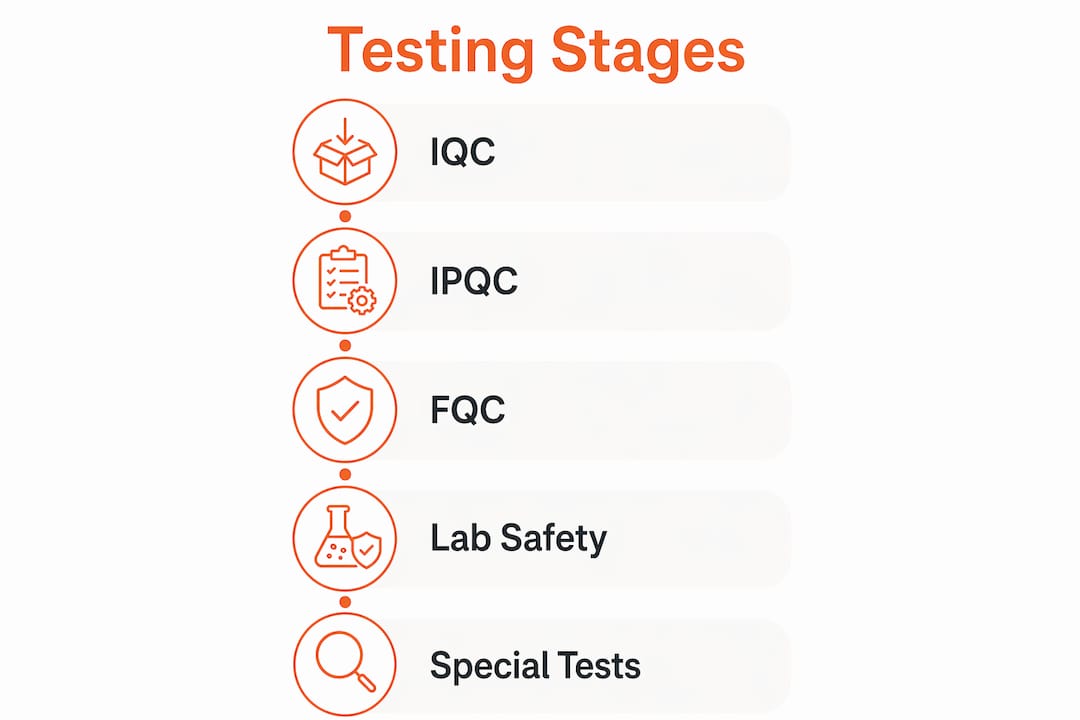
Pet product manufacturing uses a multi-stage quality control system built around three core phases: Incoming Quality Control (IQC), In-Process Quality Control (IPQC), and Final Quality Control (FQC). Each phase catches different categories of defects at the point where fixing them costs the least. Skipping any phase dramatically increases the chance of a recall or a product that fails in your home.
IQC, IPQC, and FQC explained
IQC inspects raw materials before production begins. Inspectors check wood grain, metal alloys, fabric weave, and hardware components against approved specifications. A wooden feeder stand, for example, gets checked for moisture content and surface finish quality before a single joint is cut.
IPQC monitors production while it is happening. Inspectors sample products at set intervals and measure against Acceptable Quality Limits (AQL), a statistical standard that defines the maximum number of defective units allowed in a batch. If a batch fails AQL thresholds, production stops for correction.
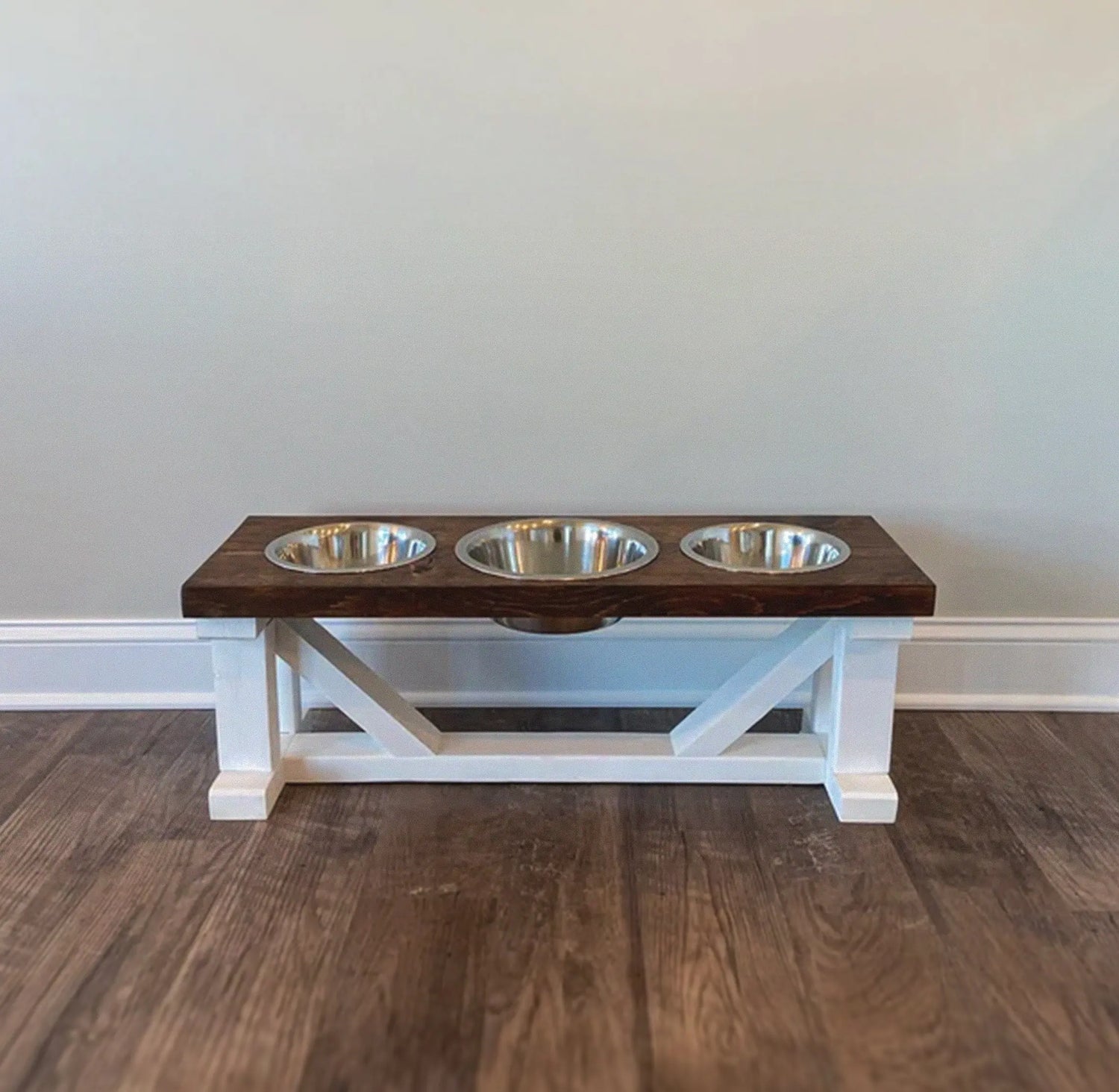
FQC is the final gate before shipment. Finished products are tested for buckle strength, stitching integrity, surface coating adhesion, and dimensional accuracy. A feeding bowl stand, for instance, gets load-tested to confirm the frame holds weight without flexing or cracking.
-
Raw material review confirms chemical composition and physical properties before production.
-
Prototype testing identifies design weaknesses before full production runs begin.
-
In-line inspection catches assembly errors in real time during manufacturing.
-
Final quality inspection verifies the finished product meets all specifications.
Pro Tip: Ask any manufacturer for their AQL level before ordering. AQL 2.5 is the standard for general consumer goods. AQL 1.0 means stricter sampling and fewer acceptable defects per batch.
What do laboratories test for in pet product safety?
Laboratory testing for pet products targets two categories: chemical hazards and physical hazards. Both categories follow standards closely modeled on ASTM F963, the American standard originally developed for children’s toys and now widely applied to pet products.
Chemical safety testing
Lead levels must stay below 90 ppm, and phthalates must measure less than 0.1% by weight under ASTM F963-based benchmarks. These limits exist because pets chew and lick surfaces far more than humans do, making chemical exposure a real risk. Labs use X-ray fluorescence (XRF) scanning for rapid heavy metal screening, then confirm results with inductively coupled plasma (ICP) analysis for precise measurement.

| Test Type | What It Measures | Pass Threshold |
|---|---|---|
| Heavy metals (XRF/ICP) | Lead, cadmium, chromium in coatings | Lead under 90 ppm |
| Phthalate analysis | Plasticizers in soft materials | Under 0.1% by weight |
| Choking hazard assessment | Small detachable parts | No parts under 1.25 inches |
| Mechanical strength | Joint integrity, load capacity | No failure under rated load |
| Surface coating adhesion | Paint or finish durability | No flaking after abrasion test |
Physical and mechanical testing
Physical testing checks whether a product can fail in ways that injure a pet. Choking hazard assessments use standardized cylinders to identify any part small enough to lodge in a pet’s airway. Stitching pull tests measure force required to separate seams. For feeding accessories, safety testing covers strength, material safety, and durability to confirm the product holds up under daily use.
ISO 17025-accredited laboratories conduct both chemical and mechanical tests under controlled, audited conditions. Accreditation means the lab’s methods, equipment, and staff qualifications are independently verified. A test report from a non-accredited lab carries far less weight with retailers and customs authorities.
Pro Tip: When reviewing a test report, check for the lab’s ISO 17025 accreditation number. If it is missing, the report may not satisfy major retailer compliance requirements.
What specialized tests cover travel gear and ingestible products?
Pet products that carry passengers or enter a pet’s body face a higher level of scrutiny than standard accessories. Two categories stand out: crash-tested travel restraints and laboratory-analyzed ingestibles.
Crash testing for pet travel products
Crash testing uses 30 mph sled tests with weighted anthropomorphic dummies representing dogs from 10–75 lbs. The test verifies that the restraint holds the pet in place, that no structural failure occurs, and that the pet would not be ejected or injured by the hardware. Only results from ISO 17025-accredited labs with documented test protocols count as credible crash test certifications.
-
Test dummies are weighted to match specific dog size classes from 10–75 lbs.
-
The sled replicates a 30 mph frontal collision, the most common crash scenario.
-
Pass criteria include no ejection, no hardware penetration, and no structural collapse.
-
Labs document every variable: dummy weight, harness attachment point, and impact force.
-
Products that pass receive a test report with the lab’s accreditation number and test date.
Testing for pet food and supplements
Pet ingestibles go through regulatory-compliant chemical analysis to confirm ingredient safety, label accuracy, and stability. Routine testing takes 2–3 weeks. In-depth health-claim validation, which requires biological assays, takes 4–6 weeks. Labs test for protein content, moisture, fat, fiber, and the presence of contaminants like mycotoxins or heavy metals.
In-vitro testing using canine and feline cell models has replaced live animal trials for health claim validation. This approach delivers faster, reproducible results that regulators prefer. It also removes the ethical concerns associated with animal testing, which matters to a growing number of pet owners when they evaluate brands.
Why does documented safety testing matter for trust and market access?
Documented testing is not just a regulatory checkbox. It is the foundation of a brand’s credibility with retailers, customs authorities, and pet owners.
Retailers like Amazon, Walmart, and Costco require documented chemical and mechanical testing for pet toys and foods, with random audits and delisting for failures. A brand that cannot produce test reports on demand loses shelf space. That consequence is immediate and costly.
-
Customs clearance depends on test documentation proving products meet the importing country’s chemical and safety standards.
-
Retailer audits require reports covering heavy metals, phthalates, choking hazards, and ingredient compliance per FDA and AAFCO guidelines.
-
Consumer confidence grows when brands can answer safety questions with specific lab reports rather than vague assurances.
-
Liability reduction comes from documented evidence that a product met recognized standards at the time of sale.
Compliance requirements also vary by market. A product that passes U.S. standards may still need additional certification under EU REACH regulations or Japan’s voluntary safety frameworks before it can be sold there. Brands that treat testing as a one-time domestic exercise often face expensive surprises when they try to expand internationally.
The pet product market is shifting from voluntary safety practices toward emerging standardized requirements in 2026. Brands that build testing into their process now will be better positioned as regulations tighten. Those that wait will face higher costs and more disruption when compliance becomes mandatory. For pet owners, choosing products from brands with transparent testing records is the clearest signal of genuine quality commitment. You can also look for durability ratings for feeding stations as a practical starting point when evaluating feeding accessories. Understanding why stylish pet gear trends matter also helps you see how tested quality and design are increasingly connected in the market.
Key Takeaways
Rigorous pet product testing requires IQC, IPQC, and FQC stages, ISO 17025-accredited lab verification, and market-specific compliance documentation to protect pets and build lasting brand trust.
| Point | Details |
|---|---|
| Three-stage quality control | IQC, IPQC, and FQC catch defects at every production phase, not just at the end. |
| Chemical safety thresholds | Lead must stay below 90 ppm and phthalates below 0.1% per ASTM F963-based standards. |
| Accredited lab verification | ISO 17025 accreditation confirms a lab’s methods are independently audited and credible. |
| Market-specific compliance | U.S. approval does not guarantee EU REACH or Japanese standard compliance. |
| Documentation drives access | Retailers and customs authorities require test reports; missing documentation means delisting or rejection. |
What I’ve learned about reading safety claims on pet products
Pet owners are getting better at asking safety questions, but the answers they receive are often vague. After years of reviewing pet product testing documentation, the pattern I see most often is brands treating testing as a marketing tool rather than a quality tool.
The phrase “tested for safety” appears on thousands of products. What it rarely tells you is which lab ran the test, what standard was applied, or what the product actually scored. A genuine test report names the accredited lab, lists the specific tests performed, and shows the measured results against the pass threshold. If a brand cannot share that document, the claim is not worth much.
The other mistake I see regularly is treating testing as a final step. Integrating testing early in development identifies material and design problems before they become expensive production failures. Brands that test only finished products often discover issues too late to fix without scrapping an entire run.
My practical advice: ask for the test report, not just the certificate. Look for the ISO 17025 accreditation number, the test date, and the specific results. If a brand is proud of its testing, that document will be easy to find. If it is not, that tells you something important about how seriously they take quality.
— Kim
Bearwoodessentials: feeding products built with quality in mind
Bearwoodessentials designs and handcrafts elevated pet feeders and feeding accessories with the same attention to material safety and structural integrity that serious testing standards demand.
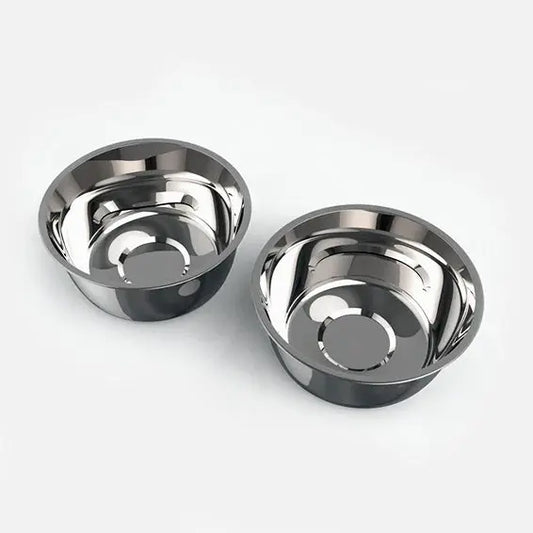
The handmade metal dog bowl feeder combines a durable metal frame with a functional raised design, built for daily use and easy cleaning. The unspillable stainless steel pet bowl uses 18/8 food-grade stainless steel, a material that meets food-contact safety standards and resists corrosion. Every Bearwoodessentials product reflects a commitment to craftsmanship that goes beyond surface appearance. Browse the full collection and choose feeding accessories you can trust.
FAQ
What does ASTM F963 mean for pet products?
ASTM F963 is an American safety standard originally developed for children’s toys. Pet product manufacturers use it as a benchmark for chemical limits like lead under 90 ppm and phthalates below 0.1%, since no equivalent mandatory pet-specific standard currently exists.
What is ISO 17025 accreditation in pet product testing?
ISO 17025 is an international standard that certifies a laboratory’s technical competence and measurement accuracy. Test reports from ISO 17025-accredited labs carry credibility with retailers, customs authorities, and regulators because the lab’s methods are independently verified.
How long does pet product safety testing take?
Routine chemical and mechanical testing typically takes 2–3 weeks. In-depth health-claim validation for pet ingestibles, which uses biological assays, takes 4–6 weeks from sample submission to final report.
How are pet feeding accessories evaluated for safety?
Testing methods for pet supplies like feeding stations cover material chemical composition, surface coating adhesion, load-bearing strength, and joint integrity. Labs check that no harmful chemicals leach from surfaces and that the structure holds up under normal daily use.
What should I look for in a pet product safety certificate?
A credible safety certificate includes the ISO 17025 accreditation number of the testing lab, the specific tests performed, the measured results, and the pass thresholds. Vague claims like “crash tested” or “safety approved” without this documentation lack substance.