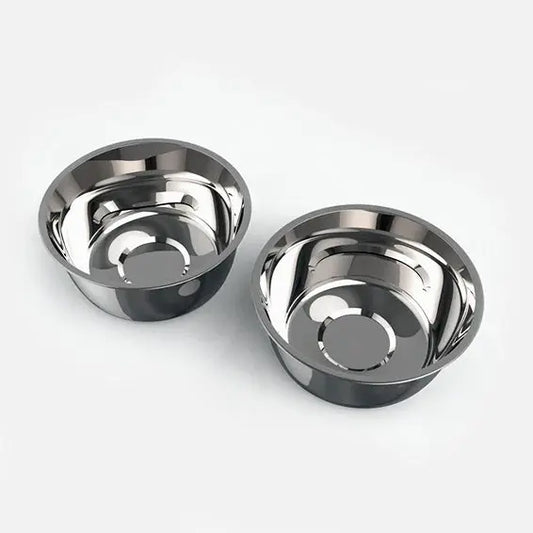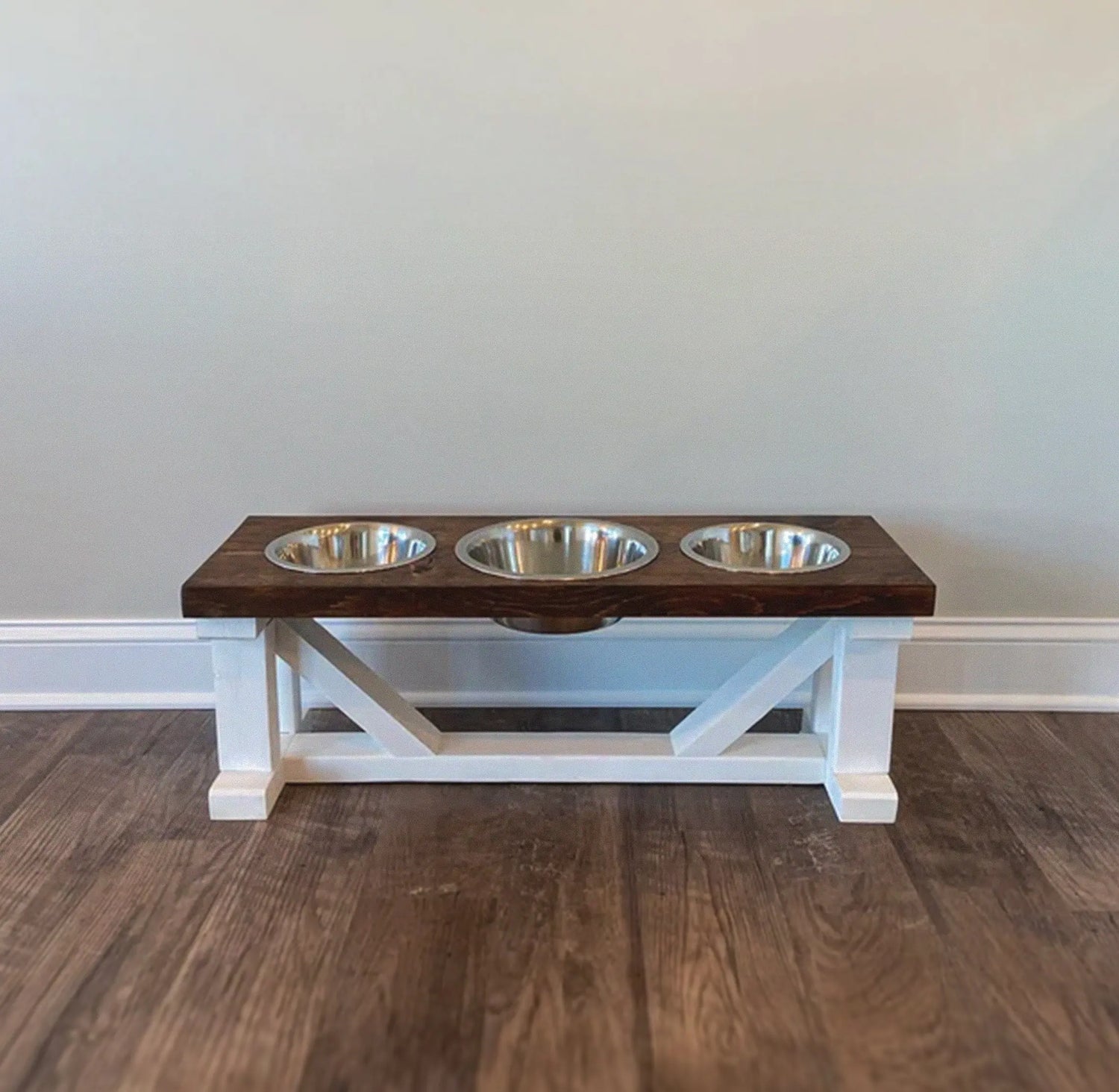


Elevated dog bowls are raised feeding stations designed to bring food and water up to a more natural height for your dog. Transitioning your puppy to an elevated bowl can improve feeding posture and reduce neck strain, but the process requires care, the right measurements, and an honest look at your puppy’s breed and health. Veterinary research has shifted the conversation on raised feeders significantly in recent years. What was once promoted as a universal health upgrade is now recommended mainly for specific medical conditions or with direct vet guidance. This guide gives you the full picture so you can make the right call for your pup.
Why and when to consider an elevated bowl for your puppy
Raised feeders are not a one-size-fits-all solution. The benefits of elevated dog bowls are real for certain dogs, but the risks are equally real for others. Understanding the difference protects your puppy from day one.
When elevated bowls genuinely help
For puppies with specific medical conditions, a raised feeder can be life-changing. Veterinarians now recommend elevation primarily for dogs with megaesophagus, cervical arthritis, or those recovering from spinal surgery. These conditions make floor-level eating genuinely difficult or painful. Elevation reduces the effort required to swallow and keeps the neck in a more comfortable position during meals.
Beyond medical cases, some puppy owners find that raised bowls reduce mess. A bowl at the right height is harder for a puppy to paw at, tip over, or splash water out of. That practical benefit is real, even if it is not a health argument.
The bloat risk you need to know about
The most important fact for new puppy owners is this: large and giant breeds using elevated feeders face roughly a 110% increased risk of gastric dilatation volvulus, commonly called bloat. Up to 52% of GDV cases in giant breeds have been linked to raised feeding bowls. That statistic reversed the veterinary community’s earlier enthusiasm for elevated feeders as a bloat preventive. The current guidance is clear. For deep-chested large breeds such as Great Danes, Irish Setters, and Weimaraners, floor-level slow-feeder bowls combined with multiple small meals per day remain the safest feeding method.
For small and medium breeds without medical conditions, the risk profile looks different. Elevated bowls are generally considered lower risk for these dogs, though a vet conversation is still the right starting point.
-
Good candidates: Small and medium breeds, dogs with megaesophagus, dogs with arthritis or post-surgical recovery needs
-
Use caution: Large and giant deep-chested breeds, fast eaters, puppies without a confirmed medical need
-
Always consult your vet before switching any puppy to a raised feeder, especially if your breed appears on high-risk lists
How to measure the proper height for your puppy’s elevated bowl
Getting the puppy feeding bowl height right is the single most important step in this process. An overly high bowl forces your puppy to crane its neck upward, which strains the shoulders and can affect skeletal development during growth phases. Too low, and you have gained nothing over a floor bowl.

The standard measurement method
The industry-standard method is straightforward:
-
Stand your puppy on a flat surface and measure from the floor to the top of the withers. The withers are the highest point of the shoulder blades, right where the neck meets the back.
-
Subtract 4–6 inches from that measurement. The result is your target bowl height.
-
For small dogs with withers around 8–12 inches, the recommended bowl height is 4–6 inches. For extra-large dogs with withers of 29 inches or more, the target range is 12–16 inches.
This method comes from the floor-to-withers standard used by veterinary nutritionists and pet ergonomics specialists. It keeps the neck in a neutral position during eating, which reduces strain on the cervical spine and front legs.
Why adjustable feeders matter for puppies
Puppies grow fast. A height that fits your 10-week-old Labrador will be too low by week 16. Adjustable-height feeders are the practical answer because they allow 1-inch incremental adjustments as your puppy grows through each phase. Fixed-height stands require you to buy a new feeder every few months, which adds cost and disruption to your puppy’s routine.
Pro Tip: Start your puppy at a height slightly lower than the calculated target. This gives their neck and shoulders time to adjust without strain. Move up by one inch every few weeks as they grow and show comfort at the current height.
Step-by-step guide to transitioning your puppy to an elevated bowl
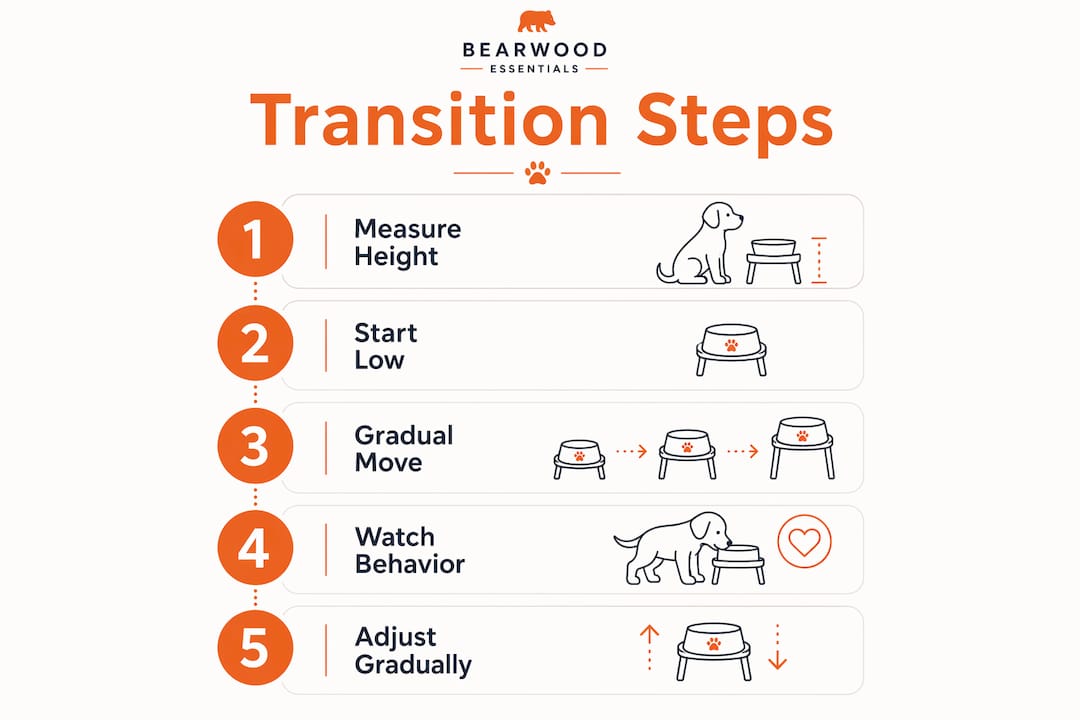
A gradual approach is the most effective transition puppy feeding method. Rushing the switch can cause confusion, refusal to eat, or unnecessary stress. Most puppies adapt within a few days when the process is paced correctly.
The transition process
-
Place the elevated bowl beside the floor bowl. Do not remove the old bowl yet. Let your puppy sniff and investigate the new feeder without pressure. Feed one meal from the elevated bowl and one from the floor bowl on the first day.
-
Encourage approach with hand feeding. Hold a few pieces of kibble near the elevated bowl so your puppy associates the new height with a positive experience. Do this for two to three meals before expecting independent eating.
-
Shift the ratio gradually. By day three or four, feed two meals from the elevated bowl and one from the floor bowl. Watch your puppy’s body language carefully during each meal.
-
Remove the floor bowl once your puppy eats comfortably. Most puppies reach this point within five to seven days. Do not rush this step if your puppy still shows hesitation.
-
Recheck the height every four weeks. As your puppy grows, remeasure the withers and adjust the feeder height accordingly.
What to watch for during the transition
| Behavior | What it means | What to do |
|---|---|---|
| Eating confidently from new bowl | Transition is working | Continue gradual shift |
| Sniffing but not eating | Curiosity, mild hesitation | Use hand feeding to encourage |
| Walking away from bowl | Discomfort or height issue | Lower the bowl by one inch |
| Pawing at the stand | Instability concern | Check that the stand is level and secure |
| Gulping or coughing | Bowl may be too high | Lower height and consult your vet |
Pro Tip: Feed your puppy at the same time each day during the transition. Consistent meal timing reduces anxiety around the new setup and helps your puppy build a positive routine faster.
Proper raised feeder safety practices also include placing the feeder on a non-slip mat and checking the stand for wobble before every meal. A tipping feeder during a meal can startle a young puppy and set the transition back significantly.
Common challenges and troubleshooting when switching to an elevated bowl
Even with a careful plan, some puppies push back. Knowing what to look for helps you respond quickly and keep the transition on track.
-
Puppy refuses to eat from the elevated bowl. Lower the bowl by one inch and try hand feeding near the bowl for the next two meals. Refusal is almost always a height or comfort issue, not stubbornness.
-
Puppy eats but seems uncomfortable. Watch for neck stretching upward, front leg splaying, or a hunched back. Any of these signals mean the bowl is too high. Drop the height and recheck your withers measurement.
-
Bowl tips or slides during meals. Heavy ceramic bowls reduce tipping and spilling compared to lightweight stainless steel, especially for playful puppies. A heavier bowl inside a stable stand solves most stability problems.
-
Puppy eats too fast. A raised feeder does not slow eating on its own. Add a slow-feeder insert or use a puzzle bowl inside the elevated stand to reduce gulping.
-
Digestive upset after switching. Bloating, gas, or vomiting after the switch warrants an immediate vet call. Do not assume it is a normal adjustment phase.
If your puppy shows any signs of respiratory distress, a distended abdomen, or repeated unproductive retching after eating from a raised bowl, contact your veterinarian immediately. These are potential signs of GDV, which is a life-threatening emergency.
Breed matters here more than most owners realize. If you have a large, deep-chested breed, review the bloat risk research with your vet before continuing with an elevated feeder. The current veterinary consensus does not support raised bowls as a default for these dogs. For guidance on best practices for elevated feeding updated for 2026, your vet’s input combined with current research gives you the clearest picture.
Key takeaways
Transitioning a puppy to an elevated bowl works best when you match the bowl height to your puppy’s withers measurement, introduce the change gradually over five to seven days, and confirm the setup is appropriate for your puppy’s breed and health status.
| Point | Details |
|---|---|
| Measure before you buy | Use the floor-to-withers method and subtract 4–6 inches to find the correct bowl height. |
| Choose adjustable feeders | Puppies grow fast; a feeder with 1-inch increments prevents repeated purchases and keeps height correct. |
| Transition over five to seven days | Place the elevated bowl beside the old bowl first, then shift meals gradually until your puppy eats confidently. |
| Know the breed risk | Large, deep-chested breeds face a significantly higher bloat risk with raised feeders; consult your vet first. |
| Watch for discomfort signals | Neck craning, front leg splaying, or food refusal all indicate the bowl height needs adjustment. |
What I’ve learned from watching puppies adapt to raised feeders
The part most guides skip is how individual the timeline really is. I have seen confident puppies eat from a new elevated bowl on the very first try. I have also seen cautious pups take two full weeks to stop glancing at the spot where their old floor bowl used to sit. Neither response is wrong. The mistake owners make is treating the five-to-seven-day average as a deadline rather than a guideline.
The height question also trips people up more than expected. Owners often set the bowl too high because they are thinking about adult size, not current size. An overly high bowl forces a puppy to stretch upward, which puts real stress on developing shoulder joints and the cervical spine. I always recommend starting one inch below the calculated target and watching how the puppy holds its neck during the first few meals. That single observation tells you more than any formula.
My honest opinion on adjustable feeders: they are not optional for puppies. A fixed-height stand is a reasonable choice for an adult dog whose growth has stopped. For a puppy in the first year of life, a fixed stand means you are either constantly behind on height or you are buying a new feeder every few months. The 1-inch increment adjustment that adjustable feeders offer is genuinely useful, not a marketing feature.
The vet conversation matters most for large breeds. If you have a Great Dane or a Weimaraner puppy, please do not skip that step. The bloat research is not ambiguous, and the stakes are too high to rely on general advice from the internet, including this article.
— Kim
Feeders built to grow with your puppy
Finding a feeder that actually adjusts as your puppy grows is harder than it sounds. Most pet store options are fixed-height stands that look good but become the wrong size within months.
Bearwoodessentials handcrafts elevated feeders designed with growing dogs in mind. The Small Single Feeder P901 is built for small and growing puppies, with a stable base and a design that holds the bowl securely during even the most enthusiastic meals. For larger breeds, the Large Single Feeder P899 offers the same quality construction at a height range suited to bigger dogs. Every feeder ships free within the U.S. on qualifying orders. Browse the full collection at Bearwoodessentials and find the right fit for your puppy today.
FAQ
Are elevated bowls good for all puppies?
Elevated bowls are not recommended as a default for all puppies. They work well for small and medium breeds and for dogs with specific medical conditions, but large, deep-chested breeds face a significantly higher bloat risk with raised feeders.
How do I know if the bowl height is correct?
Measure from the floor to your puppy’s withers and subtract 4–6 inches. Your puppy should be able to eat with its neck in a neutral position, not stretched upward or bent sharply downward.
How long does the transition to a raised feeder take?
Most puppies adjust within a few days when introduced gradually. Placing the elevated bowl beside the old floor bowl and shifting meals slowly over five to seven days produces the smoothest results.
What bowl material works best for puppies in a raised stand?
Heavy ceramic bowls reduce tipping and spilling better than lightweight stainless steel, which matters for active, playful puppies. Stability during meals keeps the transition positive and prevents startling.
When should I call a vet during the transition?
Contact your vet immediately if your puppy shows a distended abdomen, repeated unproductive retching, or signs of respiratory distress after eating from a raised bowl. These symptoms can indicate GDV, which requires emergency care.