
Elevated dog feeders have moved from a niche pet accessory to a mainstream choice for owners who want more comfortable mealtimes and better digestion for their dogs. But following the best practices for elevated dog feeding is not as simple as buying any stand and calling it done. The wrong height, the wrong bowl, or skipping a vet conversation first can create new problems instead of solving old ones. This guide covers 10 specific, vet-informed practices to help you make the right choices for your dog’s size, breed, and health needs.
Table of Contents
- Key takeaways
- 1. Start with the right elevated feeder height
- 2. Choose the best dog feeding height with adjustable stands
- 3. Match bowl size and shape to your dog’s anatomy
- 4. Understand health benefits and risks before committing
- 5. Build a feeding routine that supports your feeder choice
- 6. Prioritize hygiene at every feeding station
- 7. Compare feeder types before you buy
- 8. Know when elevated feeding might not be the right fit
- My take on elevated feeding after years of watching it work (and backfire)
- Find a feeder that fits your dog at Bearwoodessentials
- FAQ
Key takeaways
| Point | Details |
|---|---|
| Height matters most | Position bowls at shoulder level; slightly too low is always safer than too high. |
| Bowl fit affects eating behavior | Match bowl size and depth to your dog’s muzzle shape to prevent gulping and mess. |
| Bloat risk is real | Large, deep-chested breeds face higher bloat risk with elevated feeders; vet consultation is non-negotiable. |
| Hygiene requires a plan | Clean bowls after every wet food meal and daily for dry kibble to prevent illness. |
| Routine amplifies results | Structured meals with two or more feedings daily work together with elevation to support digestion. |
1. Start with the right elevated feeder height
Getting the height right is the single most impactful decision in any elevated dog feeding guide. The general rule is to position the bowl rim at roughly your dog’s shoulder or lower chest level. This lets your dog eat with a natural, relaxed neck angle rather than straining up or hunching down. Elevated feeders at shoulder level reduce the awkward bending that can cause joint strain over time, especially for larger breeds.
Here is a practical sizing approach by dog category:
- Small breeds (under 20 lbs): 2 to 6 inches of elevation
- Medium breeds (20 to 50 lbs): 7 to 12 inches
- Large breeds (50 to 90 lbs): 12 to 18 inches
- Giant breeds (90 lbs and up): 18 to 24 inches
These are starting points, not fixed rules. Every dog carries weight differently and has a unique build. If you measure and your dog still seems to stretch upward or crane its neck, adjust downward. The correct bowl height for large breeds deserves particular attention since the margin for error is smaller.
Pro Tip: Watch your dog eat from the current bowl for 30 seconds. If the nose points sharply up or the front legs spread wide for balance, the height is off. Natural, neutral neck posture is the goal.
2. Choose the best dog feeding height with adjustable stands
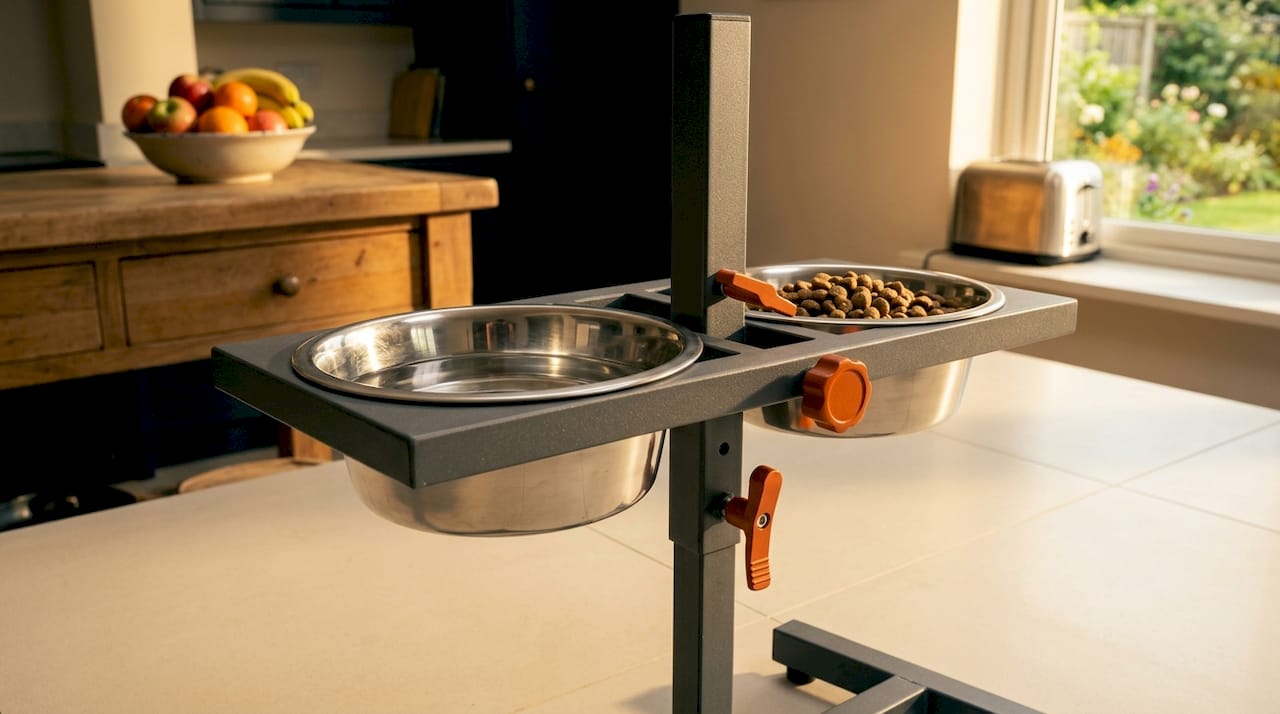
Static feeders work well when your dog has reached full adult size and you have already confirmed the correct height. But for puppies, dogs recovering from surgery, or households with more than one dog, adjustable dog feeding stands are a smarter choice from the start.
A growing puppy can go from needing 4 inches of elevation to 14 inches within a year. Buying a fixed-height stand too early means buying again in six months. An adjustable stand grows with your dog and avoids repeated expense. Multi-dog households benefit even more since two dogs of different heights can share one station without compromise.
Look for adjustable stands with locking mechanisms that hold firmly under eating pressure. Wobble during mealtime triggers anxiety in some dogs and can cause them to eat faster, which defeats the purpose of elevation entirely.
3. Match bowl size and shape to your dog’s anatomy
The best dog feeding height means nothing if the bowl itself is the wrong fit. Bowl opening and depth should match your dog’s muzzle shape for comfortable and efficient eating. A bowl that forces your dog to tilt its head awkwardly leads to slower eating, spilled food, and swallowing more air.
Use these anatomy-based guidelines when selecting a bowl:
- Narrow muzzles (Greyhounds, Collies): Choose a deeper, narrower bowl so food stays centered and accessible
- Broad faces (Bulldogs, Pugs): Use a wide, shallow bowl that lets the whole muzzle reach food without restriction
- Long-eared breeds (Basset Hounds, Spaniels): Consider a tapered bowl that keeps ears out of the food
- Fast eaters of any breed: A slow feeder bowl insert can reduce gulping regardless of elevation
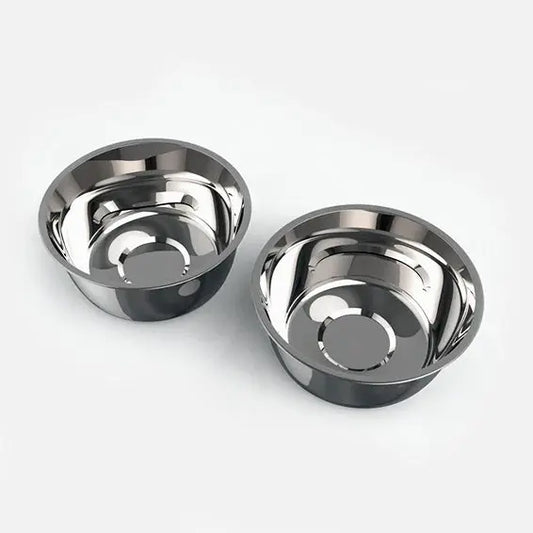
Material also plays a role. Stainless steel is the preferred choice for hygiene and durability. It resists scratching, does not harbor bacteria the way plastic does, and holds up well to daily washing. You can explore how bowl depth affects eating in more detail to dial in the right fit for your specific dog.
Pro Tip: If your dog consistently paws at its bowl or moves it around mid-meal, the bowl is likely too small or too slippery for comfortable eating. A non-slip base or a heavier stainless steel bowl usually solves this.
4. Understand health benefits and risks before committing
Elevated feeding is not automatically good for every dog. This is where many owners get tripped up. Knowing the upside and the downside with equal clarity is what separates informed decisions from guesswork.
Potential benefits:
- Reduced neck, shoulder, and joint strain, particularly for senior or arthritic dogs
- Easier swallowing for dogs with megaesophagus, a condition where food travels back up due to an enlarged esophagus
- Improved posture during meals for dogs with mobility issues
- Less bending for owners during bowl placement and pickup
Risks to take seriously:
- Elevated bowls increase bloat risk in certain breeds, according to the American Kennel Club
- A Purdue University study linked elevated feeding to higher rates of gastric dilatation-volvulus in large, deep-chested breeds
- Great Danes, German Shepherds, Saint Bernards, and Weimaraners are among the breeds at highest risk
Talk to your vet before making the switch if your dog is a large or deep-chested breed. Elevated feeding is a conditional tool, not a universal upgrade. For dogs with mobility issues or confirmed swallowing difficulties, the benefits often outweigh the risks. For healthy large-breed dogs with no specific need for elevation, the evidence does not clearly support it.
5. Build a feeding routine that supports your feeder choice
Choosing the right feeder gets you part of the way there. The feeding schedule you pair with it matters just as much. Feeding two or more smaller meals daily improves digestion and reduces the amount of air your dog swallows during a meal, which is especially relevant when using an elevated feeder.
Here is a structured daily feeding approach:
- Set consistent mealtimes. Feed at the same times each day. Dogs regulate their digestion partly through routine, and unpredictable schedules lead to anxiety-driven fast eating.
- Divide daily portions into two meals minimum. A dog that eats one large meal gulps air and food together. Two smaller meals slow the pace naturally.
- Remove the bowl after 15 to 20 minutes. Avoid free feeding or leaving food out all day. This keeps eating intentional and prevents overeating.
- Give water separately and consistently. Refill the water bowl at least once daily and place it at a height your dog can access without straining.
Pro Tip: If your dog finishes its meal in under 60 seconds, speed is the real problem. Add a slow feeder bowl insert or a meal-dispensing puzzle before adjusting height or switching feeders.
6. Prioritize hygiene at every feeding station
Elevation does not change the basic hygiene rules. If anything, it adds one more surface to keep clean. Washing bowls after each wet or raw food meal and daily for dry kibble is the standard, and it prevents bacterial buildup that can cause illness and affects how food smells and tastes to your dog.
For elevated feeding stations, you also need to manage the stand itself. Drips from wet food and water splash settle into wood grain or metal crevices if you skip regular wiping. A sealed wooden stand resists moisture better than unsealed wood, which is worth prioritizing when you buy or build.
If you feed wet or raw diets, keeping a second set of stainless steel bowls on hand makes the rotation easier. One set is in use while the other is being washed. This is especially practical for dogs eating from elevated stands where bowls may be set into fitted holders that need both the bowl and the stand wiped down.
7. Compare feeder types before you buy
Not all elevated feeders are built the same way, and the type you choose has a direct impact on safety, convenience, and how well it fits your home.
| Feeder Type | Best For | Key Consideration |
|---|---|---|
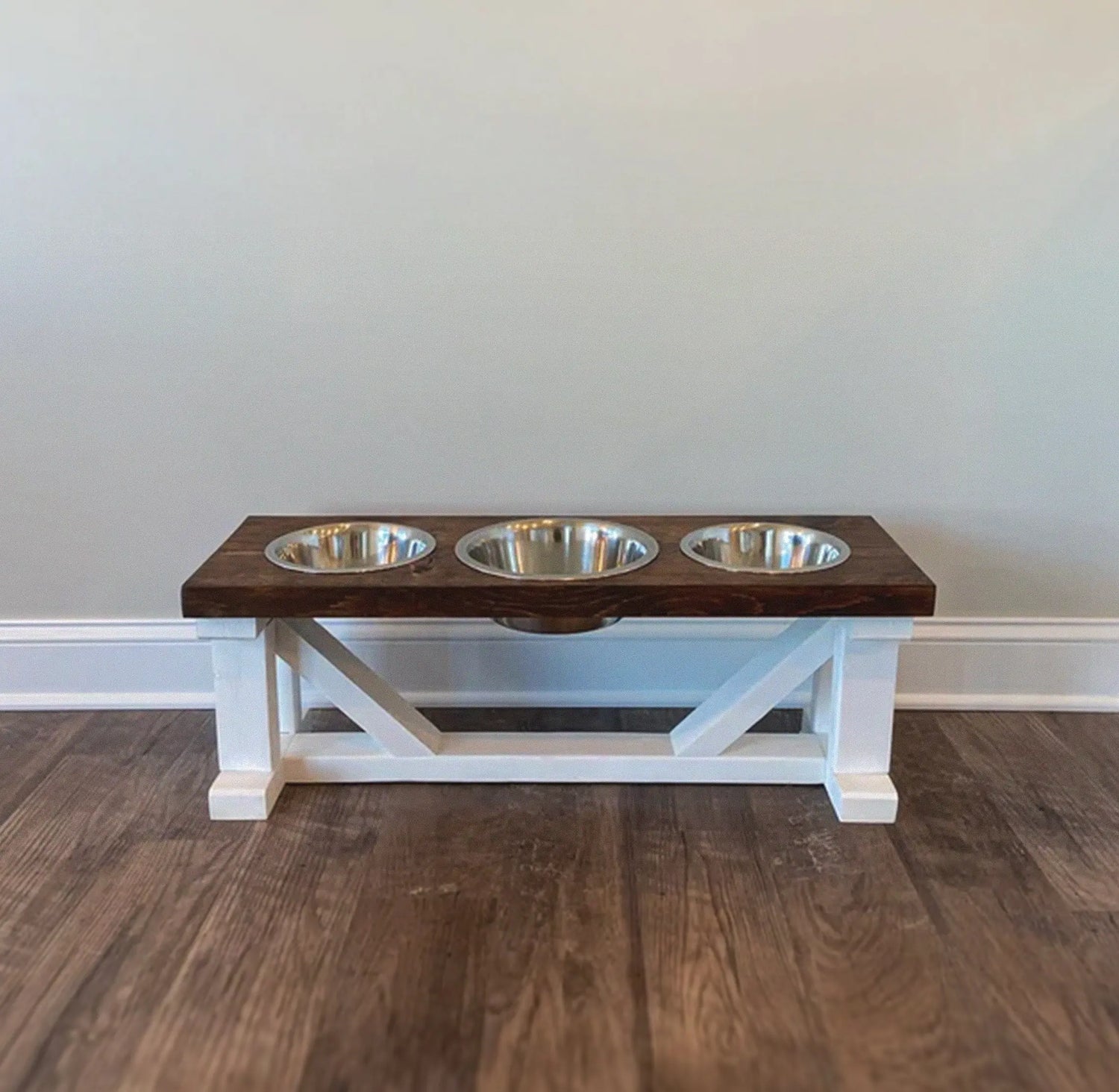
| Fixed-height wooden stand | Adult dogs at a known size | Durable and stylish; no height adjustment |
| Adjustable metal stand | Growing dogs or multi-dog homes | Verify locking mechanism is sturdy |
| Tilted bowl design | Dogs prone to gas or regurgitation | Improves swallowing angle; not universal |
| Slow feeder insert version | Fast eaters of any size | Reduces gulping but needs extra cleaning |
When evaluating your options, focus on these features:
- Non-slip base: A stand that slides across the floor during mealtime is a safety hazard and stress trigger
- Bowl compatibility: Check that replacement bowls are easy to find if the originals crack or stain
- Ease of cleaning: Stands with removable bowls clean faster than those with fixed inserts
- Stability at full meal weight: Filled water bowls are heavy; test that the stand does not tip
DIY elevated feeders offer real benefits in terms of customization and decor matching. But they require careful attention to height accuracy and structural stability, particularly for large dogs whose eating pressure can shift a poorly braced frame.
8. Know when elevated feeding might not be the right fit
The elevated feeding station tips you follow should always begin with an honest assessment of your dog’s health. Some dogs genuinely benefit from raised bowls. Others do not need them, and for a specific group, elevated feeding carries more risk than reward.
Use this decision sequence before you buy:
- Talk to your vet. Share your dog’s breed, weight, age, and any current health concerns. Ask specifically about bloat risk given your dog’s breed profile.
- Look for signs of need. Dogs with joint pain, neck stiffness, a confirmed diagnosis of megaesophagus, or visible discomfort bending to eat are good candidates. Read through 9 signs your dog needs a raised feeder for a fuller picture.
- Introduce gradually. Place the elevated feeder next to the floor bowl and let your dog investigate. Do not force the switch. Most dogs adapt within a few meals.
- Monitor behavior for the first two weeks. Watch for hesitation, slower eating, or any signs of physical discomfort like neck stretching or pawing at the stand.
- Adjust height or bowl size if anything seems off. The first setup is rarely the final answer.
If your dog is a healthy young adult with no mobility concerns and belongs to a high-bloat-risk breed, a floor-level bowl is likely the safer choice. Elevated feeding should solve a real problem, not create one.
My take on elevated feeding after years of watching it work (and backfire)
I have watched elevated feeders make a genuine difference for older dogs with arthritis and for dogs managing megaesophagus. The relief visible in a senior dog that no longer has to fold itself in half to reach a bowl is hard to argue with. That experience makes me a believer in elevated feeding as a targeted tool.
But I have also seen owners buy the tallest stand they could find because it seemed more premium, only to create a dog that strains upward at every meal. The “too low rather than too high” principle from the Daily Paws feeding guide is one I wish more people knew before they bought. Height is not a flex. It is a measurement.
The bloat risk conversation is the one most owners skip because it feels abstract until it is not. If you have a Great Dane or a German Shepherd and you are considering elevation, that vet conversation is not optional. It takes five minutes and it matters enormously.
My biggest lesson: feeder type is not the whole picture. The dog nutrition and feeding routine you pair with any feeder determines most of the outcome. Structured meals, correct bowl sizing, consistent cleaning, and watching how your dog actually eats tell you more than any product description ever will.
— Kim
Find a feeder that fits your dog at Bearwoodessentials
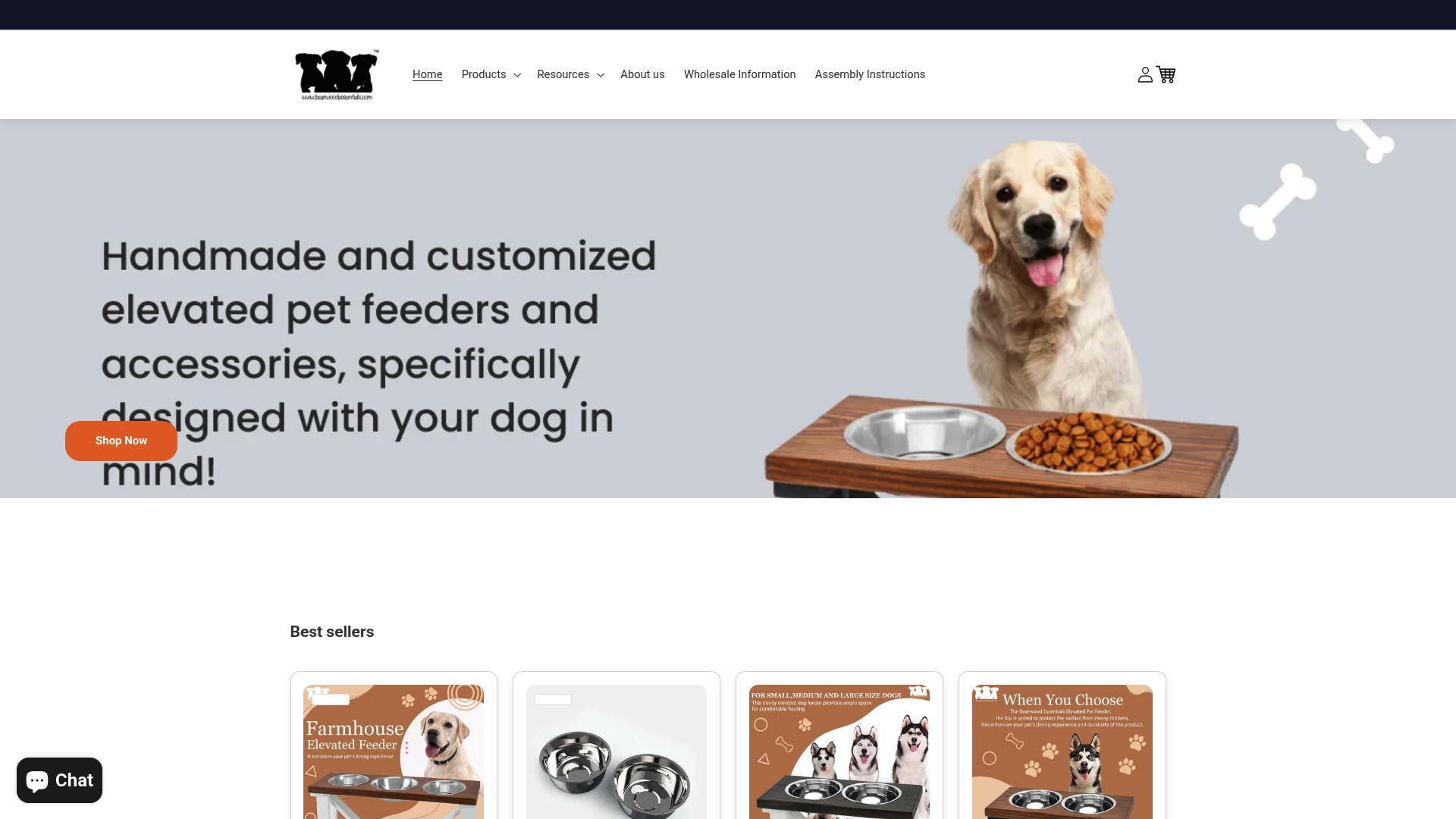
Bearwoodessentials builds handcrafted elevated feeders designed around the exact principles covered in this guide. From stable wooden two-bowl stands to adjustable metal raised feeders, every product is made with real attention to height, bowl fit, and daily usability. The wooden two-bowl elevated feeder is a favorite for medium to large breeds, with a sealed finish that makes cleanup fast and a solid base that will not shift during meals.
If you prefer metal construction with a cleaner modern look, the metal elevated bowl stand offers adjustable height settings and larger bowl capacity. Both come with stainless steel bowls that meet the hygiene standards recommended by the AKC. You can also pick up replacement stainless steel bowls separately if you want to keep a second set on hand for the feeding rotation.
Browse the full range at Bearwoodessentials and find the feeder that fits your dog’s size, your home’s style, and the feeding practices that actually work.
FAQ
What is the ideal height for elevated dog bowls?
The ideal height positions the bowl rim at your dog’s shoulder or lower chest level. Shoulder-level elevation reduces neck strain and supports a natural eating posture without forcing the dog to stretch upward.
Are elevated feeders safe for large breeds?
Not always without a vet check first. Large, deep-chested breeds face a higher risk of gastric dilatation-volvulus with elevated bowls, as the AKC cautions. Your vet can help determine whether the benefits outweigh the risks for your specific dog.
How often should I clean my dog’s elevated feeder bowls?
Wash bowls after every wet or raw food meal and at minimum once daily for dry kibble diets. The AKC recommends daily water bowl cleaning and refilling as well. Clean the stand surface weekly or whenever you notice drips or residue.
Should I use an adjustable feeder for my puppy?
Yes. Puppies grow quickly, and adjustable elevated feeders accommodate changing height needs without requiring multiple stand replacements. They also work well in households with more than one dog of different sizes.
What bowl material works best for elevated feeders?
Stainless steel is the top choice for hygiene and longevity. It does not scratch as easily as plastic, resists bacteria, and holds up well to repeated washing. The AKC recommends stainless steel for its cleanliness and durability compared to other materials.