
If you’ve been wondering about elevated feeders, you’re not alone. Many dog owners assume raised bowls are a straightforward upgrade for any pet, but the reality is more nuanced. Understanding why vets recommend elevated feeders requires looking at individual dog health, breed, age, and specific physical conditions. Vets don’t hand out a single blanket recommendation. Instead, they weigh real benefits against documented risks to help you make the best choice for your specific dog. This guide breaks down exactly what that looks like in practice.
Table of Contents
- Key takeaways
- Why vets recommend elevated feeders for certain dogs
- The real risks vets warn about
- How vets decide when to recommend elevated feeders
- Choosing and using elevated feeders safely
- My honest take on the elevated feeder debate
- Find the right elevated feeder for your dog
- FAQ
Key takeaways
| Point | Details |
|---|---|
| Elevated feeders benefit specific dogs | Senior dogs, arthritic dogs, and those with swallowing difficulties gain the most from raised bowls. |
| Bloat risk is a real concern | Large and deep-chested breeds may face higher bloat risk with elevated feeders, requiring vet guidance. |
| Correct height is non-negotiable | Feeder height should align with your dog’s chest or just above to prevent neck strain. |
| Vets treat feeders as comfort tools | Raised bowls are comfort aids for qualifying dogs, not universal preventive health devices. |
| Always consult your vet first | Your vet’s assessment of breed, mobility, and medical history should drive your final decision. |
Why vets recommend elevated feeders for certain dogs
The core reason veterinarians support elevated feeders comes down to posture and physical comfort. When a dog bends all the way to the floor to eat, the neck, spine, and joints absorb the strain of that repeated downward reach. For a healthy, young dog, this is barely noticeable. For a senior dog with arthritis, a dog recovering from spinal surgery, or a large breed with joint sensitivity, it adds up to real discomfort at every meal.
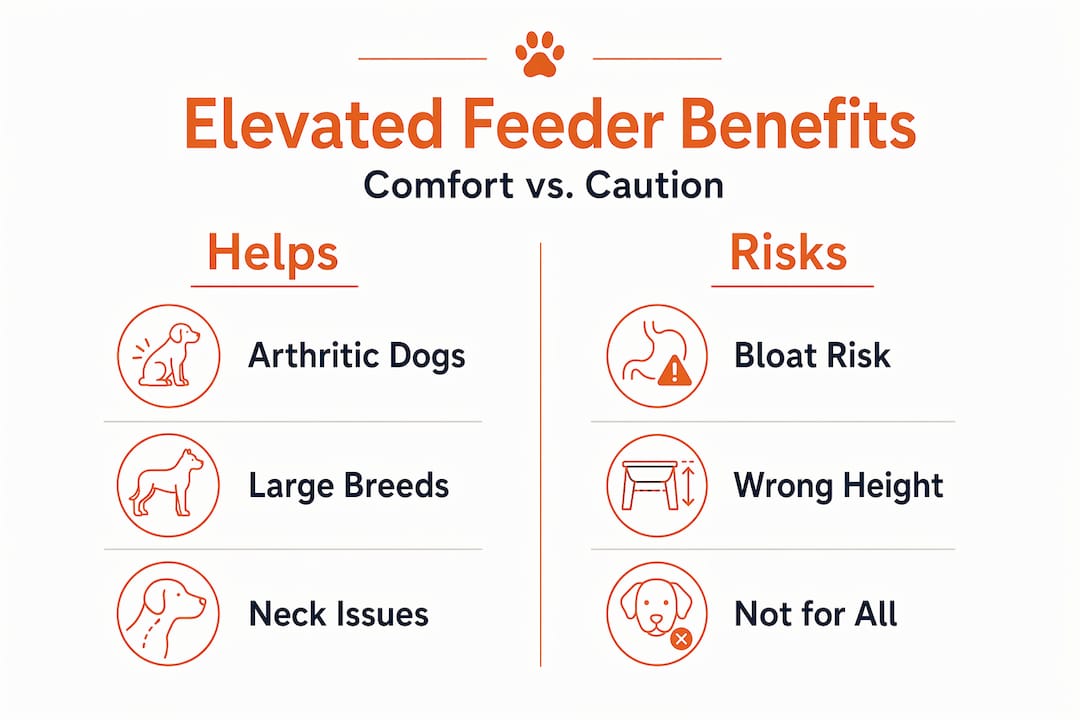
Elevated feeders improve posture by reducing strain on the neck, back, and joints, which is a primary driver behind vet recommendations for older and mobility-impaired dogs. The benefits of elevated feeders in these cases are well-supported. When the bowl sits closer to your dog’s mouth and chest, the swallowing motion becomes more natural and less effortful.
Here are the specific conditions where vets most commonly recommend elevated feeders:
- Senior dogs with arthritis or joint stiffness. Bending low repeatedly through the day aggravates inflamed joints. A raised bowl keeps meals comfortable without requiring painful body positions.
- Dogs with spinal disorders or degenerative disc issues. Keeping the spine more neutral during feeding reduces unnecessary compression.
- Dogs with megaesophagus or swallowing difficulties. For these dogs, an elevated position aids swallowing by using gravity to help food move down more efficiently.
- Dogs recovering from neck or shoulder injuries. Reduced range of motion means floor-level bowls create unnecessary strain during recovery.
- Messy eaters who scatter food and water. A stable raised feeder contains food better, reduces puddles, and cuts down on the floor cleanup after every meal.
Pro Tip: If your dog regularly finishes meals and then stands awkwardly or seems reluctant to eat, ask your vet whether feeding posture could be a contributing factor. What looks like finicky eating is sometimes physical discomfort.
The calmer feeding behavior that often follows an elevated feeder switch is also worth noting. Dogs who no longer have to strain to reach their food tend to eat more steadily, which supports healthier digestion over time.
The real risks vets warn about
The honest picture of vet recommendations for feeding includes a significant caution that many pet product articles skip. Some research links raised bowls to bloat risk in large and deep-chested breeds, and that finding shapes how vets think about elevated feeders.
Gastric dilatation-volvulus (bloat) is a life-threatening condition where the stomach fills with gas and twists on itself. It progresses fast and requires emergency surgery. The breeds most vulnerable include Great Danes, German Shepherds, Standard Poodles, Doberman Pinschers, Weimaraners, and Irish Setters. For these dogs, the elevated dog feeder advantages that help smaller or older dogs may be outweighed by the elevated bloat risk.
“Veterinary advice generally treats raised feeders as comfort devices, not preventive medicines against bloat. For high-risk dogs, floor feeding combined with other risk-reduction strategies is often the safer approach.” — American Kennel Club expert guidance
The risks vets flag most often include:
- Increased bloat risk in large, deep-chested breeds. This is the most serious concern and the one that most commonly changes a vet’s recommendation.
- Over-elevation causing neck strain. Over-elevating feeders forces unnatural neck extension, which defeats the purpose entirely and can cause its own pain.
- Feeder instability encouraging fast, gulping eating. If the bowl shifts while your dog eats, they may speed up to compensate, which increases the risk of gas ingestion.
- Using elevated feeders without an individual assessment. Applying a feeding setup designed for one type of dog to every dog at home can create problems that weren’t there before.
The takeaway from this section isn’t that elevated feeders are dangerous. It’s that they are the right tool for specific dogs, not every dog. Your vet’s job is to figure out which category your dog falls into.
How vets decide when to recommend elevated feeders
Veterinarians don’t make feeding recommendations based on your dog’s size alone. The decision involves a layered assessment that considers multiple factors at once. Vet assessments include breed, medical history, mobility, and risk factors before a recommendation comes through.
Here is how that evaluation typically unfolds in practice:
- Breed and body type assessment. Deep-chested and large breeds are flagged for bloat risk immediately. Smaller breeds and dogs with longer torsos face a different set of considerations.
- Age and mobility evaluation. Senior dogs and those with documented joint, spine, or muscle conditions receive stronger consideration for elevated feeders based on comfort needs.
- Swallowing and digestive history review. Dogs with a history of regurgitation, megaesophagus, or difficulty swallowing are often recommended elevated feeders specifically because of how gravity assists food movement.
- Current eating behavior observation. Vets watch for signs like gulping, frequent regurgitation, post-meal discomfort, or reluctance to eat from floor-level bowls.
- Individual risk-benefit calculation. A senior Great Dane with arthritis presents a conflict between two competing needs. The vet weighs mobility against bloat risk to reach the most appropriate recommendation.
Veterinarians view elevated feeders as individualized comfort solutions, not universal preventive tools. That framing matters because it shapes how you should approach the conversation with your own vet.
Pro Tip: Bring a short video of your dog eating at their current bowl height to your next vet appointment. Watching the actual eating posture gives your vet far better information than a verbal description alone.
The health benefits of elevated feeders are real for the right dog. The goal of the vet evaluation is to confirm whether your dog is actually that dog.
Choosing and using elevated feeders safely
Once your vet gives the go-ahead, how you select and set up the feeder matters just as much as the decision to use one. Getting the details wrong erases most of the benefit.
Finding the right height
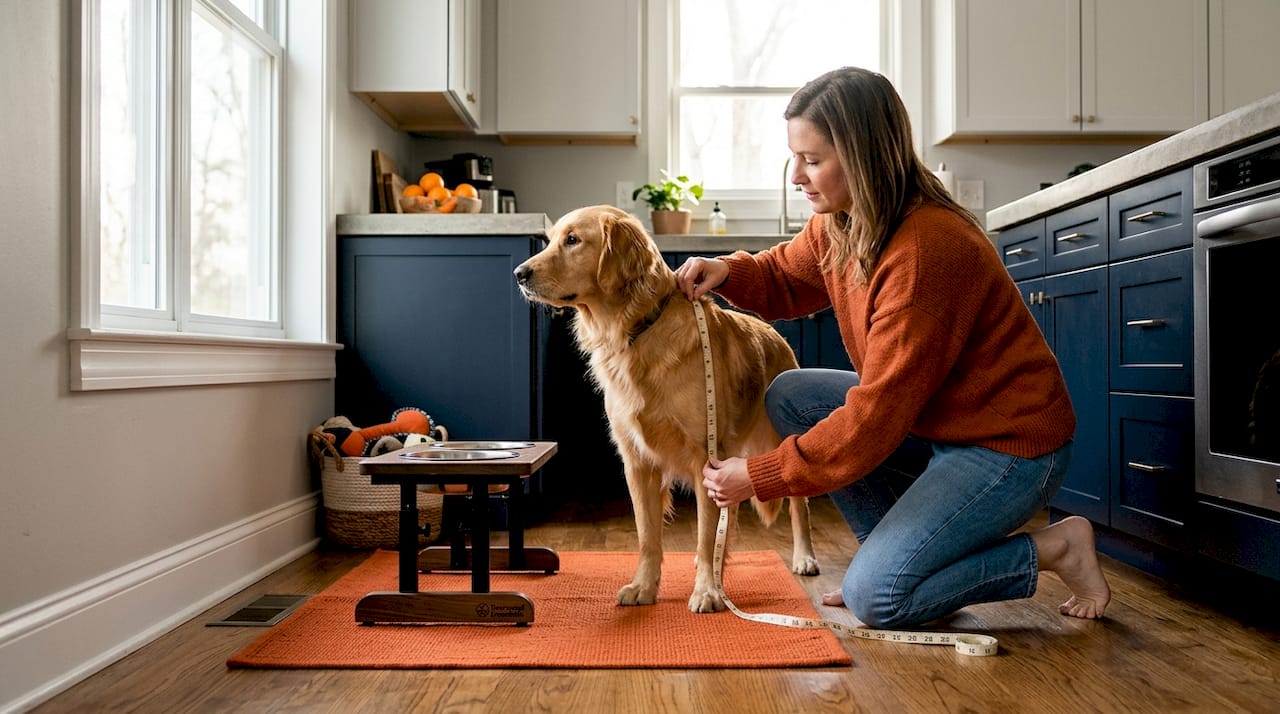
Proper feeding height aligns with the pet’s chest or slightly above for best comfort and safety. To measure this at home, have your dog stand naturally and find the point where their chest meets the front legs. The bowl rim should sit at or just below that point. If the bowl forces your dog to extend their neck upward to eat, it is too high.
Comparing feeder options
| Feature | Why it matters |
|---|---|
| Adjustable height | Allows you to dial in the correct position as your dog ages or their condition changes |
| Non-slip base | Prevents shifting during meals, which reduces gulping and food scattering |
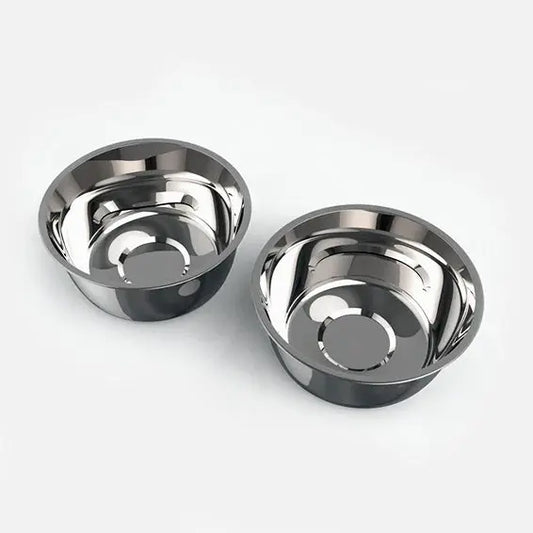
| Stainless steel bowls | Stainless steel aids hygiene and durability; resists bacteria buildup better than plastic |
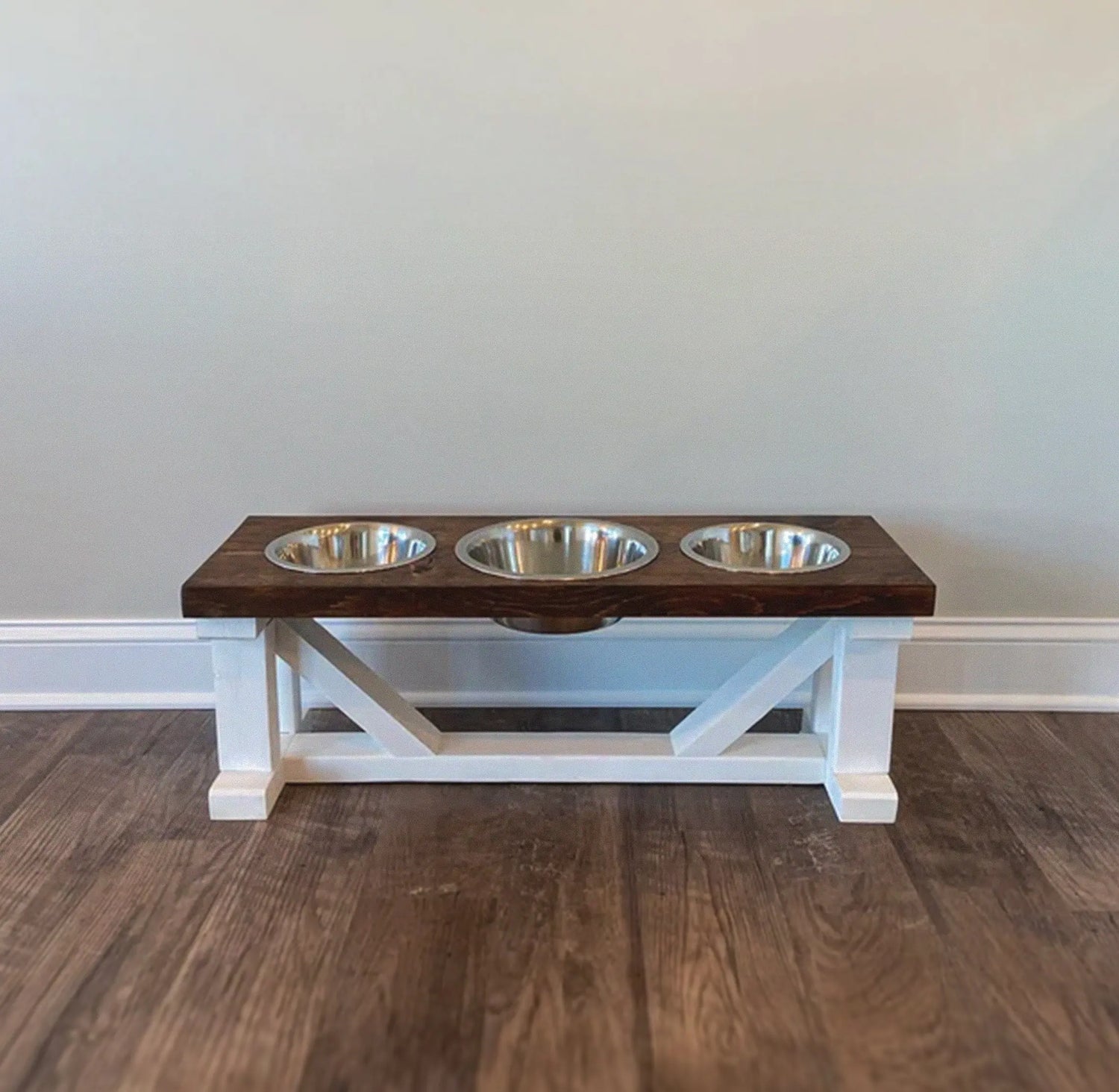
| Stable frame construction | Wood and metal frames add weight and stability that plastic stands often lack |
| Easy bowl removal | Simplified cleaning keeps your feeding setup sanitary between meals |
Beyond the table specs, observe your dog for at least two weeks after switching to a raised feeder. Watch for changes in eating pace, signs of discomfort after meals, or any new digestive symptoms. If something shifts in either direction, report back to your vet.
A few practical habits to build around your elevated feeder setup:
- Clean the bowls daily to prevent bacterial growth and maintain food safety.
- Avoid feeding immediately before or after vigorous exercise, especially for deep-chested breeds.
- If you have multiple dogs, make sure the feeder height is sized for the individual dog using it, not just the largest or smallest.
You can read more about specific signs your dog needs a raised feeder to help you evaluate your own pet before your next vet visit.
My honest take on the elevated feeder debate
I’ve followed the elevated feeder conversation for years, and the thing that frustrates me most is how polarized it gets. One camp insists elevated feeders are a universal health upgrade. The other dismisses them entirely because of the bloat research. Both camps are oversimplifying.
What I’ve learned is that the bloat research, while real and worth taking seriously, primarily applies to large and deep-chested breeds. For a 12-year-old Labrador with hip dysplasia or a Dachshund with a history of disc problems, the comfort and swallowing benefits of an elevated feeder are not theoretical. They show up at every single meal.
The mistake I see most often is over-elevation. An owner reads that raised bowls reduce neck strain, assumes higher must be better, and sets the bowl at shoulder height. Now the dog is hyperextending its neck upward instead of bending downward. The problem just moved. Getting the height right is the whole game, and most owners don’t measure carefully enough.
My bigger concern is owners who skip the vet conversation because they assume a feeder is just an accessory. It is an accessory, but it’s also a posture device that your dog uses three times a day, every day, for years. That deserves at least one honest conversation with someone who has examined your dog and knows their specific risks. Comfort improvements matter, but they need to be built on an accurate individual assessment. If your vet recommends a raised feeding approach for seniors, take that recommendation seriously and implement it carefully. The details are where the outcome lives.
— Kim
Find the right elevated feeder for your dog
If your vet has given you the green light for an elevated feeder, the next step is finding one built to last and sized correctly for your dog.

Bearwoodessentials specializes in handcrafted elevated feeders designed with both function and durability in mind. The wood and metal elevated feeder combines a stable frame with a clean design that holds firmly during every meal, no shifting or tipping. For owners who want to maintain hygiene without replacing the entire feeder, the pet feeder replacement bowls make it easy to keep your setup fresh. Bearwoodessentials also carries options sized for large breeds with the ergonomic clearance larger dogs need. Browse the full collection at Bearwoodessentials and bring your vet’s recommendation to your search so you find the right fit the first time.
FAQ
Why do vets recommend elevated feeders for senior dogs?
Senior dogs with arthritis, joint stiffness, or spinal issues benefit from elevated feeders because the raised bowl reduces the downward reach required at mealtimes. Elevated feeders aid swallowing and comfort for dogs with mobility challenges, making daily feeding less physically taxing.
Can elevated feeders cause bloat in dogs?
Research indicates that large and deep-chested breeds may face a higher risk of bloat when using raised bowls. In high-risk bloat cases, vets typically recommend floor feeding combined with other risk-reduction strategies rather than elevated feeders.
What height should an elevated dog feeder be?
The correct height aligns the bowl rim with your dog’s chest or just slightly below it when they are standing naturally. A bowl set too high forces the neck into an unnatural upward extension, which causes its own strain.
Are elevated feeders good for all dogs?
No. Veterinarians recommend elevated feeders primarily for dogs with specific health conditions such as arthritis, swallowing disorders, or mobility issues. Whether a raised feeder is appropriate for your dog depends on their breed, age, and individual health profile.
What material is best for an elevated feeder bowl?
Stainless steel is the most practical choice for the bowl itself because it resists bacteria buildup, holds up to daily cleaning, and doesn’t degrade over time the way plastic does. The frame can be wood or metal, as long as it is stable and non-slip during use.