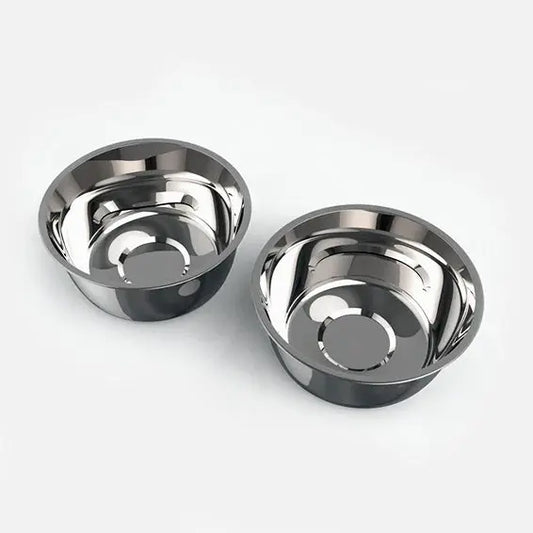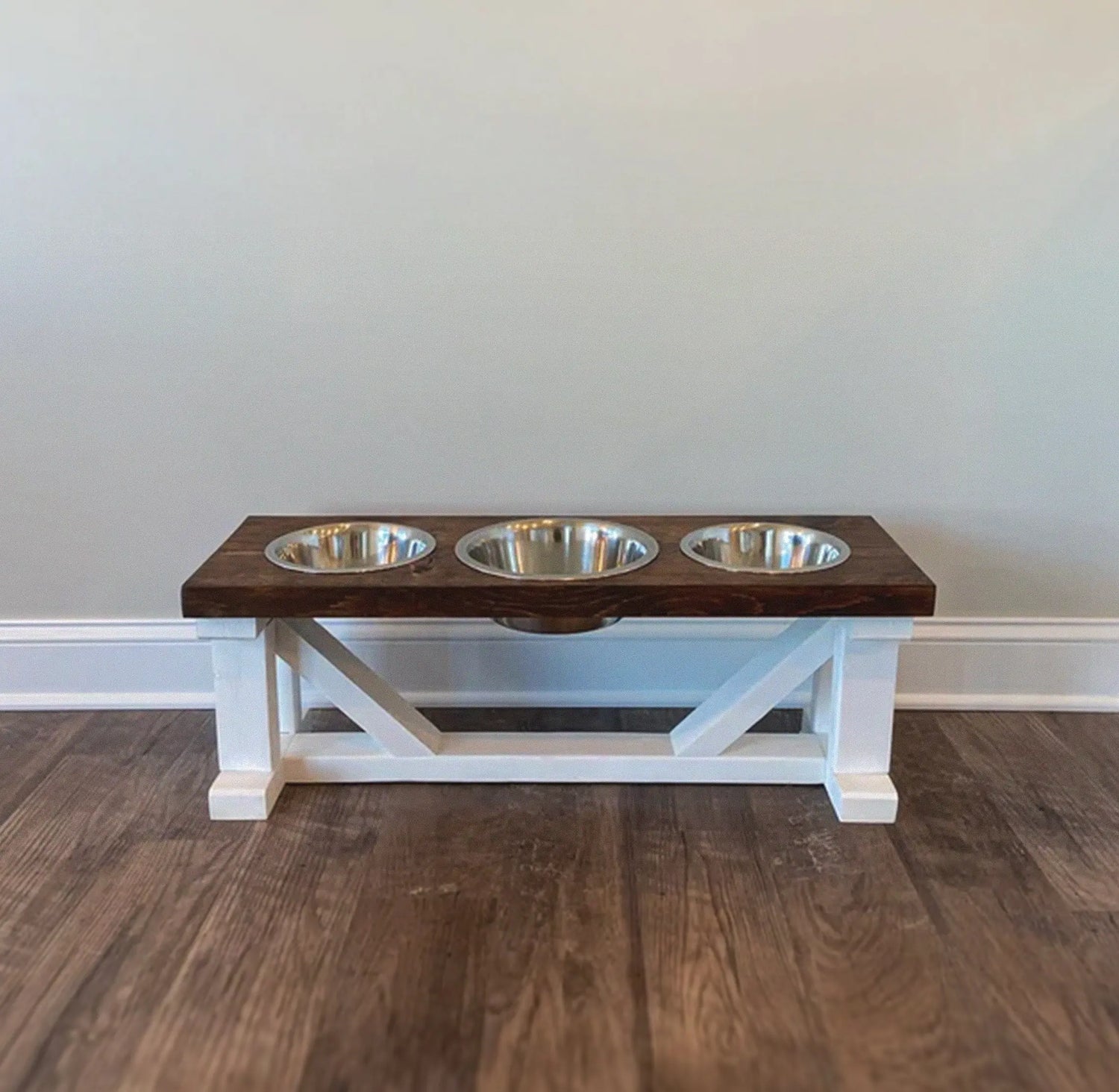


For daily heavy-duty use, choose food-grade stainless steel — specifically 304 (18/8) or 316 (18/10) grade — paired with a weighted, elevated stand. That combination gives you a non-porous, dishwasher-safe bowl that won’t leach chemicals, set inside a stable frame that resists tipping even from the most enthusiastic eaters. Bearwoodessentials handcrafted elevated feeders are built on exactly this principle: food-grade stainless bowls seated in reinforced wood or metal stands.
Quick verdict by use case:
-
Daily heavy-duty feeding (indoor/outdoor): 18/8 or 18/10 stainless steel bowl in a weighted elevated stand
-
Calm home, aesthetic priority: Food-grade, lead-free ceramic for weight and stability
-
Travel, hikes, or enrichment: Collapsible food-grade silicone — not a primary home feeder
-
Automatic or hopper feeders: High-density BPA-free polypropylene (PP) body with stainless steel bowl
Table of Contents
-
Why material determines whether a feeder is truly heavy-duty
-
Why Bearwoodessentials handcrafted feeders meet heavy-duty standards
-
Bearwoodessentials handcrafted feeders: built for daily heavy-duty use
Why material determines whether a feeder is truly heavy-duty
The material your dog eats from is not just a style choice. It directly affects hygiene, safety, and how long the feeder holds up under real-world conditions.
Non-porous, corrosion-resistant materials are the foundation of any long-lasting dog feeding station. A porous surface — think scratched plastic or crazed ceramic glaze — traps bacteria in microscopic grooves that a standard rinse won’t reach. Stainless steel’s non-porous surface means bacteria have nowhere to hide, which is why it consistently tops vet-informed material guides.
Low-quality plastics and decorative ceramics without food-grade certification can leach BPA, phthalates, lead, or cadmium when scratched or chipped. Lead exposure in dogs is linked to anemia, neurological changes, and gastrointestinal disorders. That risk alone makes material verification non-negotiable.
Key stat: Stainless steel is non-porous and does not absorb or hold onto bacteria, making it the most hygienic daily bowl material available for dogs.
Material attributes that define heavy-duty performance:
-
Corrosion resistance: Prevents rust and surface degradation over time
-
Non-porous surface: Blocks bacterial colonization between cleanings
-
Thickness and weight: Heavier bowls and stands resist tipping and movement
-
Food-safety certification: Look for 18/8, FDA food-contact compliance, or LFGB (European food-contact standard)
-
Chew and impact resistance: Stainless steel and dense ceramic both resist deformation; thin plastic does not
Pro Tip: Pair any stainless steel bowl with a non-slip silicone base or a weighted elevated stand. Stainless steel paired with these stability features closes the tip-resistance gap with heavy ceramic bowls — especially for nose-nudging or arthritic dogs.
How the most common feeder materials compare side by side
| Material | Durability / Chew Resistance | Food Safety / Hygiene | Weight / Tip Resistance | Dishwasher Safe | Automatic Feeder Use | Aesthetics | Long-Term Value |
|---|---|---|---|---|---|---|---|
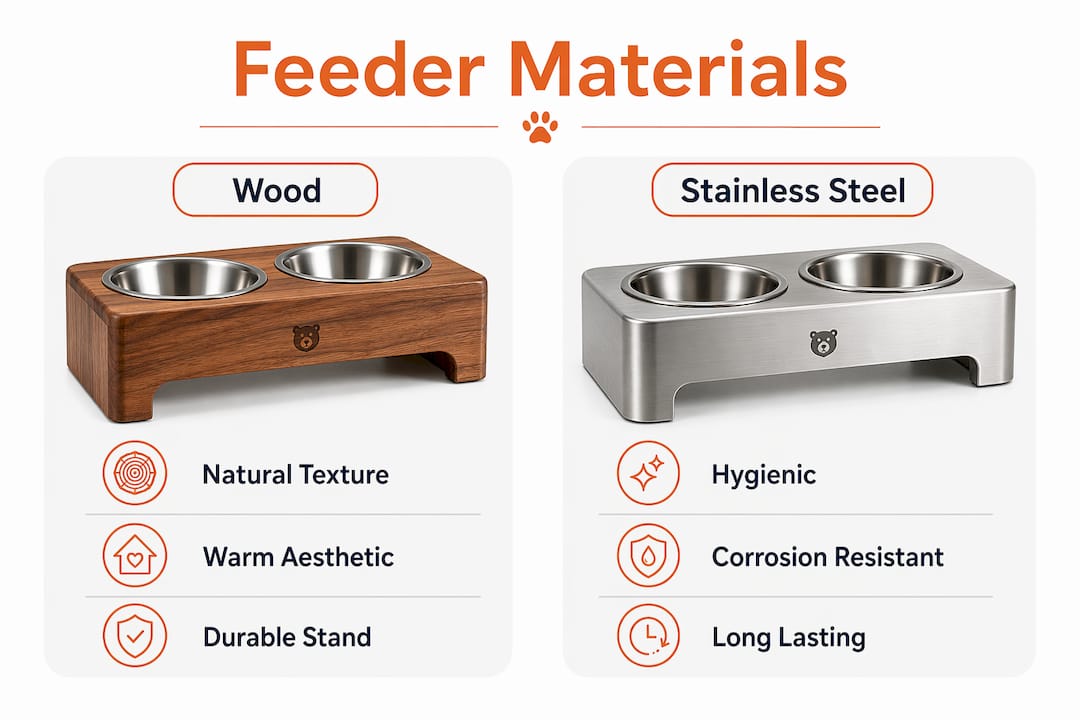
| 304/316 Stainless Steel | Excellent | Best — non-porous, no leaching | Medium (add weighted stand) | Yes | Yes — bowl component | Minimal, modern | High |
| Food-grade ceramic (lead-free) | Good if intact | Very good when uncracked | High — naturally heavy | Usually yes | No | High — many designs | Medium |
| High-density BPA-free PP plastic | Moderate | Acceptable if unscratched | Low | Usually yes | Yes — structural body | Wide variety | Low–Medium |
| Food-grade silicone | Low — chewable | Very good | Very low | Yes (or boil) | Flexible components only | Minimal | Low (travel use) |
| Glass | Poor — breaks easily | Very good | Low–Medium | Yes | No | High | Low |
| Reinforced metal (auto feeder body) | Excellent | Good with stainless bowl | High | Partial | Yes — primary body | Industrial | High |
Safety caveats to know before you buy:
-
Ceramic without an explicit “lead-free” label can release lead or cadmium from glaze chips over time. Invisible crazing in the glaze still poses a contamination risk.
-
Any bowl marked “for pet use only” is a red flag. If it’s not safe for human food contact, it’s not safe for your dog.
-
Scratched plastic degrades the surface and can expose BPA or phthalates even in bowls originally labeled BPA-free.
-
Always ask for the stainless steel grade. If a manufacturer won’t disclose it, the grade is likely inferior.
Pro Tip: The most practical setup for most households is a hybrid: an 18/8 stainless steel bowl in a handcrafted wood or metal elevated stand for daily meals, plus a collapsible silicone bowl for travel or enrichment activities. You get the hygiene and durability of stainless at home without sacrificing portability on the go.
What design features make a feeder genuinely heavy-duty
Material alone won’t prevent tipping. Mechanical design is the other half of the equation, especially for large, active, or arthritic dogs.
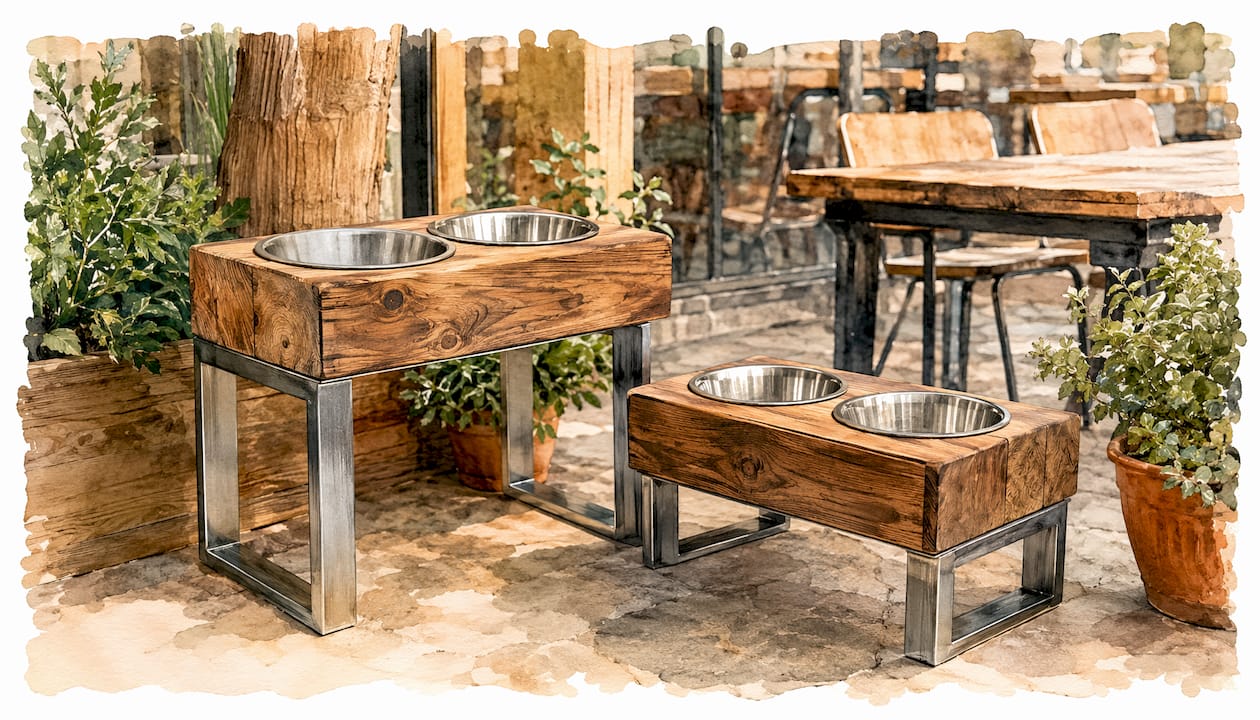
Heavy-duty classification depends as much on construction as on what the bowl is made from. A lightweight stainless bowl in a flimsy stand tips just as easily as a plastic one. The stand, base, and fastening system all need to match the bowl’s quality.
Anti-tip and stability features to require:
-
Weighted or heavy-gauge bowls that resist nose-nudging
-
Non-slip silicone or rubber feet on the stand base
-
Bowl retention rings that lock bowls into the stand frame
-
Floor anchors or wedge mounts for very large or determined dogs
-
Wide, low-profile base geometry for elevated stands
Construction quality signs in a handcrafted feeder:
-
Reinforced welds or dowel-and-glue joints (not just staples or thin nails)
-
Thick hardwood or heavy-gauge metal for the stand body
-
Protective sealed finish on wood components to resist moisture and scratches
-
Explicit stainless steel grade stamped or disclosed by the maker
Checklist: questions to ask before you buy or commission a handcrafted feeder:
-
What stainless steel grade are the bowls? (Require 304/18-8 minimum)
-
Is the finish food-safe and moisture-resistant?
-
Are bowl retention rings or locking inserts included?
-
What is the stand’s weight capacity and base width?
-
Are replacement bowls available in the same size?
-
Does the maker offer a warranty or care guidance?
Pro Tip: For metal components, choose heavy-gauge steel over thin sheet metal. For plastic hopper or structural parts in automatic feeders, look for tested wall thickness and high-density PP — thinner walls deform under load and create jam points.
How to match material and design to your dog’s needs
The right material depends on your dog’s size, behavior, and where the feeder lives. Here’s a straightforward decision process.
Step-by-step decision checklist:
-
Assess your dog’s size and chew behavior. Large or power-chewing dogs need stainless steel and reinforced stands. Small, calm dogs have more flexibility.
-
Pick the primary material. Stainless steel (18/8 or 18/10) for most heavy-duty indoor and outdoor setups. Lead-free ceramic for quiet, stay-put bowls in calm homes. Silicone for travel only.
-
Choose stability features. Non-slip base, bowl retention ring, and weighted stand for active dogs. Elevated height matched to your dog’s shoulder height for ergonomic benefit.
-
Verify food-grade certification. Confirm 18/8 or 18/10 stamp for stainless, explicit “lead-free” label for ceramic, and BPA-free plus phthalate-free for any plastic.
-
Set maintenance expectations. Stainless and silicone are dishwasher-safe. Ceramic requires careful handling. Plastic needs retirement at the first deep scratch.
-
Budget for long-term value. Higher upfront cost for verified food-grade materials reduces replacement frequency and long-term health risk.
Red flags to avoid:
-
“For pets only” or “for decorative use” labels on bowls
-
Stainless steel with no grade disclosure
-
BPA-free labeling without phthalate-free confirmation
-
Ceramic with no explicit lead-free certification
Targeted scenarios:
-
Large chewer in the mudroom: 18/8 stainless bowl in a reinforced metal elevated stand with rubber feet and bowl retention ring
-
Senior or arthritic dog: Elevated stainless feeder at shoulder height with non-slip base to reduce neck strain
-
Travel or hiking: Collapsible food-grade silicone bowl — lightweight, foldable, dishwasher-safe
-
Calm indoor home with decor focus: Food-grade ceramic bowl, inspected regularly for chips, in a stable wooden stand
Pro Tip: For outdoor or mudroom setups, 316 stainless steel (18/10) offers slightly better corrosion resistance than 304 in humid or salty environments — worth specifying if your dog eats outside year-round.
How to clean and maintain a heavy-duty feeder
A heavy-duty feeder stays safe only with consistent care. The material determines the cleaning method; the schedule determines how long it performs.
Daily and weekly maintenance by material:
-
Stainless steel: Rinse daily, dishwasher-safe for weekly sterilization. Watch for deep scratches from abrasive scrubbers — they can harbor bacteria over time.
-
Ceramic: Hand-wash or top-rack dishwasher. Replace immediately if chipped; even hairline cracks trap bacteria and can release glaze compounds.
-
Silicone: Boil or run through the dishwasher. Highly heat-resistant and odor-resistant.
-
Plastic: Dishwasher-safe if labeled so, but retire the bowl at the first deep scratch — surface damage compromises food safety.
-
Glass: Hand-wash carefully; not recommended for large or active dogs.
Replacement red flags — retire the bowl when you see:
-
Chips, cracks, or crazing in ceramic or glass
-
Deep scratches in stainless steel or plastic
-
Persistent odors that survive a full wash cycle
-
Rust spots or surface pitting on metal
-
Discoloration or cloudiness in plastic that won’t wash off
When replacing bowls, consider the environmental footprint. Stainless steel is fully recyclable. Food-grade silicone has a longer lifespan than most plastics before replacement is needed. Choosing replacement bowls that fit your existing elevated stand reduces waste and cost over time.
Why Bearwoodessentials handcrafted feeders meet heavy-duty standards
A handcrafted wood and metal elevated feeder isn’t just a style choice. When built correctly, it meets every heavy-duty criterion: food-grade stainless bowls, reinforced stand construction, and a weighted hardwood or metal base that resists tipping without floor anchors.
Bearwoodessentials builds its elevated feeders with 18/8 stainless steel bowls, reinforced metal or hardwood stands, and protective sealed finishes. The GF Wood & Metal Feeder (Double Diner) combines a rustic handcrafted aesthetic with a reinforced metal frame designed for daily heavy-duty use. The Unspillable 18/8 Stainless Steel Bowl adds an anti-spill lip that keeps kibble and water contained even with enthusiastic eaters. The Wooden Double Diner and Raised Dog Feeder models pair dense hardwood bases with stainless bowls, giving you the stability of ceramic’s weight class with the hygiene of food-grade metal.
Craftsmanship trust signals to look for in any maker:
-
Explicit stainless steel grade (18/8 or 18/10 minimum) disclosed upfront
-
Reinforced welds or joinery — not just glued or stapled
-
Sealed, moisture-resistant finish on all wood surfaces
-
Replacement bowl availability in matching sizes
-
Care guidance and warranty information provided
Pro Tip: Ask Bearwoodessentials about bowl retention rings or rubberized inserts for your elevated stand. They add anti-slip protection and prevent bowl rattle without changing the handcrafted look of the feeder.
Key Takeaways
Food-grade 18/8 stainless steel paired with a reinforced, weighted elevated stand is the most durable, hygienic, and practical choice for heavy-duty dog feeding.
| Point | Details |
|---|---|
| Best daily material | Choose food-grade stainless steel that is non-porous, dishwasher-safe, and certified for food use. |
| Ceramic’s role | Use lead-free, food-grade ceramic for weight and stability in calm indoor homes; replace immediately if chipped. |
| Silicone and plastic | Reserve food-grade silicone for travel; use high-density BPA-free PP only for structural or automatic feeder components. |
| Three red flags | Avoid “for pets only” labels, undisclosed stainless grades, and ceramic without explicit lead-free certification. |
| Bearwoodessentials option | Handcrafted elevated feeders with 18/8 stainless bowls and reinforced stands meet heavy-duty criteria with ergonomic and aesthetic design. |
The case for stainless steel and sturdy stands
Most material guides spend too much time on aesthetics and not enough on what actually keeps a dog safe over years of daily use. The hygiene argument for stainless steel isn’t subtle: a non-porous surface that goes through the dishwasher weekly simply cannot harbor the same bacterial load as a scratched plastic bowl or a crazed ceramic glaze. That’s not a preference — it’s a physical property of the material.
What gets underestimated is the stand. Owners invest in a quality bowl and then seat it in a lightweight frame that tips at the first nudge. The stand’s weight, base width, and bowl retention system matter as much as the bowl’s grade. Vet-informed guidance and material certifications like 18/8 are the right starting anchors for any purchase decision, but they only get you halfway there. The other half is construction.
Handcrafted elevated feeders, when built with the right materials and joinery, offer something mass-produced options rarely do: a feeder that’s both ergonomically sound and genuinely heavy-duty. That combination is worth seeking out.
Bearwoodessentials handcrafted feeders: built for daily heavy-duty use
Bearwoodessentials offers handcrafted elevated feeders that pair 18/8 stainless steel bowls with reinforced wood and metal stands — giving your dog a hygienic, stable, and ergonomic feeding setup that holds up to daily use.
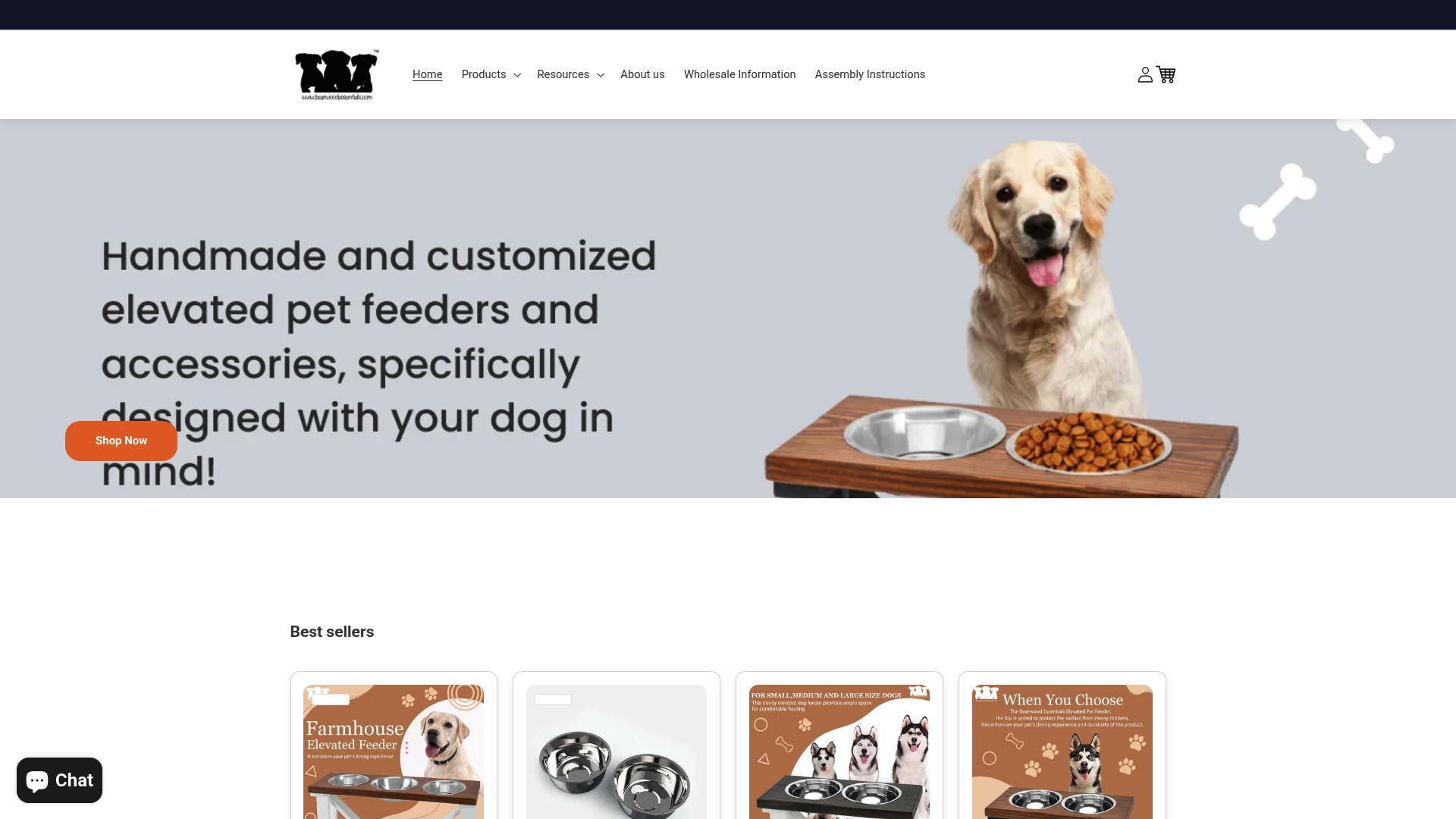
The handmade metal dog bowl feeder is built for heavy-duty performance with a rustic, functional design that fits naturally in any home. The Unspillable 18/8 Stainless Steel Bowl is available as a standalone purchase or as part of a complete elevated setup. Replacement bowls are available in multiple sizes to fit existing stands, so you never have to replace the whole feeder when a bowl needs retiring. Bearwoodessentials ships free across the U.S. on qualifying orders. Browse the full collection and find the right size and style for your dog at bearwoodessentials.com.
Useful sources and further reading
These sources back the material recommendations in this guide. Check certification labels (18/8, FDA food-contact, LFGB) directly on product packaging, and consult your veterinarian for dogs with specific medical or dietary needs.
-
Are Stainless Steel Bowls Better for Dogs? Vet Comparison Guide — Vet-informed comparison of stainless steel vs. other bowl materials, covering hygiene, durability, and anti-tip pairings.
-
The Best Dog Bowls Evaluated — Dogs Naturally — Detailed breakdown of bowl materials including stainless, ceramic, plastic, and silicone, with food-grade certification guidance.
-
Stainless Steel Grades and Uses — AZoM — Technical reference for 304 and 316 stainless steel grades, chromium/nickel content, and corrosion resistance.
-
Best Material for Dog Bowls: Complete Safety Guide — Bestone — Safety-focused guide covering BPA, phthalates, lead risks, and silicone travel bowl use cases.
-
Material Standards for Dog Feeder Production Units — Yulee Tech — Manufacturing perspective on PP, stainless steel, and reinforced metal standards for automatic and structural feeder components.
-
Choosing the Right Dog Bowl — AKC — AKC guidance on ceramic stability, food-grade requirements, and matching bowl type to dog size and behavior.