
Feeder stability for large dogs is defined as the design and construction quality that keeps a feeding station firmly in place during meals, preventing tipping, sliding, or displacement regardless of the dog’s size or enthusiasm. For breeds like Great Danes, German Shepherds, and Labrador Retrievers, an unstable feeder is more than a minor inconvenience. It creates real risks: gulped air, poor posture, joint strain, and mealtime anxiety. Getting stability right means understanding what materials, dimensions, and placement choices actually hold up under the force of a 90-pound dog eating with purpose.
What is feeder stability for large dogs, and why does it matter?
Feeder stability refers to the combination of weight, base design, surface grip, and structural integrity that prevents a feeding station from moving during use. For large breeds, this is not optional. Heavy-duty materials reduce bowl sliding by over 90% compared to lightweight plastic alternatives. That number reflects a real difference in mealtime safety and comfort.
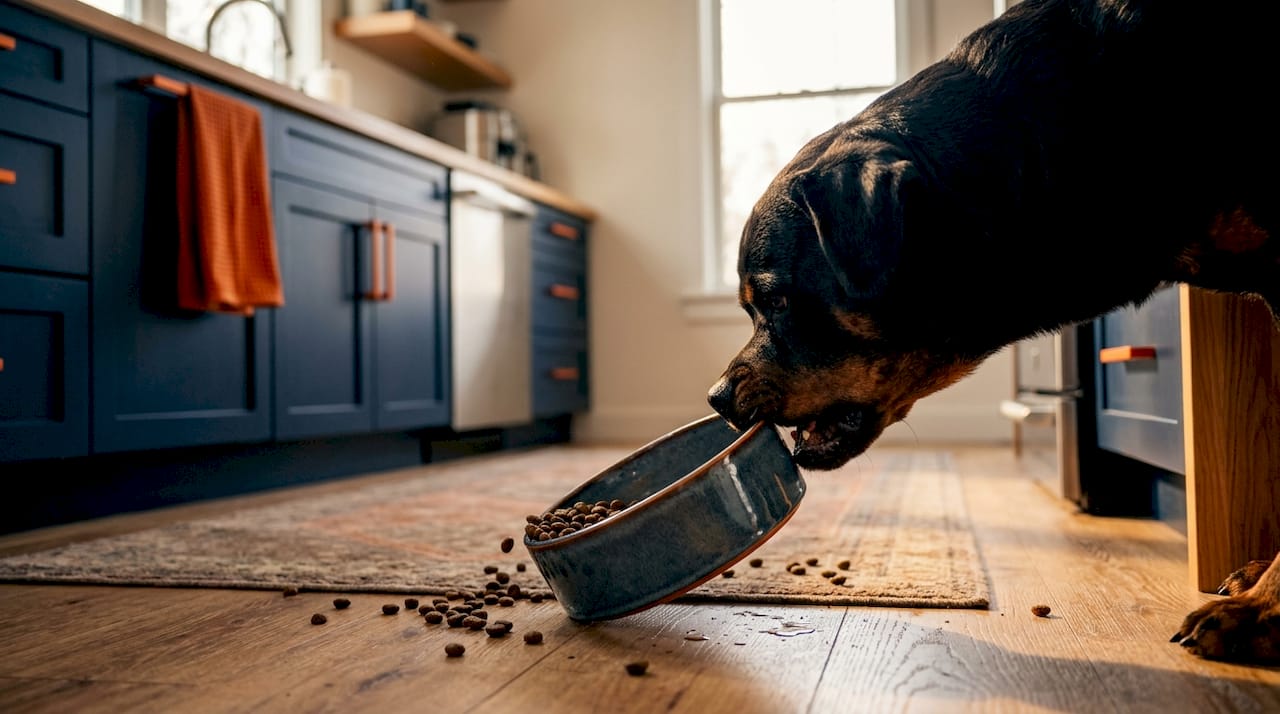
Large dogs eat with force. A Golden Retriever or Rottweiler pushing a bowl across the kitchen floor is not just messy. It forces the dog to chase the bowl, extend its neck awkwardly, and swallow air with every bite. Over time, this pattern contributes to bloat, joint stress, and a generally anxious relationship with food. Stable feeders interrupt that cycle at the source.
The term “feeder stability” is sometimes used informally, but the underlying concept maps directly to what product engineers call anti-displacement design. This includes base weight, friction coefficients of contact surfaces, and the structural resistance of the stand itself. You do not need to know the engineering to benefit from it. You do need to know what to look for when you shop.
What features contribute to feeder stability for large dogs?
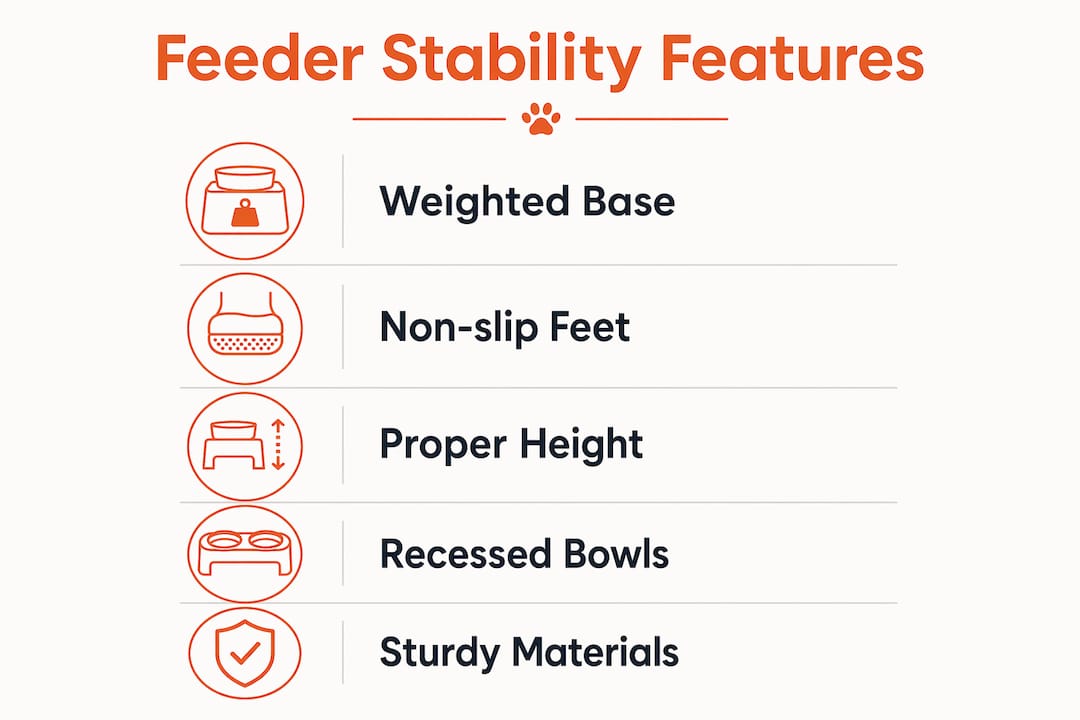
Several specific design elements determine whether a feeder stays put or becomes a problem. Here is what actually matters:
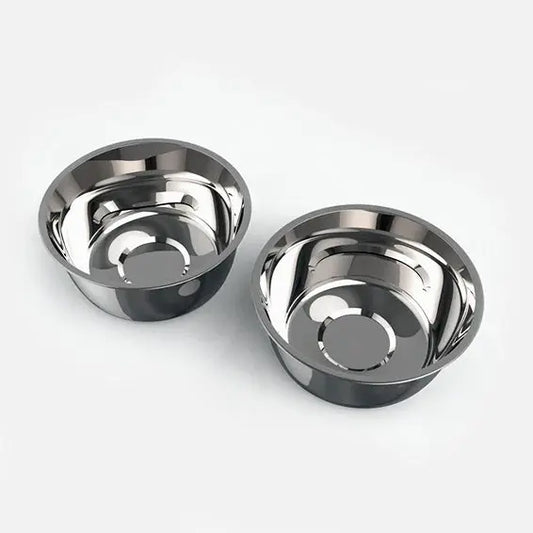
- Weighted base and heavy materials. Stainless steel feeders resist damage and provide substantial weight, making them the preferred choice for large, enthusiastic eaters. Industrial-grade feeders designed for large breeds typically weigh around 8 lbs empty, which is enough mass to resist displacement during normal feeding.
- Non-slip rubber feet. Rubber contact points on the bottom of the stand create friction against hard floors. Without them, even a heavy feeder can slide on tile or hardwood.
- Anti-tip geometry. Wide, low-profile bases distribute the feeder’s weight across a larger footprint. Narrow-legged stands with a high center of gravity are inherently less stable for large breeds.
- Locking bowl mechanisms. Some elevated feeders include recessed bowl holders or locking rings that prevent the bowl itself from being lifted or knocked out during feeding.
- Wall-mount options. For dogs with particularly strong feeding behavior, wall-mounted feeders eliminate the tipping variable entirely by anchoring the station to a fixed surface.
- Adjustable height with locking joints. Adjustable height feeders support spinal health and comfort for varying large breed sizes, but the adjustment mechanism must lock securely or it becomes a new instability point.
Pro Tip: When testing a feeder’s stability before purchase, press down on one side of the stand with moderate force. If it rocks or shifts, it will not hold up to a 70-pound dog eating at speed.
The correct bowl height for large breeds is lower chest level for dogs over 50 lbs. A feeder set at the right height reduces the downward force a dog exerts while eating, which directly reduces the load on the stand’s base.
How does feeder stability affect large dog health and mealtime behavior?
A stable feeder does more than stay in place. It changes how your dog eats, and that change has measurable health consequences.
“Elevated feeder stability promotes calm eating by preventing bowl chasing and gulping, improving digestion and reducing bloat risk.” — Why Raised Feeders Are Essential for Giant Breed Dogs
When a bowl moves during feeding, dogs compensate by eating faster and more aggressively. That behavior increases air ingestion, which is a primary contributor to gastric dilatation-volvulus (GDV), commonly called bloat. GDV is a life-threatening condition in large breeds like Great Danes, Standard Poodles, and Weimaraners. Stable feeders reduce the behavioral triggers that accelerate this risk.
Joint and neck strain is the other major health factor. Elevated feeders at lower chest level reduce joint strain for dogs over 50 lbs by positioning the bowl so the dog does not have to bend its neck sharply downward. For senior dogs or breeds prone to arthritis, like Bernese Mountain Dogs and Saint Bernards, this ergonomic benefit is significant. The Bearwoodessentials blog covers elevated feeding for senior dogs in detail if your dog is older or has mobility concerns.
Calmer eating behavior is also a direct outcome of stability. Dogs that do not have to chase or reposition their bowl settle into a steadier eating rhythm. That rhythm supports better chewing, better digestion, and a more relaxed mealtime experience overall.
Common stability issues with dog feeders and how to fix them
Most large dog owners encounter at least one of these problems. Each has a practical fix.
- Lightweight or shallow bowls that slide. Many feeders marketed for large dogs lack sufficient weight or depth to prevent tipping or resist rapid eating. Replace lightweight plastic bowls with stainless steel versions, which add mass and resist deformation.
- Placement on uneven surfaces. Placement on uneven ground compromises feeder stability even with heavy industrial designs. Use rubber risers or a non-slip mat beneath the feeder to level the contact surface and add grip.
- Dogs dislodging bowls with bite force. Large dogs can exert 200 to 300 lbs of bite force, which challenges feeder durability and bowl retention. Choose feeders with recessed bowl holders or locking rings that physically prevent the bowl from being lifted out.
- Wobbly stands with loose joints. Stands with adjustable legs or multiple connection points can loosen over time. Check all joints monthly and tighten any hardware that has shifted.
- Feeder placed on smooth tile without grip. Even a heavy feeder will migrate on polished tile. A textured rubber mat under the entire feeder station solves this without requiring a new product.
Pro Tip: Place the feeder in a corner where two walls meet. The corner acts as a natural brace, limiting the directions the feeder can shift during aggressive eating.
Comparing types of feeders: which offer the best stability for large dogs?
Not all feeders perform equally when it comes to large dog feeder stability. This comparison covers the most common types.
| Feeder type | Stability rating | Best for | Key drawback |
|---|---|---|---|
| Stainless steel elevated stand | Very high | Large and giant breeds, enthusiastic eaters | Higher cost; heavier to move |
| Weighted plastic slow feeder | Moderate | Dogs that eat too fast on flat surfaces | Shallow ridges often ineffective for large breeds |
| Metal frame raised feeder with adjustable height | High | Multi-dog households, growing breeds | Joints can loosen over time |
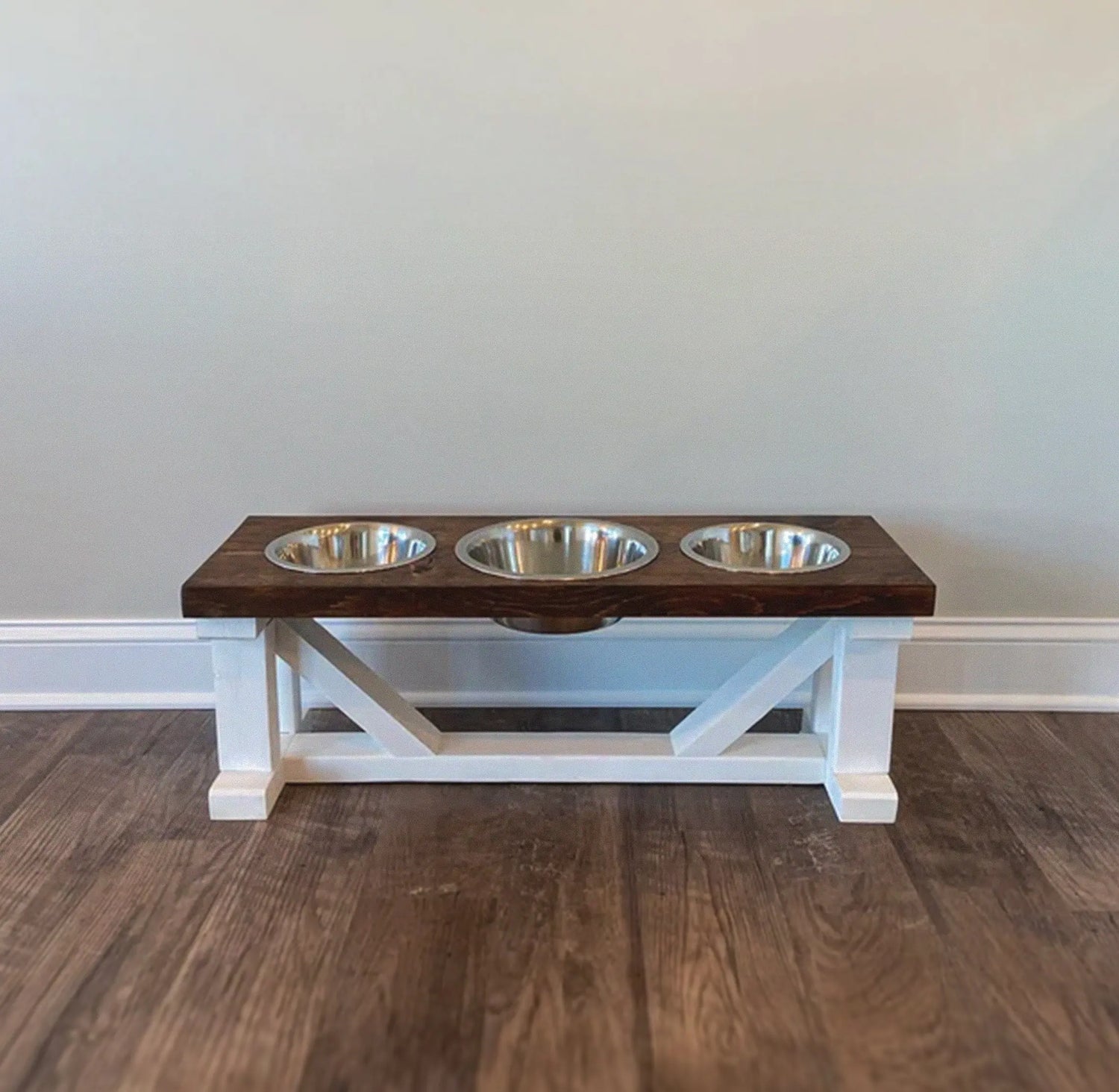
| Wooden elevated feeder with steel bowls | High | Owners prioritizing aesthetics and function | Requires sealing to resist moisture |
| Automatic feeder on stand | Moderate to high | Scheduled feeding, portion control | Motor housing adds top weight, raising center of gravity |
Stainless steel elevated feeders with heavy bases consistently outperform other types for large breeds. The combination of material weight, bowl depth, and rigid construction addresses the three main displacement forces: lateral push from the dog’s snout, vertical lift from the dog’s mouth, and vibration from enthusiastic eating.
Wooden elevated feeders with stainless steel bowls, like those offered by Bearwoodessentials, combine the structural mass of solid wood with the hygienic and weighty properties of steel bowls. This pairing delivers both stability and easy cleaning. The top benefits of raised dog feeders go beyond stability alone, covering hygiene, posture, and behavioral improvements worth reading before you decide.
Weighted plastic slow feeders are worth mentioning specifically. They serve a real purpose in slowing rapid eating, but many lack the structural depth needed to stay put under a large dog’s force. If you use one, pair it with a non-slip mat and place it against a wall.
Key takeaways
Feeder stability for large dogs requires a weighted base, non-slip contact surfaces, and correct ergonomic height to prevent displacement, protect joint health, and support calm digestion.
| Point | Details |
|---|---|
| Material weight is the foundation | Heavy-duty stainless steel or solid wood reduces bowl sliding by over 90% compared to lightweight plastics. |
| Correct height reduces displacement force | Feeders at lower chest level for dogs over 50 lbs reduce the downward force that destabilizes stands. |
| Surface placement matters as much as design | Rubber mats or risers solve wobble on uneven or smooth floors even when the feeder itself is well-built. |
| Bite force demands bowl retention features | Large dogs exert 200 to 300 lbs of bite force; recessed holders or locking rings prevent bowl dislodging. |
| Stability directly supports digestion | Preventing bowl movement reduces gulping, air ingestion, and the behavioral triggers linked to bloat. |
Why I think most large dog owners underestimate this problem
I have spent years looking at how dogs actually interact with their feeders, and the pattern I see most often is this: owners invest in high-quality food and then place it in a feeder that slides across the floor the moment their dog takes a bite. The feeder is treated as an afterthought, when it is actually the delivery system for everything else you are doing right.
The detail that surprises most people is how much placement matters. I have seen genuinely well-built feeders become unstable simply because they were set on a slightly sloped kitchen floor. The fix took thirty seconds and a rubber mat. But without knowing to look for it, that owner would have kept blaming the feeder.
My honest recommendation is to test your current feeder right now. Push it from the side with moderate hand pressure. If it moves more than an inch, your dog is dealing with that movement at every meal. For senior dogs especially, that instability compounds over time into real joint and digestive consequences. The vets who recommend elevated feeders are not talking about a luxury upgrade. They are talking about a functional tool that changes how your dog’s body handles food.
The other thing I would flag is the cleaning habit. Stability features like rubber feet and recessed bowl holders only work when they are clean. Grease and food residue on rubber feet reduce grip significantly. Wipe the base contact points every time you clean the bowls.
— Kim
Handcrafted elevated feeders built for large breeds
If you are ready to replace an unstable feeder with something built to last, Bearwoodessentials designs handcrafted metal and wooden elevated feeders specifically for large and giant breeds.
Each feeder is built with weighted bases, recessed stainless steel bowls, and non-slip feet that hold firm on any surface. The handmade metal dog bowl feeder is a strong starting point for large breed owners who want durability and clean design in one piece. For a double-bowl option, the wooden raised dog feeder pairs solid wood construction with stainless steel bowls for both stability and style. Browse the full range at Bearwoodessentials and find the right fit for your dog’s size and feeding habits.
FAQ
What is feeder stability for large dogs?
Feeder stability for large dogs refers to the design qualities that keep a feeding station in place during meals, including base weight, non-slip feet, and anti-tip construction. It prevents bowl sliding, tipping, and displacement caused by the force large breeds exert while eating.
What type of feeder is most stable for large dogs?
Stainless steel elevated feeders with heavy bases and recessed bowl holders offer the highest stability for large breeds. These materials resist displacement and withstand the 200 to 300 lbs of bite force large dogs can generate.
How high should a feeder be for a large dog?
The feeder should reach lower chest level for dogs over 50 lbs. This height reduces neck and joint strain while also lowering the downward force the dog exerts on the stand, which improves overall feeder stability.
How do I stop my dog’s feeder from sliding?
Place a non-slip rubber mat under the feeder and position it in a corner where two walls provide natural bracing. If the feeder has rubber feet, clean them regularly since grease buildup reduces grip on smooth floors.
Can an unstable feeder cause health problems for large dogs?
Yes. An unstable feeder causes dogs to chase and gulp food, increasing air ingestion and raising the risk of bloat, a serious condition in large breeds. It also forces unnatural neck angles that contribute to joint strain over time.