
Most dog owners assume any automatic feeder will work equally well on the back porch or in the kitchen. That assumption can put your dog’s health at risk. Outdoor and indoor feeders are built for entirely different challenges, from battling rain and wildlife to maintaining precise portions on a schedule. Choosing the wrong type means spoiled food, pest problems, or missed meals. This guide breaks down every key difference so you can feed your dog safely, whether mealtime happens inside or out.
Table of Contents
- Key design differences between outdoor and indoor pet feeders
- Feeding mechanisms: Always-available, timed, and smart options
- Keeping food fresh and safe: Sealing and spoilage prevention
- Security and tamper resistance: Protecting your dog’s meals
- What most guides miss: It’s not just the feeder, but the feeding habits
- Enhance every mealtime with trusted pet feeding solutions
- Frequently asked questions
Key Takeaways
| Point | Details |
|---|---|
| Weather resistance matters | Outdoor feeders need weatherproofing and tamper resistance to keep food safe and fresh. |
| Feeding mechanisms differ | Gravity, timed, and smart feeders have unique pros and cons depending on indoor or outdoor use. |
| Freshness is not optional | Choosing the wrong feeder can lead to spoiled food, pests, or even health issues for your dog. |
| Security prevents wildlife access | Only outdoor feeders with locking features effectively deter wildlife and keep your dog’s meal safe. |
| Routine matters most | The right cleaning and inspection habits make any feeder safer and more reliable for your pet. |
Key design differences between outdoor and indoor pet feeders
To begin, let’s explore what sets outdoor and indoor feeders apart at the structural level.
The most obvious difference between outdoor and indoor feeders is the material they’re made from. Outdoor feeders need to survive real weather conditions: rain, snow, intense summer heat, and direct UV exposure. That’s why you’ll see outdoor models built from corrosion-resistant stainless steel, powder-coated metals, or heavy-duty UV-stabilized plastics. These materials resist warping, fading, and rust over months of exposure. An indoor feeder made from lightweight ABS plastic or untreated wood will degrade quickly if left outside.
Outdoor feeders differ from indoor models mainly in environmental design, needing weather resistance against rain, snow, and heat, plus tamper resistance and secure storage to keep food dry and uncontaminated. Indoor feeders, by contrast, focus more on portioning accuracy, hygiene, and ease of cleaning. An indoor model rarely needs to worry about a raccoon prying it open.
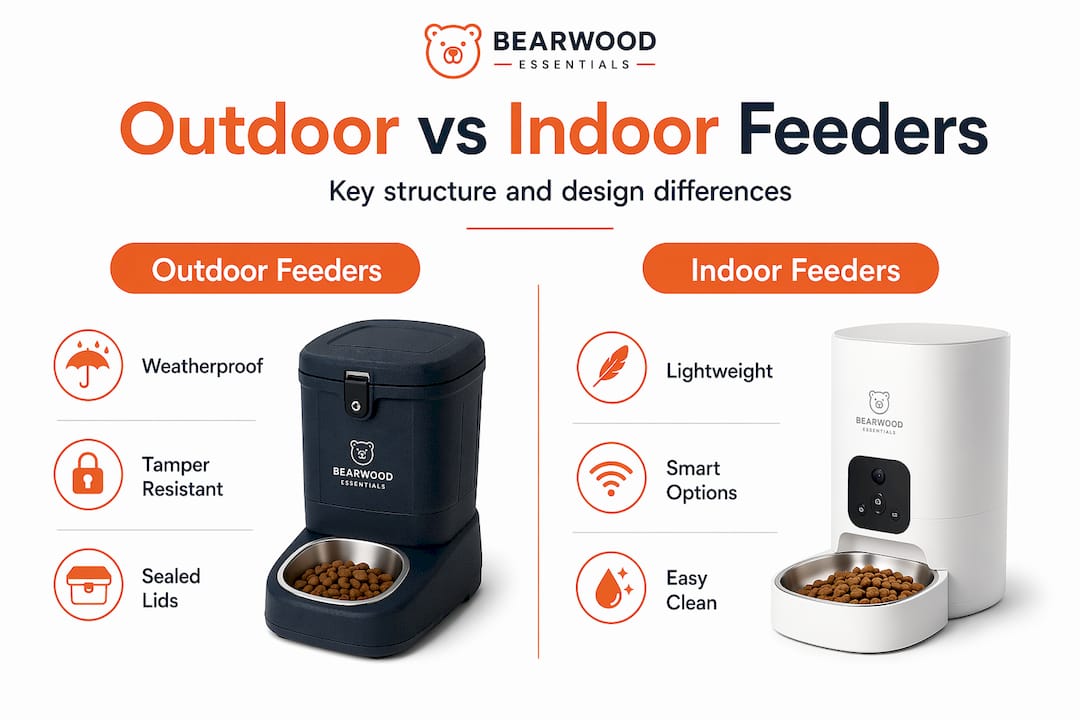
Weatherproofing goes beyond just durable materials. Quality outdoor feeders feature sealed lids with rubber gaskets, raised bowl designs that prevent water from pooling, and waterproof electronics if any are included. Some models even use weighted bases to stay stable during wind. Storing your dog’s kibble in a well-sealed pet food container alongside an outdoor feeder adds another layer of protection for food freshness.
Here’s a quick comparison of how the two feeder types stack up:
| Feature | Outdoor feeder | Indoor feeder |
|---|---|---|
| Material | Stainless steel, UV plastics | Plastic, wood, ceramic |
| Weatherproofing | Sealed lids, waterproof body | Not required |
| Tamper resistance | Locking lids, heavy base | Optional |
| Portion control | Basic timers, manual | Advanced timers, smart apps |
| Hygiene focus | Pest-proofing, moisture seals | Airtight food seals |
| Cleaning ease | Moderate (weather exposure) | Easy (controlled environment) |
Key outdoor feeder design priorities include:
- Corrosion-resistant metals or UV-stabilized polymers for long-term durability
- Sealed, locking lids that resist both moisture and curious animals
- Raised bowl stands that keep water from pooling inside the bowl
- Weighted or anchored bases to prevent tipping in wind or by larger wildlife
- Minimal electronics to reduce failure risk from moisture and temperature extremes
Pro Tip: Before buying any outdoor feeder, check the manufacturer’s IP (ingress protection) rating. A rating of IP44 or higher means the unit can handle splashing water from any direction, which is especially important in rainy climates.
Feeding mechanisms: Always-available, timed, and smart options
With construction basics covered, let’s compare how feeding mechanisms themselves work in indoor versus outdoor settings.
Feeding mechanisms fall into three main categories, and each one behaves very differently depending on where it’s placed. The simplest is the gravity feeder. Gravity feeders use the weight of the food itself to keep the bowl filled at all times. They require no power, have no moving parts, and are very reliable in terms of function. The downside is significant: there’s no portion control at all. Dogs with a tendency to overeat, which is common in many breeds, will simply consume more than they should. Indoors, this is a known risk. Outdoors, a constantly full bowl also acts as an open invitation to wildlife.
Gravity feeders versus timed automatic feeders represent a fundamental split in indoor feeding: gravity models keep food always available with no portion limits, while non-Wi-Fi timed automatics use an electric timer to dispense measured portions on a schedule. The timed option significantly reduces overfeeding risk and helps build a reliable meal routine for your dog.
Smart Wi-Fi feeders take things a step further indoors. They let you control portions remotely via a smartphone app, check feeding history, and even talk to your pet through a built-in speaker. These are genuinely useful tools for busy owners. But they come with one serious vulnerability: power and internet outages. If your router goes down or the power cuts, your dog may miss a meal entirely without a battery backup system.
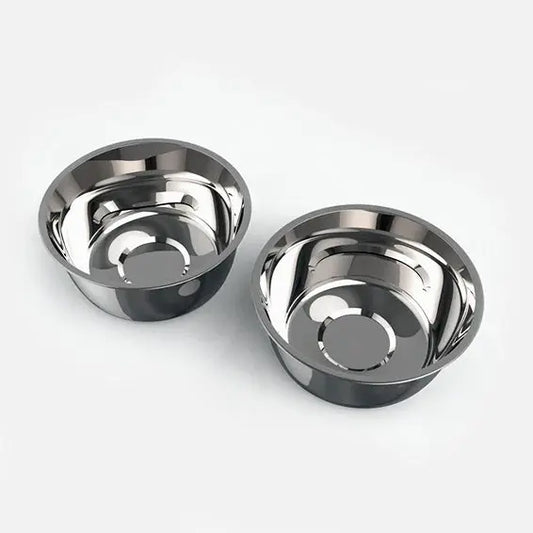
Outdoors, simplicity wins. A basic timed mechanism with a secure lid is far more dependable in the elements than any Wi-Fi-connected device. A single feeder with portion control is an excellent option for managing meal sizes reliably. If your dog’s bowl gets wet or dirty between meals, having a set of replacement bowls on hand makes regular swaps fast and easy.
How to choose the right mechanism for your setup:
- Assess your dog’s eating habits. Dogs prone to overeating need timed, measured dispensing regardless of location.
- Consider power reliability. Outdoor locations may lack nearby outlets; battery-powered models are often safer.
- Evaluate Wi-Fi stability. Only invest in smart features if your home network is consistently reliable.
- Match mechanism complexity to environment. The more exposed the location, the simpler the mechanism should be.
- Check the dispenser’s jam resistance. Some kibble shapes can clog wheels or chutes, which is especially problematic outdoors where you might not notice immediately.
Pro Tip: If you use a timed automatic feeder outdoors, test it weekly by observing a scheduled feeding cycle. Outdoor vibrations, temperature shifts, and moisture can cause timing mechanisms to drift or stick over time.
Keeping food fresh and safe: Sealing and spoilage prevention
Once the feeding mechanism is chosen, keeping food fresh and safe becomes the next big challenge.
Food safety is where indoor and outdoor feeders diverge most dramatically. Outdoors, food faces moisture from rain and humidity, pests attracted by scent, direct sunlight that accelerates fat oxidation in kibble, and temperature swings that can cause condensation inside the feeder. A bag of kibble that stays fresh for weeks inside your home may go stale or even moldy within days in an unsealed outdoor feeder during a humid summer.
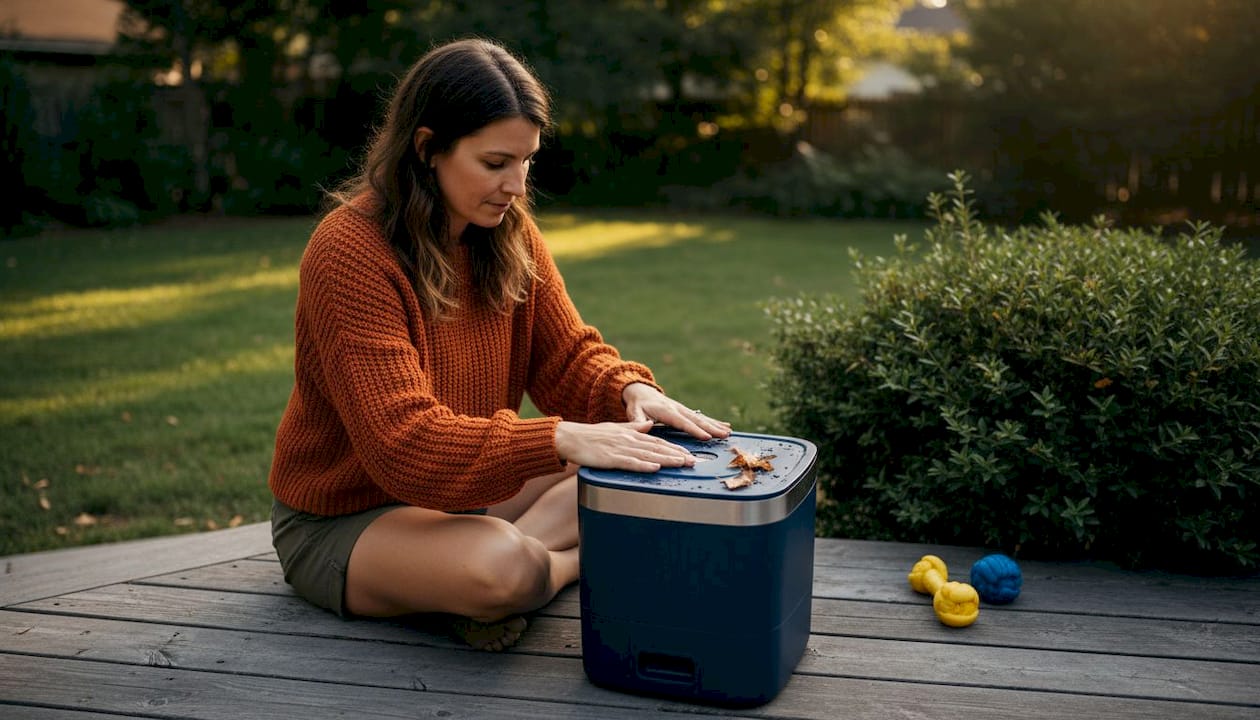
Outdoor feeders emphasize food freshness protection through sealing and moisture intrusion prevention, while indoor feeders focus on airtight sealing, desiccants, and gaskets to maintain daily freshness. Both environments require attention to hygiene, but the threats are very different in nature.
The wet food question is one that catches many owners off guard. Wet or raw food outdoors is almost never safe in a standard feeder.
“Using automatic feeders for wet food outdoors is much harder because wet foods spoil faster outdoors and many basic automated systems are designed primarily for dry kibble; wet food also needs refrigeration or temperature control.”
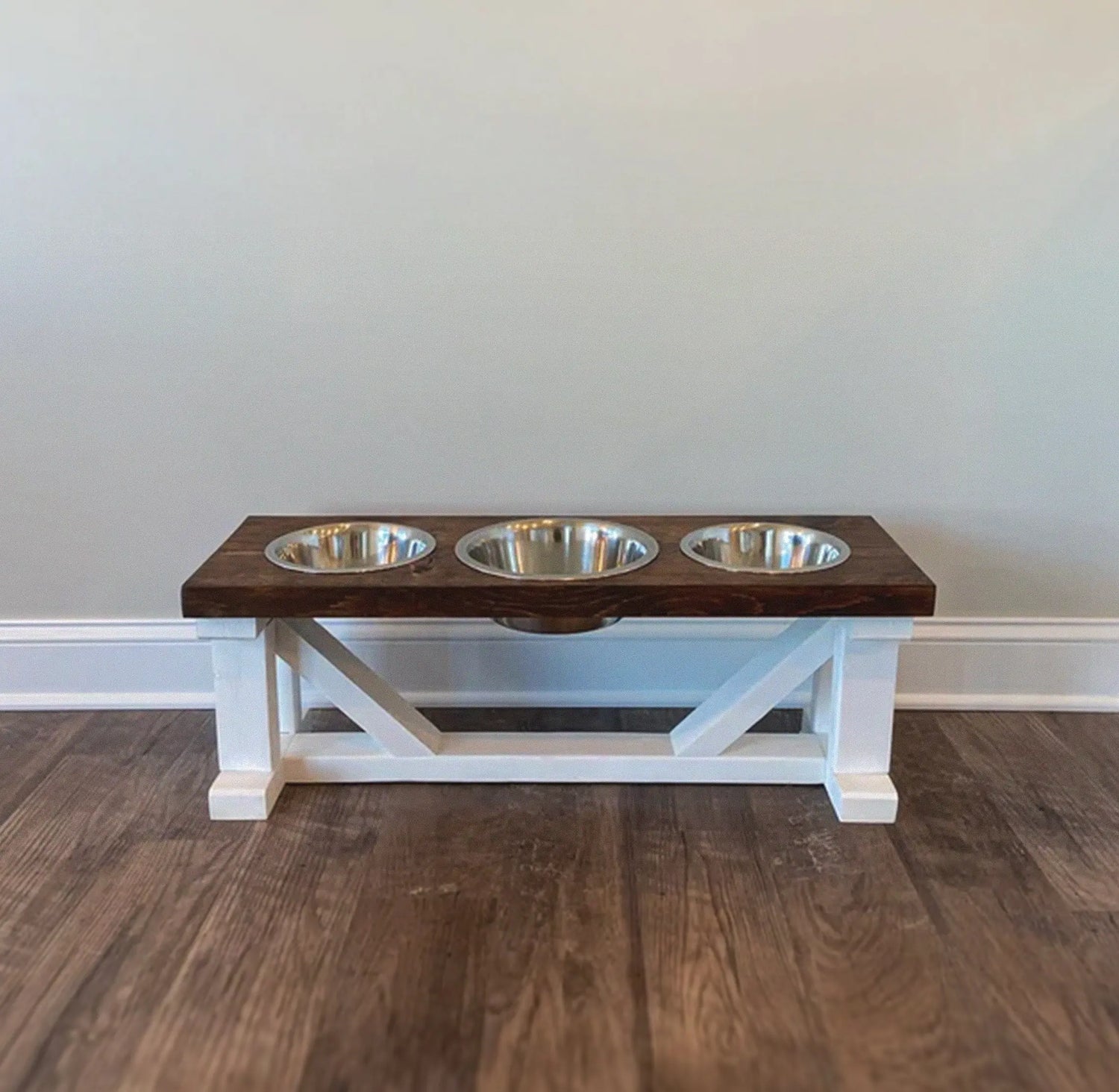
If you feed your dog wet food, do it by hand outdoors and remove the bowl within 20 to 30 minutes. Never leave it sitting in heat or humidity. For dry kibble fed outdoors, pairing your feeder with a quality adjustable diner with bowls that elevates the bowl off the ground adds an extra barrier against ground moisture and insects.
Key freshness and safety priorities by environment:
- Outdoors: Use only dry kibble, choose feeders with airtight seals and rubber gaskets, store bulk food in weather-proof containers, and clean the feeder every 2 to 3 days in warm weather
- Indoors: Look for models with airtight food reservoirs, desiccant-compatible designs, and easy-to-clean surfaces; clean weekly at minimum
- Both environments: Never allow food to sit in direct sunlight for extended periods, and always check for signs of moisture, insects, or mold before refilling
A good rule of thumb is this: if you wouldn’t eat food that had been sitting in those conditions yourself, don’t leave it for your dog either. Their digestive systems can handle some things humans can’t, but spoiled food still causes serious gastrointestinal problems, including vomiting, diarrhea, and in severe cases, bacterial infections from contaminants like salmonella.
Security and tamper resistance: Protecting your dog’s meals
Fresh food is one side of the coin; the other is making sure only your dog can get to it.
Tamper resistance is a genuinely outdoor-specific concern that indoor feeders mostly don’t need to address. When a feeder sits in a backyard, on a patio, or in a kennel run, it becomes a target. Raccoons are remarkably skilled at opening containers. Squirrels, opossums, and neighborhood cats are also common opportunists. In more rural areas, deer, coyotes, and bears can become real problems if food is left accessible overnight.
Security and tamper resistance are more critical outdoors: outdoor feeders must prevent other animals from accessing food, whereas indoor feeders primarily focus on reliable dispensing and optional Wi-Fi monitoring. An indoor feeder just doesn’t face the same level of external threat.
The most effective tamper-resistant outdoor feeder designs share a few common features:
- Locking lid mechanisms that require a deliberate multi-step action to open, far beyond what an animal’s paw can manage
- Heavy base materials or anchor points that prevent the unit from being tipped or dragged
- Smooth exterior surfaces with no footholds that a climbing animal could use to pry the lid
- Recessed dispensing openings sized specifically for your dog’s snout, reducing access for smaller wildlife
“Outdoor feeders must prevent other animals from accessing food, making locking mechanisms and heavy construction far more important than app connectivity or portion tracking features.”
For larger dogs fed outdoors, a large single feeder with sturdy construction provides both the capacity and the physical resistance needed to deter most common wildlife. Indoors, you can prioritize portion accuracy and app reliability instead, since the security demands are far lower.
Smart features and power planning also require extra thought outdoors. If your outdoor feeder uses electronics, battery backup is essential. Temperature extremes can affect battery performance: lithium batteries lose capacity in cold weather, and heat shortens their overall lifespan. Position any electronic outdoor feeder in a shaded spot where possible, and check battery levels monthly.
Pro Tip: Place your outdoor feeder on a smooth, flat surface elevated slightly off the ground. This deters insects from using gaps in the surface to access the feeder from below, and it makes cleaning the area underneath much easier.
What most guides miss: It’s not just the feeder, but the feeding habits
Choosing the right feeder for your environment is a strong start. But we’d be doing you a disservice if we stopped there.
The honest truth is that even the most durable, tamper-proof outdoor feeder will fail your dog if the habits around it aren’t consistent. We see this pattern repeatedly: an owner invests in a quality feeder, sets it up correctly, and then lets the cleaning schedule slip. Over a few weeks, old kibble dust accumulates in the chute, humidity introduces moisture, and the feeder becomes a habitat for mold and insects. Your dog eats from it every day, and the health effects show up gradually, sometimes as recurring stomach upsets or unexplained lethargy.
The practical rule is clear: if the feeder stays outside continuously or semi-exposed, prioritize weather resistance and tamper protection; if it stays indoors, prioritize portion accuracy, anti-jam reliability, and sealed food freshness. But beyond the hardware choice, commit to a maintenance routine that matches your environment.
Indoor smart feeders carry their own overlooked risk. Many owners rely heavily on app notifications and feeding logs without ever building in a backup plan. Smart Wi-Fi features can fail during outages, and indoor reviewers consistently highlight offline and battery backup capabilities as critical factors. If your smart feeder has no offline mode, your dog’s 6 AM breakfast depends entirely on your internet connection staying live overnight.
The most effective approach combines the right feeder type with three non-negotiable habits: clean the feeder on a fixed schedule, inspect the food reservoir every time you refill it, and always have a manual backup plan for power or connectivity failures. No feeder technology replaces the attentive, caring owner who checks in daily.
Enhance every mealtime with trusted pet feeding solutions
For readers ready to take action, high-quality solutions are just a click away.
Whether your dog eats inside, outside, or both, the right feeder setup makes a real difference in their health and your peace of mind. The principles in this guide point to one clear takeaway: materials, mechanisms, and security all need to match the environment.
At BearwoodEssentials, we craft feeders that balance durability, function, and genuine beauty. If your dog eats outdoors and you want a bowl that holds up to the elements while looking great, our metal outdoor dog bowl feeder is built for exactly that purpose. For indoor feeding, our elevated indoor dog feeder supports healthier posture and easier digestion, crafted by hand with the care your pet deserves. Explore the full range and find the setup that fits your dog’s life perfectly.
Frequently asked questions
Can I use the same pet feeder both indoors and outdoors?
Most feeders are specialized for one environment; using an indoor feeder outside exposes food to weather and tampering risks that it was never designed to handle. Choosing a feeder built for its intended environment protects both food quality and your dog’s health.
Which feeder is safer for wet or raw dog food?
Wet food requires temperature control to stay safe, and wet food spoils faster outdoors because most automated outdoor feeders are designed for dry kibble only. For wet or raw food, always serve it fresh by hand and remove the bowl promptly.
How can I prevent wildlife from raiding my dog’s outdoor feeder?
Select an outdoor feeder with locking lids, a sturdy weighted base, and smooth exterior surfaces that animals cannot grip or pry. Tamper resistance matters far more outdoors than app connectivity or smart features.
Are battery backup and Wi-Fi important for outdoor pet feeders?
Weather resistance is the top priority for outdoor feeders; smart features add complexity and failure points in wet or extreme temperatures. Smart features like Wi-Fi can fail during outages, so battery backup is worth having, but simplicity and weatherproofing should come first.
What is the most important maintenance tip for outdoor feeders?
Clean your outdoor feeder every two to three days during warm, humid weather to prevent pest buildup and food degradation. Outdoor feeders need consistent upkeep because weather exposure accelerates the buildup of moisture, mold, and insects far faster than indoor conditions do.