

Most dog owners assume that switching to a raised feeder is an automatic win for their aging dog. It sounds logical: your dog is stiff, a raised bowl seems gentler, done. But the reality is more nuanced, and getting it wrong can actually cause harm. Understanding why senior dogs need raised feeders, and when they truly help versus when they don’t, is the difference between real comfort and a well-intentioned mistake. This guide gives you the full picture.
Table of Contents
- How raised feeders improve comfort for senior dogs
- Risks and considerations: bloat and breed-specific issues with raised feeders
- Comparing raised feeders and floor bowls for senior dogs
- Practical tips for using raised feeders safely and effectively
- Reconsidering raised feeders: what most guides don’t reveal
- Find the perfect raised feeder for your senior dog at Bearwood Essentials
- Frequently asked questions
Key Takeaways
| Point | Details |
|---|---|
| Ergonomic relief | Raised feeders set at elbow height reduce neck and joint strain for senior dogs with arthritis. |
| Bloat risk caution | Improperly high feeders increase bloat risk in large breeds; moderate elevation lowers this risk. |
| Personalized feeding | Not all senior dogs benefit from raised feeders; veterinary consultation ensures safe choices. |
| Setup essentials | Use stable stands, non-slip mats, and wide stainless steel bowls for safety and hygiene. |
| Ongoing adjustment | Reassess feeder height every 4–8 weeks to match your dog’s changing posture and comfort. |
How raised feeders improve comfort for senior dogs
For a dog dealing with arthritis, joint stiffness, or general age-related mobility decline, the simple act of eating can become physically taxing. Bending all the way down to a floor-level bowl forces the neck into a steep downward angle, loading the cervical spine and putting pressure on already-inflamed joints with every bite. Over time, this repeated strain adds up.
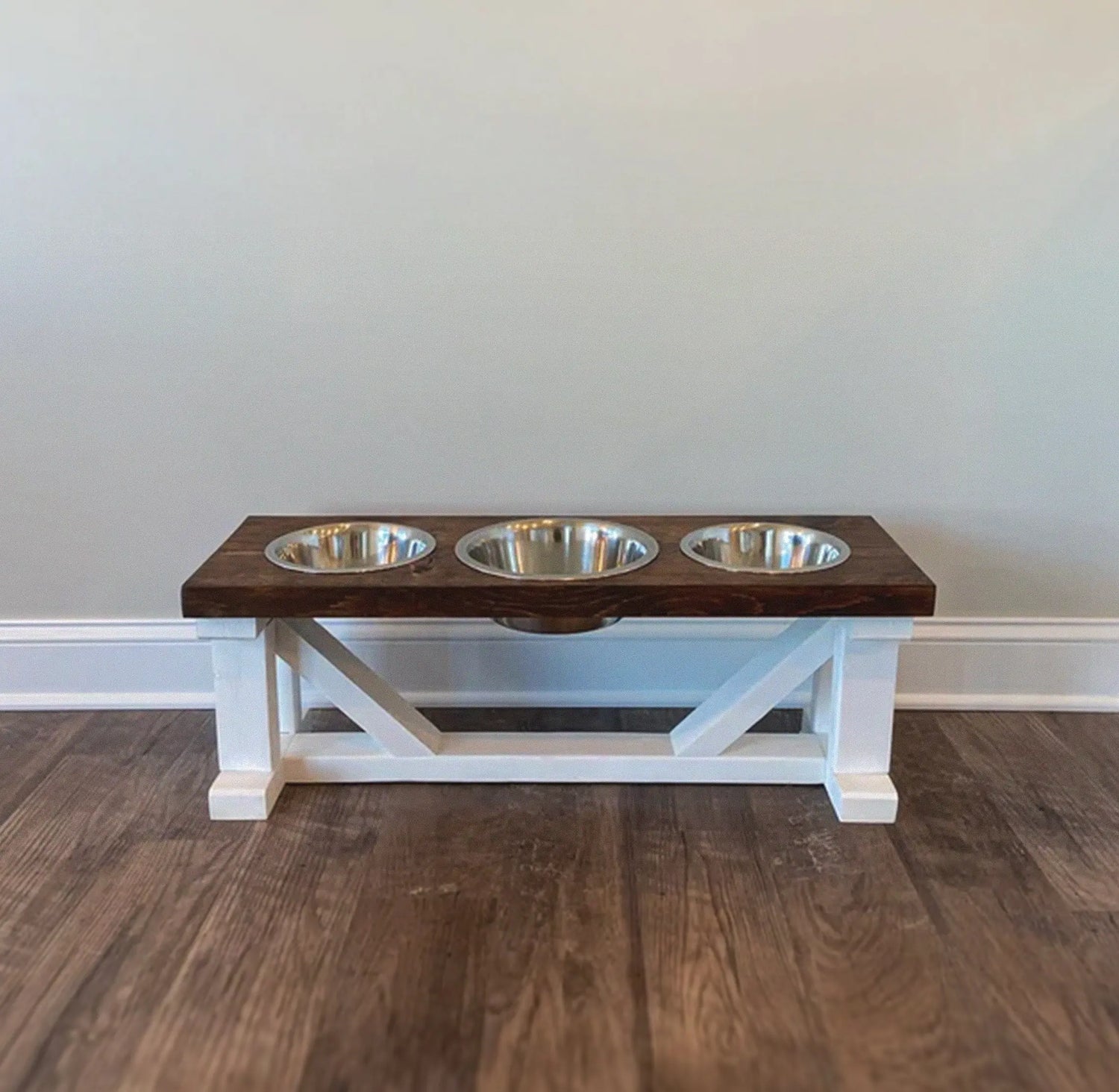
The core benefit of a raised feeder is positional. When the bowl sits at your dog’s elbow height, the neck stays roughly horizontal during eating. This reduces neck flexion and joint load for senior dogs aged 7 and older, with veterinary guidance specifically recommending elbow-level placement. In practical terms, your dog can eat without dropping their head, which means less discomfort during and after meals.
The elevated feeding benefits go beyond just the neck. Dogs with hip dysplasia, elbow arthritis, or general rear-end weakness also benefit because they don’t have to shift their body weight forward and down to reach food. Many owners notice their senior dogs eat more consistently and with less hesitation once the bowl is raised to the right height.
Here is what the right setup typically includes:
- Correct bowl height: Set at or just below elbow level to prevent neck craning. Raising bowls to elbow height prevents neck craning in 80 to 90% of senior dogs with arthritis.
- Wide, shallow bowl: Allows your dog to eat without pressing their muzzle deep into the bowl, which reduces neck flexion further.
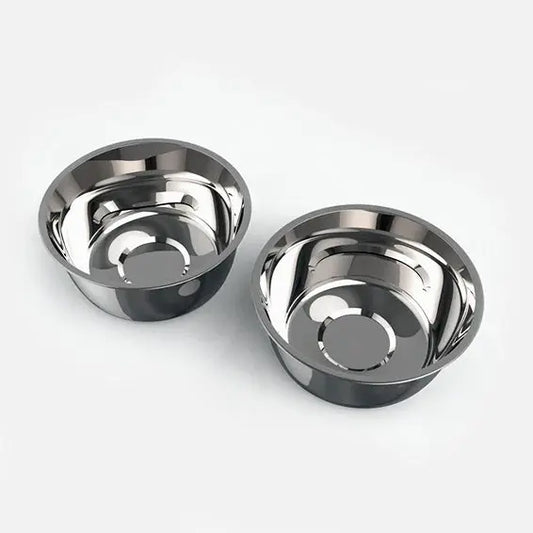
- Stainless steel material: Easier to sanitize, resistant to bacteria buildup, and durable enough to handle daily use.
- Non-slip mat underneath: Keeps the feeder from sliding, so your dog doesn’t have to compensate with their legs during meals.
“A raised feeder at the correct height is one of the simplest modifications you can make to improve a senior dog’s daily quality of life. It costs little but delivers consistent, measurable comfort.” — Senior Dog Comfort
Pro Tip: If your dog currently eats from the floor and you’re transitioning to a raised feeder, raise the height gradually over one to two weeks rather than jumping straight to full elbow height. Sudden changes in posture during eating can cause initial resistance or awkwardness.
Risks and considerations: bloat and breed-specific issues with raised feeders

Here is where most guides stop short. Raised feeders are widely marketed as a universal upgrade, but there are real, documented risks for certain dogs. The most serious is gastric dilatation-volvulus, commonly called bloat, a life-threatening condition where the stomach fills with gas and twists on itself.
The elevated feeders and bloat relationship is complicated. A frequently cited Purdue University study found that raised feeders may increase bloat risk in large, deep-chested breeds by 110% when the feeder is excessively high. However, the same research indicates that moderate elevation at elbow height does not show a significant increase in risk. The problem is not elevation itself. It is excessive elevation that causes dogs to swallow more air while eating.
Breeds particularly at risk include Great Danes, Irish Wolfhounds, Weimaraners, Standard Poodles, and Doberman Pinschers. If your senior dog belongs to a large, deep-chested breed, careful height calibration and a veterinary conversation are not optional, they are essential.
There is also a second, less-discussed risk: dogs with neck or cervical spine conditions. Counter-intuitively, some spinal issues actually require the dog’s head to stay low during eating to avoid compressing affected vertebrae. For these dogs, a floor-level bowl may be the right choice despite what general guidance says.
Key risks and who they apply to:
- Bloat in large breeds: High elevation increases air swallowing; limit feeder height to elbow level.
- Cervical spine conditions: Some dogs do better at floor level; a raised feeder can worsen compression.
- Instability during eating: Senior dogs with rear weakness may lose balance leaning into a raised bowl that isn’t secured.
- Esophageal issues: Dogs with megaesophagus actually benefit from very elevated feeding, but that is a distinct medical condition requiring specific veterinary guidance.
“Veterinary experts advise consulting a vet first for dogs with arthritis before switching to raised bowls, given the potential bloat risk in susceptible breeds.”
Knowing when raised feeders help versus when they don’t is just as important as knowing their benefits. These decisions deserve individual assessment, not blanket assumptions.
Comparing raised feeders and floor bowls for senior dogs
With benefits and risks both on the table, a direct comparison helps you decide which setup suits your dog right now. Keep in mind that “right now” matters because your dog’s needs will shift as they age.
| Feature | Raised feeder | Floor bowl |
|---|---|---|
| Neck and spine alignment | Better; reduces downward strain | Natural but can cause craning |
| Joint stress during eating | Lower with correct height | Higher in dogs with front-leg arthritis |
| Bloat risk | Moderate if height is calibrated | Slightly lower with slow feeding |
| Ease of cleaning | Easier; less mess on floor | Simple but more spillage |
| Stability on slick floors | Needs non-slip mat | Slides easily without mat |
| Adjustability for aging | Adjustable models accommodate change | Fixed; no adaptation |
| Suitability for all dogs | Not universal; breed/condition-dependent | Generally safe for most dogs |
The table makes one thing clear: raised feeders win on ergonomics, floor bowls win on simplicity and lower bloat risk when paired with slow feeding. The best feeding solutions for older dogs are rarely one-size-fits-all, and many owners end up using a raised feeder as their primary setup while keeping a slow-feeder insert to manage gulping.
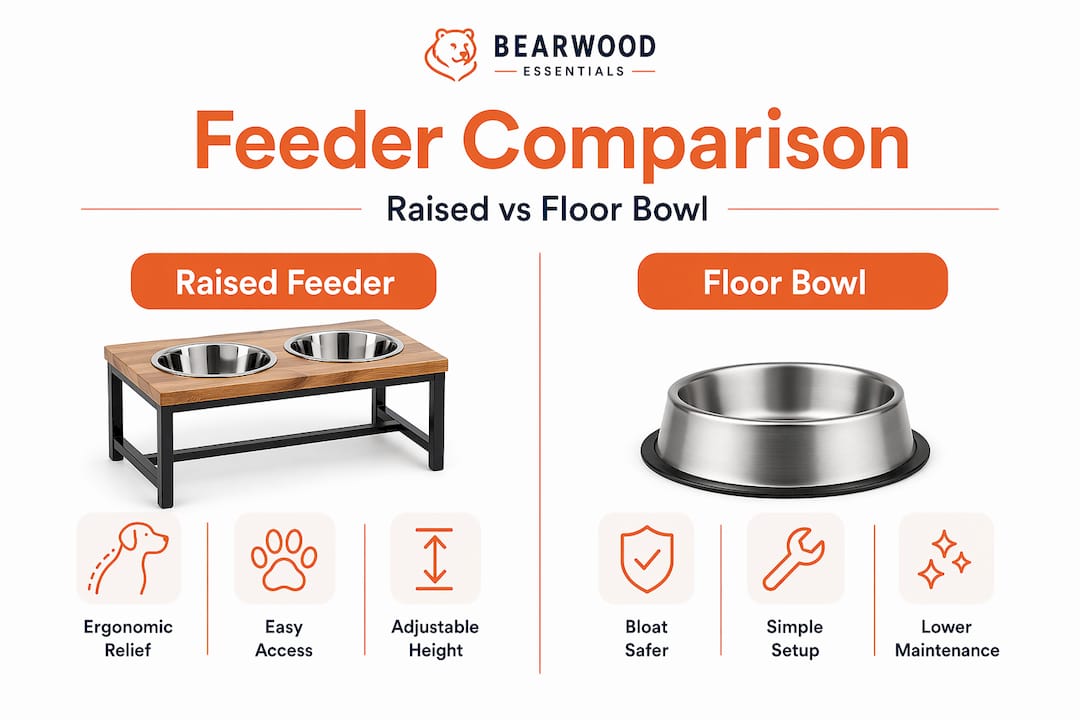
The raised vs floor feeding debate also involves practical maintenance. A raised feeder keeps your dog’s water and food at a level where splashing and spilling is reduced. That means less cleanup and, more importantly, a drier floor surface around the feeding station, which reduces slip risk for senior dogs with already compromised footing.
Pro Tip: If your senior dog eats both wet and dry food at different meals, consider keeping a raised feeder for dry kibble and using a floor mat with a non-slip bowl for wet food, since wet food bowls require more frequent washing and may benefit from separate handling.
Adjustable-height feeders deserve special mention here. Because arthritis and postural changes progress gradually, a fixed-height stand that works today may not work in six months. Look for replacement bowls and adjustable stands that allow height changes without replacing the entire unit.
Practical tips for using raised feeders safely and effectively
Knowing that raised feeders can help is only part of the job. How you set them up and maintain them matters just as much. Here is how to do it right.
- Measure your dog’s elbow height while they are standing. Hold a ruler from the floor to the point of the elbow joint. That measurement is your target bowl rim height.
- Choose an adjustable feeder so you can move the bowl height up or down as your dog’s condition changes.
- Place the feeder on a non-slip mat or rug. Senior dogs with weak legs tire quickly if they are constantly compensating for a sliding feeder. Non-slip surfaces under feeders prevent the slipping that exhausts weak senior legs.
- Use wide, shallow stainless steel bowls so your dog’s muzzle doesn’t dip deeply, and hygiene stays easy to maintain.
- Add a slow-feeder insert or slow-feeder bowl design. Combining elevated feeding with slow-feeder bowl designs prevents gulping and reduces bloat risk. Ridges, mazes, or simple obstacles inside the bowl are enough to slow eating pace significantly.
- Recheck feeder height every four to eight weeks. Arthritis progresses unevenly. Adjusting feeder height every 4 to 8 weeks accounts for shifting posture and new mobility limitations.
- Consult your vet before switching, especially if your dog is a large or deep-chested breed, or if they have any diagnosed neck or spinal condition.
Also consider the setup details that affect your dog’s comfort beyond just height. Bowl width, floor traction, and feeding pace all work together. Getting one right while ignoring the others limits the total benefit.
Reconsidering raised feeders: what most guides don’t reveal
Most articles on this topic land in one of two camps: either they tell you raised feeders are always good, or they cite the bloat study and leave you scared to use one at all. Both positions are incomplete.
Here is what we have come to understand: the value of a raised feeder depends almost entirely on whether the height is correct for your specific dog, not on the concept of elevation itself. A raised feeder at the wrong height, whether too tall or too short, can be worse than a floor bowl. The tool is not the variable. Precision is.
We also think the conversation too often skips observation. Before you buy anything, watch your dog eat from their current bowl. Do they strain their neck downward? Do they shuffle their front feet during a meal? Do they seem reluctant to eat, or do they eat quickly and then move stiffly? These behaviors are your best guide. They tell you more than any general recommendation.
Some senior dogs with specific neck or spinal conditions genuinely require feeding from the floor, even though every surface-level guide says to raise the bowl. This is why a vet partnership matters. Your veterinarian can assess whether elevation will help or harm based on imaging, physical exam, and your dog’s history.
The most effective approach we have seen is a hybrid setup: a height-adjustable raised feeder with stainless steel bowls, a slow-feeder insert, and a non-slip mat, combined with a vet check-in every few months as your dog’s condition evolves. Explore balanced elevated feeding strategies that account for all of these factors together. The goal is not to pick a side. It is to build a feeding environment that adapts as your dog ages.
Find the perfect raised feeder for your senior dog at Bearwood Essentials
Your senior dog deserves a feeding setup that actually fits their body and their needs, not a generic solution pulled off a shelf. At Bearwood Essentials, every product is built with that in mind.

Our adjustable raised feeders let you dial in the exact height your dog needs today and change it as their condition evolves. The stands are stable, the materials are durable, and the designs are built to last through the full senior chapter of your dog’s life. Pair any stand with our metal raised feeder stand options or browse our replacement bowls to customize your current setup without replacing everything. Free U.S. shipping is available on qualifying orders, so getting the right setup for your dog has never been easier.
Frequently asked questions
At what height should I position a raised feeder for my senior dog?
Start by measuring your dog’s front elbow height while standing and set the bowl rim at that level to keep the neck roughly horizontal during eating. Veterinary guidance recommends elbow-level placement for senior dogs with mobility issues, and you should recheck and adjust this every 4 to 8 weeks as posture changes.
Can raised feeders increase the risk of bloat in large dogs?
Yes, but only when the feeder is positioned too high. Excessive elevation showed a 110% higher bloat risk in large, deep-chested breeds, while moderate elevation at elbow height showed no significant increase in risk.
Are raised feeders suitable for all senior dogs?
No. Dogs with certain neck or spinal conditions may actually do better eating at floor level, so observe your dog’s eating posture carefully and consult your vet. Some senior dogs with spinal issues do better at floor level despite common recommendations for elevation.
How can I prevent my senior dog from gulping food when using a raised feeder?
Use a slow-feeder bowl design with ridges or maze-like obstacles inside the bowl to naturally slow your dog’s eating pace. Slow-feeder bowls paired with elevated feeders are shown to prevent gulping and reduce associated bloat risk in senior dogs.
What materials are best for raised feeder bowls for senior dogs?
Wide, shallow stainless steel bowls are the best choice. Stainless steel bowls are the easiest to keep clean, resist bacteria buildup, and outlast plastic or ceramic alternatives in daily use.