
How is feeding station height calculated?
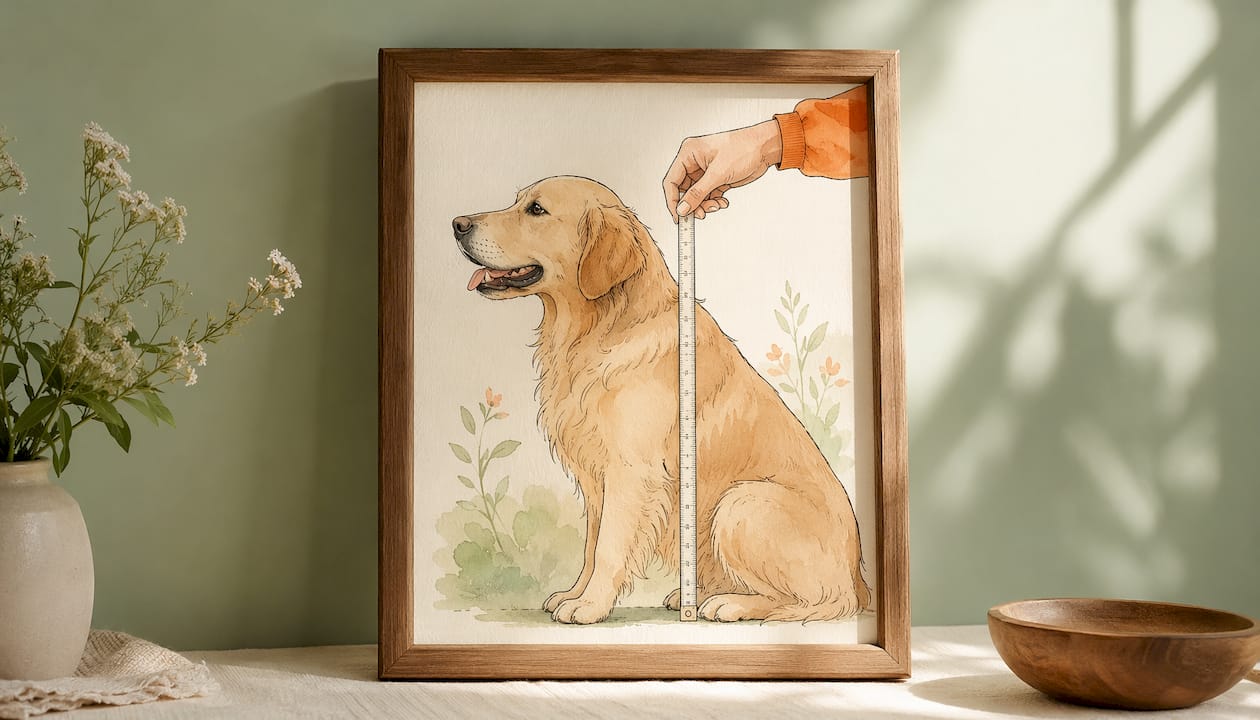
The ideal feeding station height is calculated by measuring your dog from the floor to the top of its shoulders (the withers) while it stands squarely on a hard, level surface. From that number, subtract 3 inches for small dogs or 6 inches for large dogs. The result places the bowl rim at roughly the bottom of your dog’s chest, which keeps the spine neutral and the neck relaxed during every meal.
This size-based subtraction is the core of calculating feeding station height correctly. A bowl set at chest level lets your dog eat without straining upward or hunching downward, both of which create unnecessary joint stress over time.
-
Measure floor to withers on a hard, flat surface (no carpet)
-
Subtract 3 inches for small breeds, 6 inches for large breeds
-
Confirm the final height lands near the bottom of the chest
-
Adjust slightly if your dog’s posture looks strained after a few meals
How to measure your dog accurately for feeder height
Getting the measurement right takes about two minutes, but it pays off in long-term comfort. Follow these steps carefully.
-
Have your dog stand squarely on a hard floor, feet directly beneath the body, not splayed
-
Run a flexible measuring tape from the floor straight up to the highest point of the shoulders (the withers, not the base of the neck)
-
Write down the number in inches before your dog moves
-
Apply the subtraction rule: 3 inches for small dogs, 6 inches for large dogs
-
Check that the resulting height aligns with the lower chest, not the belly
Pro Tip: If your dog won’t stand still, ask a second person to hold a treat at nose level while you measure. You get a natural, upright stance without the wrestling match.
Consistency matters here. Measure twice on the same surface, and if the two readings differ by more than half an inch, take a third and average them. Puppies and senior dogs need remeasuring every few months because their posture and muscle tone shift as they grow or age.
Why a properly adjusted feeder improves your dog’s health
A raised feeder at the right height does more than look tidy. According to Canine Arthritis Resources and Education, raising the bowl to a level that allows a neutral spine and minimal neck flexion shifts weight back onto the pelvic limbs, which provides isometric strengthening for dogs with pelvic limb arthritis.
-
Reduces strain on the neck, shoulders, elbows, and carpals during meals
-
Supports neutral spinal alignment, which protects joints over the long term
-
Helps dogs with arthritis avoid the painful forward weight shift that floor-level bowls cause
-
Reduces gulping and choking linked to awkward bowl positions
-
Lowers mealtime anxiety by making food easier to reach comfortably
Dogs with arthritis or joint pain benefit most visibly. When a dog eats from the floor, it shifts body weight forward onto the front limbs, loading the carpals, elbows, shoulders, and neck with every bite. A correctly elevated feeder redistributes that load and makes mealtime genuinely comfortable rather than something to push through.
Sizing guidelines by dog size and breed
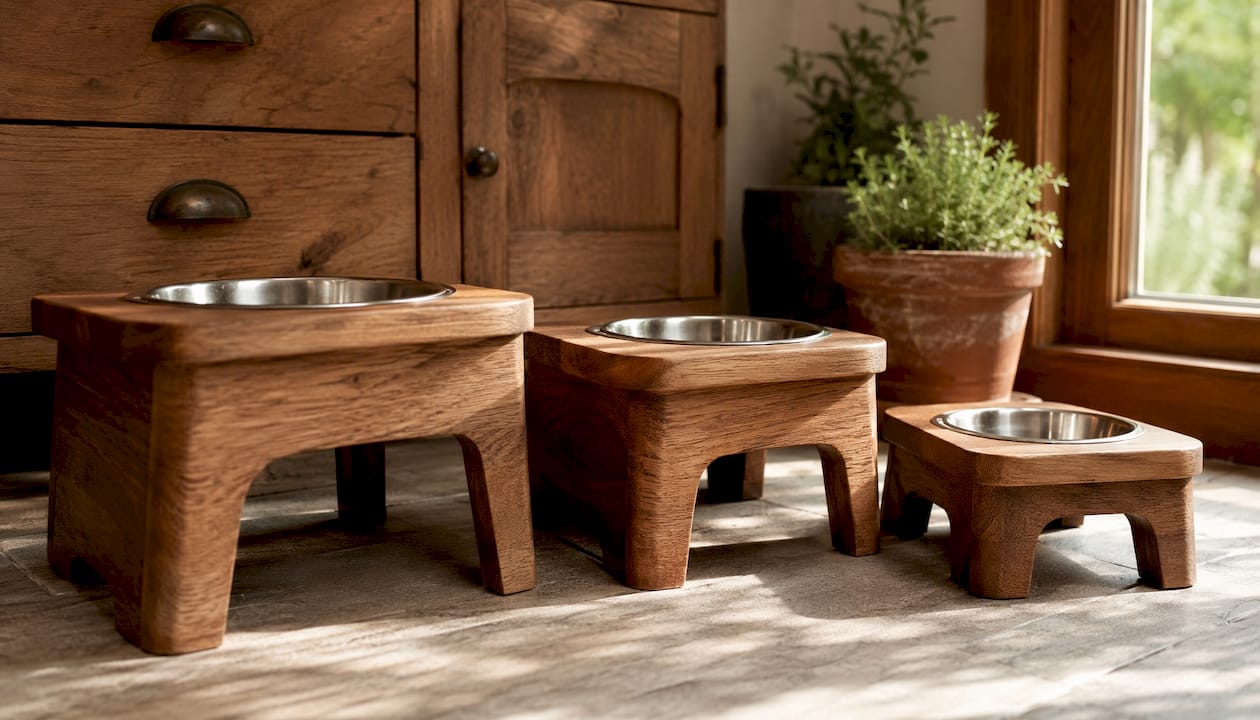
General height ranges give you a useful starting point before you take a single measurement. The ranges below reflect commonly accepted guidelines for raised bowl height above the floor.
| Dog Size | Example Breeds | Recommended Bowl Height |
|---|---|---|
| Small dog breeds like Chihuahua, Maltese, and Yorkie generally have bowls raised a few inches above the floor. |
| Medium dog breeds such as Beagle and English Springer Spaniel typically have bowls raised to a moderate height above the floor. |
| Large dog breeds including Golden Retriever, German Shepherd, and Labrador often have elevated bowls set noticeably higher off the floor. |
| Extra large or giant breeds like Great Dane, Great Pyrenees, and Irish Wolfhound generally require feeding bowls positioned at a greater height to accommodate their size. |
These ranges are starting points, not fixed rules. Two dogs of the same breed can have noticeably different withers heights depending on genetics and build, so always verify with a direct measurement. The subtraction formula gives you a personalized number; the table helps you confirm it falls in a reasonable range for your dog’s size class.
-
Aging dogs often need a slightly higher bowl as muscle loss causes them to stand with a more hunched posture
-
Dogs recovering from orthopedic surgery may need temporary height adjustments recommended by their vet
-
Puppies grow fast enough that their feeder height can become outdated within a few months
For dogs with mobility challenges, a raised feeder designed for arthritic dogs can make a meaningful difference in daily comfort.
What do experts say about posture and feeding height?
Veterinary and orthopedic experts consistently emphasize posture over any single fixed measurement. The goal for elevated feeders is a neutral spine with minimal neck flexion, adjusted to the individual dog’s posture rather than a universal height.
Experts also stress that feeding station height should be reassessed every few months to accommodate growth or changes in musculoskeletal health. A height that worked perfectly six months ago may now be causing subtle strain.
Watch for these signs that an adjustment is needed:
-
Your dog stretches its neck noticeably upward or cranes downward to reach the bowl
-
Excessive licking at the bowl rim or the floor around it
-
Visible frustration, pawing at the bowl, or walking away mid-meal
-
Gulping or choking more than usual
-
Stiffness in the neck or shoulders after eating
Common methods for measuring feeder height
Three practical approaches work well for most dog owners, and each has a slightly different use case.
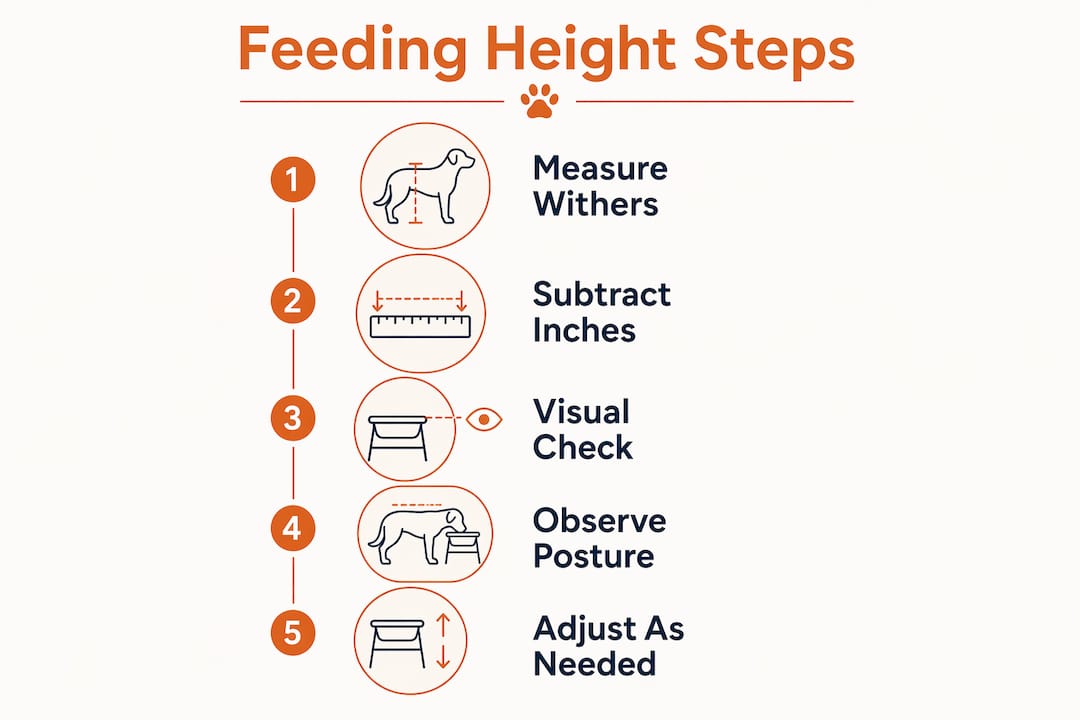
The withers-minus rule is the most reliable. Measure floor to withers, subtract 3 or 6 inches based on size, and you have a target bowl height. This method accounts for your specific dog’s proportions rather than relying on breed averages alone.
The chest-level visual check works as a quick confirmation. Stand beside your dog and note where the bottom of the chest falls. The top of the bowl should sit at or just below that line. If it does, the withers-minus calculation was accurate.
The posture observation method is the ongoing check. Watch your dog eat for the first few meals after setting a new height. A relaxed, level topline with no visible neck strain means the height is correct. Any craning up or hunching down calls for a half-inch or inch adjustment in the appropriate direction.
Using all three together gives you both a precise starting number and a real-world confirmation that the number is working for your dog.
How bowl type affects the height you need
The type of bowl or feeder you use changes the effective height your dog experiences, even when the stand height stays the same.
Deep bowls sit lower inside the stand, so your dog’s nose reaches further down to the food. If you switch from a shallow bowl to a deep one, raise the stand by roughly the difference in bowl depth to maintain the same eating posture.
Tilted or angled feeders are designed to bring food closer to the front of the bowl, reducing how far a dog must extend its neck. They work particularly well for flat-faced (brachycephalic) breeds like Bulldogs and Pugs, who benefit from a slightly lower angle of approach.
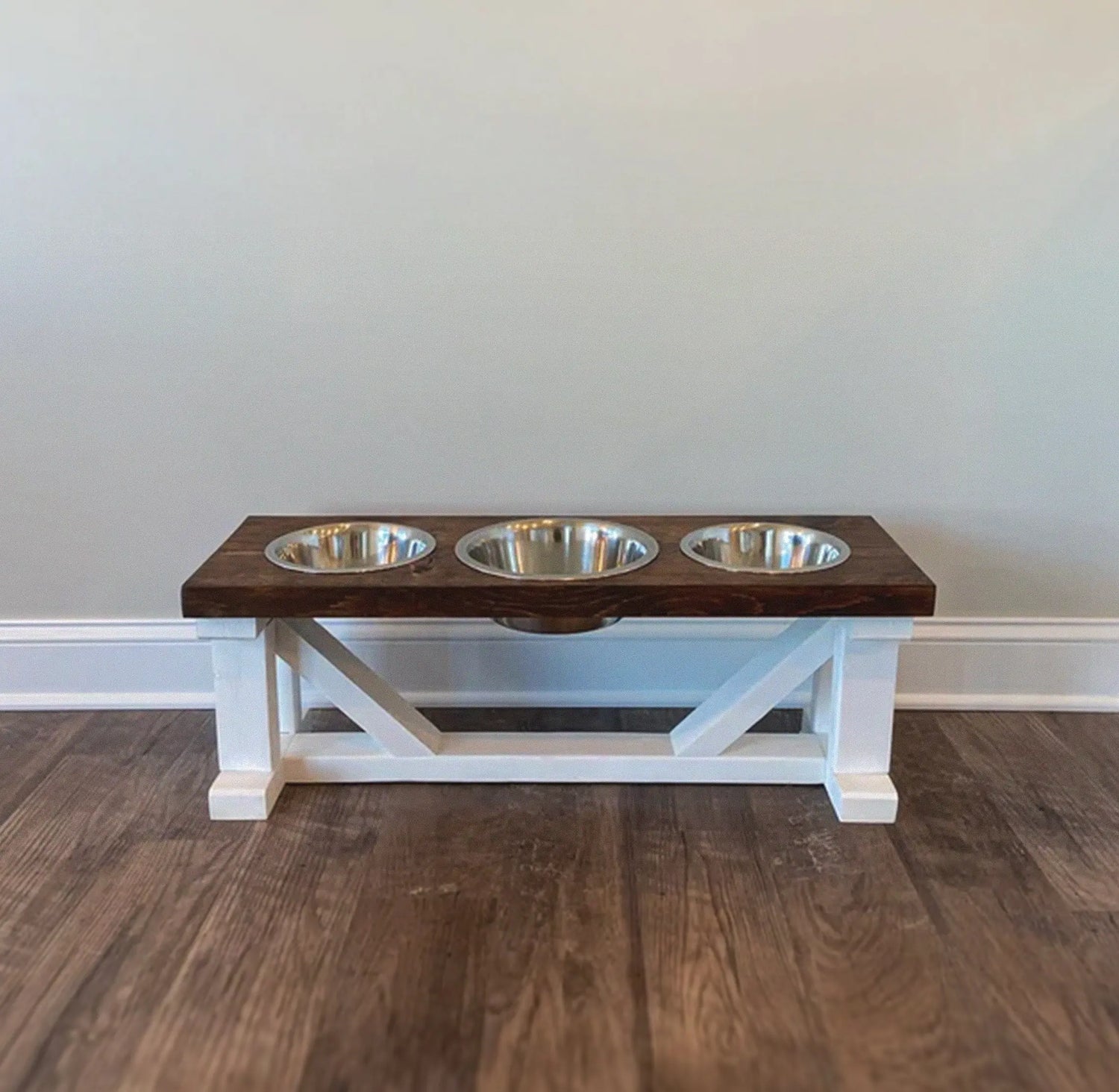
Two-bowl stations need both bowls at the same height. A wooden double diner keeps food and water at a consistent level, which matters because dogs drink with a different neck angle than they use when eating.
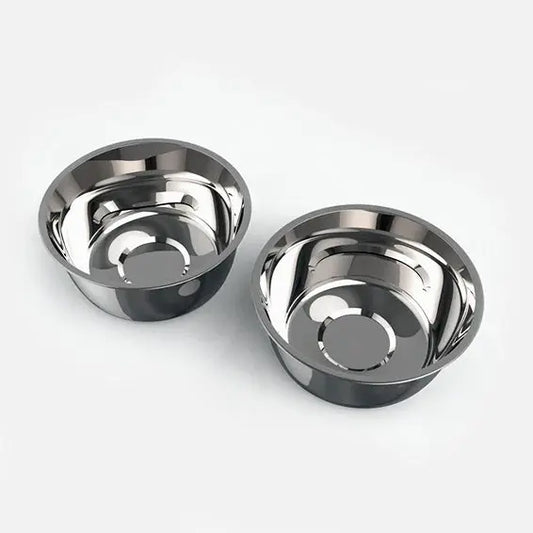
Stainless steel bowls inside a raised stand are easy to clean and do not shift the effective height the way a bowl with a thick rim or a rubber base might. Always measure from the floor to the bottom of the food surface, not just to the top of the stand.
What happens when feeder height is wrong
An incorrect feeding height creates real physical consequences, not just minor discomfort. Incorrect feeding station heights can increase risks related to digestion and musculoskeletal strain, causing visible struggling, excessive licking, frustration, or choking.
A bowl set too low forces your dog to shift weight onto the front limbs with every bite, loading the carpals, elbows, and shoulders repeatedly over years of daily meals. A bowl set too high causes the neck to extend upward, compressing the cervical spine and creating a different but equally damaging pattern of strain.
Behavioral changes often appear before physical ones. A dog that starts eating more slowly, leaves food in the bowl, or seems reluctant to approach the feeder may simply be responding to discomfort that the owner has not yet noticed. Adjusting the height often resolves these behaviors within a few days without any other change to routine.
Bearwoodessentials handcrafted feeders, sized right for your dog
Getting the height right is only half the equation. The feeder itself needs to hold that height reliably, look good in your home, and be easy to clean after every meal. Bearwoodessentials handcrafts elevated feeders in both wood and metal, built to the exact dimensions that match your dog’s calculated bowl height.
Every feeder from Bearwoodessentials is made with durable materials and functional design, so the stand stays stable at mealtime and holds up over years of daily use. The handmade metal dog bowl feeder and the wooden raised feeder with stainless steel bowls are both available in sizes that align with the height ranges covered in this guide. Free U.S. shipping applies to qualifying orders. Browse the full collection at Bearwoodessentials and find the feeder that fits your dog’s measurements.
Key Takeaways
The most reliable way to calculate feeding station height is to measure your dog’s withers height and subtract 3 inches for small dogs or 6 inches for large dogs, placing the bowl at chest level for a neutral spine.
| Point | Details |
|---|---|
| Core calculation method | Measure floor to withers, then subtract 3 inches (small dogs) or 6 inches (large dogs) for correct bowl height. |
| Height ranges by size | Small dogs: bowls raised a few inches above the floor; medium dogs: bowls raised to a moderate height; large dogs: bowls set noticeably higher off the floor; giant breeds: feeding bowls positioned at a greater height to accommodate their size. |
| Reassess regularly | Feeder height should be checked every few months as dogs grow, age, or experience changes in mobility. |
| Watch for warning signs | Excessive licking, gulping, neck straining, or mealtime frustration all signal a height adjustment is needed. |
| Bearwoodessentials feeders | Handcrafted wood and metal elevated feeders built to match your dog’s calculated height for lasting comfort. |