
Most dog owners assume a raised feeder is simply better. Put the bowl up, protect the neck, done. But understanding how raised feeders reduce strain takes more than a quick product swap. The reality is more specific, more nuanced, and honestly more interesting. Some dogs benefit enormously. Others may face new risks from the same setup. This guide walks you through the biomechanics, the latest veterinary research, and the practical steps that will help you make the right call for your dog’s size, age, and health.
Table of Contents
- Key takeaways
- How feeding posture affects neck and joint strain
- The bloat debate and raised feeder risks
- How to choose a raised feeder and set the right height
- Who benefits most from raised feeders
- My honest take on raised feeders and ergonomic feeding
- Find the right raised feeder for your dog
- FAQ
Key takeaways
| Point | Details |
|---|---|
| Feeder height affects posture | Bowls set at lower chest height promote neutral spine alignment and reduce neck flexion. |
| Raised feeders carry real risks | Large, deep-chested breeds may face increased GDV risk with elevated feeders. |
| One size does not fit all | Senior dogs and arthritic dogs benefit most; healthy young dogs often do fine with floor bowls. |
| Slow-feed inserts add safety | Pairing elevated bowls with slow-feed inserts reduces air intake and digestive distress. |
| Vet input makes the difference | Individual assessment is more reliable than general assumptions about raised feeder benefits. |
How feeding posture affects neck and joint strain
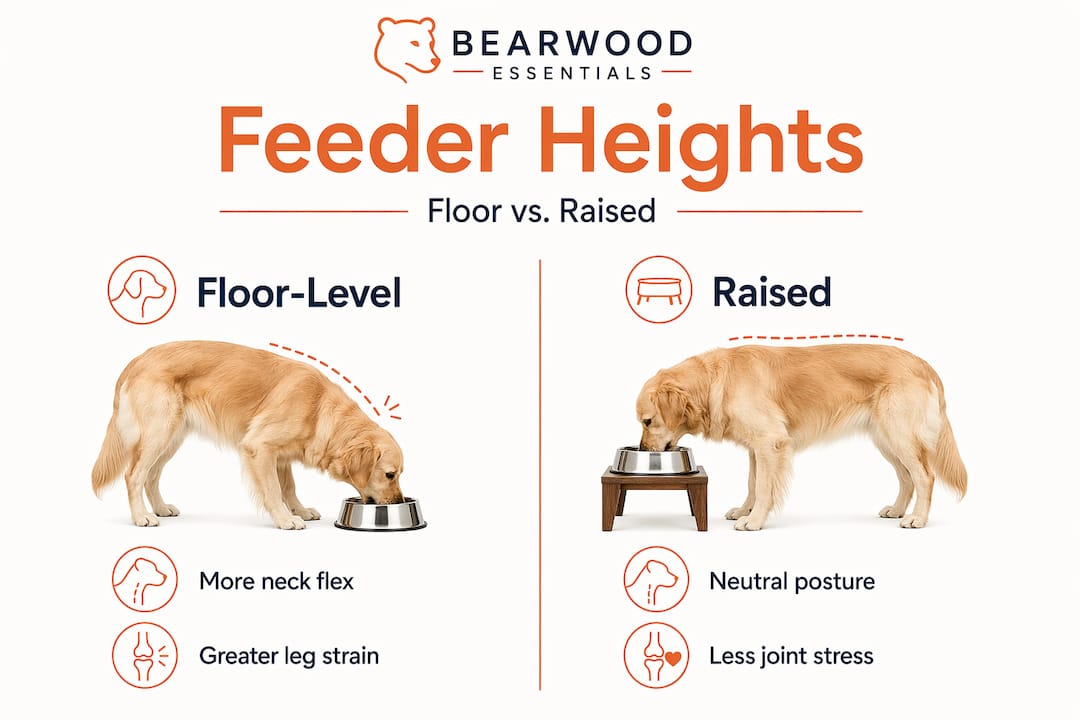
When your dog eats from a bowl on the floor, they have to lower their head well below shoulder level to reach the food. That deep neck flexion puts sustained pressure on the cervical spine and shifts a disproportionate share of body weight onto the front legs. For a healthy young dog doing this twice a day, the impact is minimal. For a dog with arthritis, neck stiffness, or shoulder problems, it becomes a real source of daily discomfort.
Elevated feeders reduce deep neck flexion and front-leg weight transfer by positioning the bowl closer to the dog’s natural standing posture. When the bowl sits at the right height, the dog’s spine stays closer to neutral, the neck muscles work less against gravity, and the front joints bear a more balanced load. Think of it the same way you think about your own desk height. Slouching over a low surface for an extended time causes strain. The same principle applies to your dog.
The benefits of raised feeders become especially clear for dogs with diagnosed joint conditions. Proper feeder height decreases forward lean and distributes body weight more evenly across the hips, elbows, and shoulders. For dogs recovering from orthopedic surgery or managing chronic pain, that reduction in mechanical stress during every meal adds up significantly over time.
Here is what changes biomechanically when a dog eats from a properly raised feeder:
- The neck stays closer to horizontal rather than angled sharply downward
- Front limb joints absorb less impact from the dog’s forward lean
- Muscles along the cervical spine do less compensatory work
- The dog can maintain a more relaxed, stable stance throughout the meal
- Dogs with breathing difficulties caused by structural issues find swallowing easier when the airway is less compressed
Pro Tip: Watch your dog eat from their current bowl and look for signs of front-leg splaying, neck straining, or repeated stepping to reposition. These are clear signals that their current setup is creating unnecessary strain.
The bloat debate and raised feeder risks
Here is where the conversation gets complicated. For years, many dog owners treated elevated feeders as a way to prevent bloat. That assumption turns out to be wrong. And for large breeds, it may actually backfire.
Research has shown that dogs fed from raised bowls may face a 110% increased risk of gastric dilatation-volvulus, commonly called GDV or bloat. This is most pronounced in large and giant breeds with deep chests, such as Great Danes, Weimaraners, and Irish Setters. GDV is a life-threatening condition where the stomach fills with gas and twists on itself. The mortality rate from GDV sits between 10 and 30% even with treatment.
The proposed mechanism is that elevated bowls encourage faster eating, which increases the amount of air a dog swallows during a meal. More air in the stomach raises the risk of distension and the cascade of events that leads to GDV. This does not mean every raised feeder is dangerous. It means that for certain breeds and feeding profiles, the height of the bowl is one variable among many that owners need to manage carefully.
| Factor | Elevated bowl | Floor bowl |
|---|---|---|
| Neck and spine alignment | Improved, more neutral | Increased cervical flexion |
| Digestive comfort | May improve for some dogs | Natural but may cause acid reflux in some |
| Joint stress | Reduced with correct height | Higher in dogs with mobility issues |
| GDV risk (large breeds) | Potentially elevated | Lower risk reported |
| Best suited for | Senior, arthritic, or mobility-limited dogs | Healthy dogs of most sizes |
“We thought the raised bowl was protecting him.” This phrase comes up repeatedly when large-breed dog owners learn their well-intentioned upgrade may have contributed to bloat. The research doesn’t mean you should panic. It means you should be informed.
The real factors for preventing GDV include feeding smaller meals twice daily, avoiding exercise one to two hours before and after eating, and slowing your dog’s eating pace. Bowl height alone is not a prevention strategy.
How to choose a raised feeder and set the right height
If you have decided a raised feeder is right for your dog, getting the height correct is the single most important decision you will make. Too low and you do not solve the posture problem. Too high and you create a different kind of strain, specifically in the neck and upper back as the dog reaches upward and forward.
Follow these steps to choose and set up a raised feeder that genuinely helps your dog:
- Measure your dog’s lower chest height. Stand your dog naturally and measure from the floor to the bottom of their chest. That measurement is your target bowl height. This is the level at which neutral spine alignment is best supported.
- Avoid going too high. A bowl set above the chest forces the dog to crane their neck upward, which creates tension through the upper cervical spine. This is a new source of strain, not a solution to the old one.
- Choose a feeder with a stable, wide base. A stable wide base with a non-slip bottom prevents the stand from shifting during a meal. Shifting forces the dog to make awkward postural adjustments mid-bite, which reintroduces the joint stress you were trying to eliminate.
- Select the right bowl shape. Wide, shallow bowls work better for dogs who eat quickly or have flat faces. Deeper bowls are fine for most medium and large breeds, but make sure the dog can reach the bottom comfortably without tilting the bowl or straining their neck.
- Add a slow-feed insert. Slow-feeder inserts with elevated bowls reduce the rate of eating and lower the amount of air your dog swallows. This is especially important for large breeds where the GDV risk is a real concern.
- Reassess every few months. Puppies grow. Dogs change weight and mobility. A height that worked six months ago may be off today. Build in a quick reassessment at each vet visit or seasonal check-in.
Pro Tip: If your feeder is not height-adjustable, place it on a low, flat platform like a rubber mat or a purpose-built wooden riser to fine-tune the height without buying a completely new stand.
Who benefits most from raised feeders
Understanding the benefits of raised feeders means understanding they are not a universal upgrade. They are a targeted solution for dogs with specific physical needs.
The dogs who see the clearest benefit from elevated feeding are:
- Senior dogs with arthritis or joint stiffness. Elevated bowls set at proper height ease the pain of bending deeply at every meal. For dogs already managing mobility issues, this can noticeably improve their quality of life and willingness to eat. You can read more about choosing appropriate setups in this guide to elevated feeding for senior dogs.
- Dogs with cervical spine problems. Disc issues or structural neck problems make deep neck flexion genuinely painful. A properly raised feeder removes most of that stress.
- Dogs recovering from orthopedic surgery. During recovery, minimizing unnecessary mechanical strain on healing joints supports a faster, more comfortable rehabilitation.
- Brachycephalic breeds with breathing challenges. Flat-faced breeds like Bulldogs and Pugs can benefit from a bowl height that keeps the airway more open during swallowing, which reduces the effort of eating.
- Dogs with acid reflux or regurgitation issues. A slightly elevated position can reduce backflow, particularly for dogs that tend to vomit or regurgitate after meals.
On the other hand, healthy young dogs without diagnosed mobility or digestive issues often do better with floor-level bowls. Their bodies are built to handle the natural posture of floor feeding. Adding a raised feeder for a healthy two-year-old Labrador offers no clear benefit and, for certain large or deep-chested breeds, may introduce unnecessary risk.
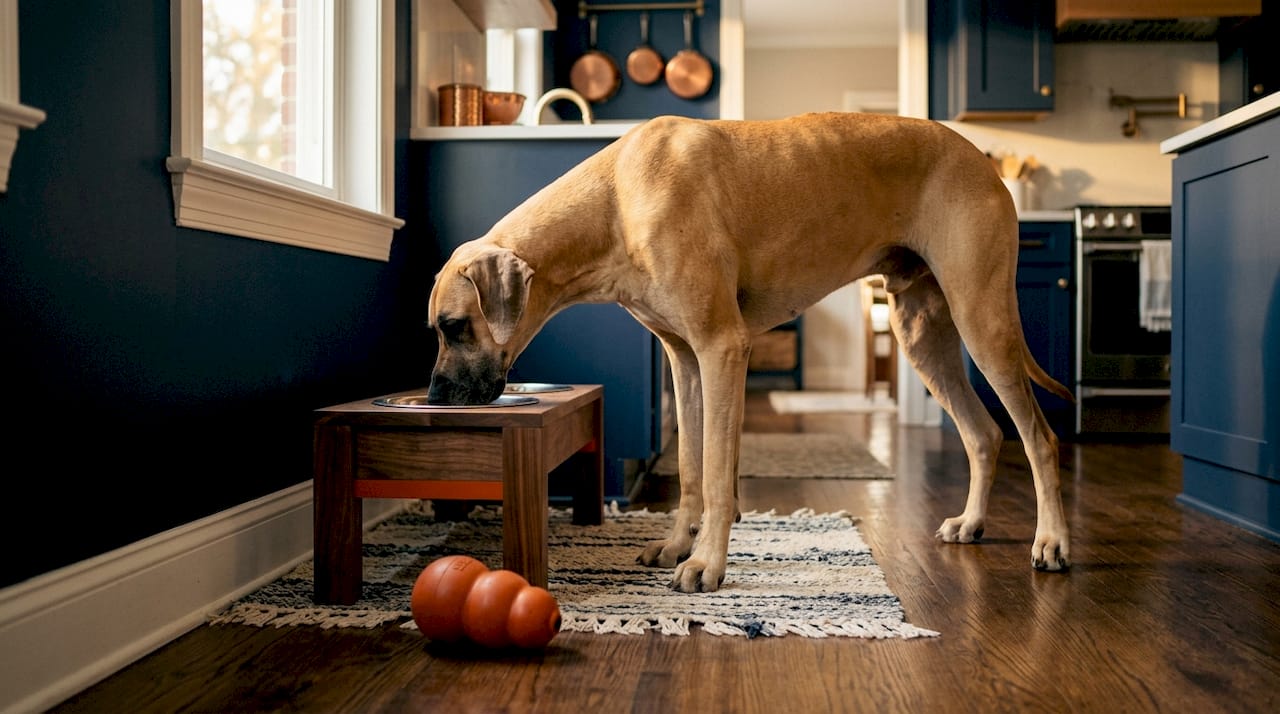
Giant breeds like Great Danes and Saint Bernards occupy a complicated middle ground. Their sheer size makes deep neck flexion more strenuous, but they also carry the highest risk profile for GDV with elevated feeders. For these dogs, the answer is not simply “raise the bowl” or “leave it on the floor.” It is a conversation with your vet that accounts for the dog’s individual anatomy, eating habits, and health history. If you are still unsure whether your dog needs an elevated setup, this checklist on signs your dog needs a raised feeder can help clarify the picture.
My honest take on raised feeders and ergonomic feeding
I have watched a lot of dogs eat over the years, in homes and at feeding setups ranging from a plastic bowl on a tile floor to hand-built wooden stands designed for specific breeds. What I have learned is that the dogs who benefit most from raised feeders are almost always the ones whose owners noticed a specific problem first. Stiffness getting down to eat. Reluctance to finish a meal. Visible discomfort in the neck or shoulders after feeding time.
The owners who switched to a raised feeder because it looked good or seemed like a reasonable upgrade are the ones more likely to see no change, or in unlucky cases with large-breed dogs, a worse outcome. That is not a criticism. It reflects how easy it is to absorb general advice without applying it to the individual animal in front of you.
What I find genuinely reassuring about the current state of knowledge is that the research on GDV risk is not saying “raised feeders are harmful.” It is saying “know your dog, know your breed, and do not rely on a single variable to solve a multifactorial problem.” That is good advice for almost everything in pet care.
My practical suggestion: if you are considering a raised feeder, write down what problem you are trying to solve before you buy anything. Then check whether the feeder’s design and height actually addresses that problem. A beautiful wooden stand at the wrong height is still the wrong solution.
— Kim
Find the right raised feeder for your dog

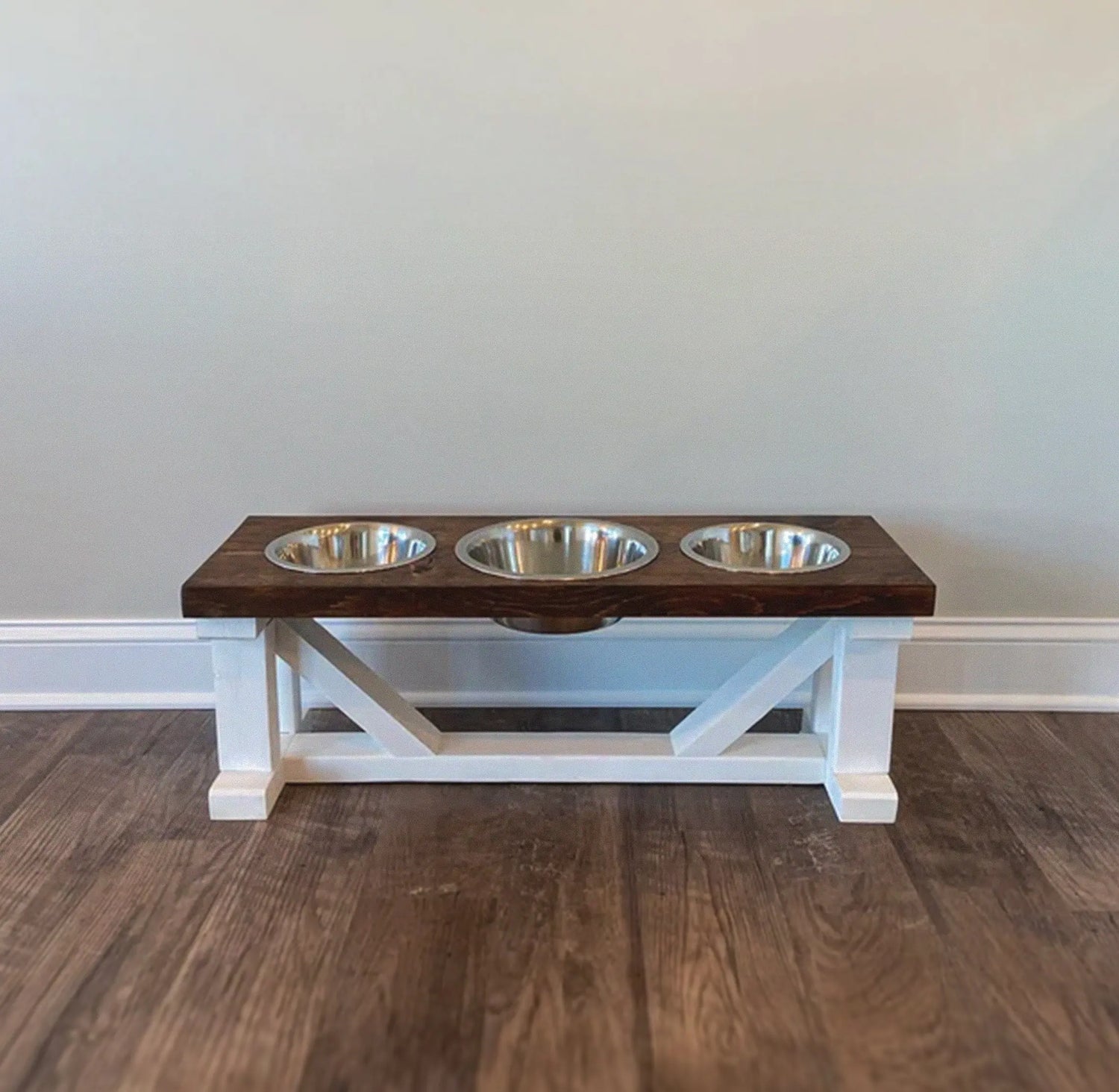
At Bearwoodessentials, every feeder is built with both function and your dog’s comfort in mind. Whether you are caring for a senior dog with arthritis or simply want a more ergonomic mealtime setup, the right feeder height and a stable base make a real difference. The handmade metal raised feeder combines durability with a clean, functional design that suits most medium and large breeds. For a classic look with the same ergonomic focus, the wooden elevated dog feeder offers a natural wood finish with stainless steel bowls built to last. Both options ship free across the U.S. on qualifying orders. Browse the full collection at Bearwoodessentials and find the fit that works for your dog.
FAQ
How do raised feeders reduce strain on a dog’s neck?
Raised feeders position the bowl at the dog’s lower chest height, which reduces the deep neck flexion required to eat from a floor bowl. This keeps the spine closer to a neutral position and takes pressure off the cervical muscles and front limb joints.
Do raised feeders improve posture in all dogs?
Not necessarily. Raised feeders and pet health improvements are most evident in dogs with arthritis, cervical stiffness, or mobility issues. Healthy young dogs without diagnosed conditions often do well with standard floor feeding and may not need an elevated setup.
Can raised feeders increase the risk of bloat?
Research suggests dogs fed from raised bowls may face a significantly higher risk of GDV, particularly in large and deep-chested breeds. The current guidance is to manage meal size, eating speed, and exercise timing alongside any decision about feeder height.
What is the correct height for a raised feeder?
The bowl should sit at roughly the height of your dog’s lower chest when they are standing naturally. Too high causes the dog to stretch upward, which creates new strain rather than relieving existing strain.
Are raised feeders a good choice for older dogs?
Yes. Raised feeders for older pets with joint pain or arthritis are one of the clearest use cases for elevated feeding. Reducing the need to bend deeply at every meal can meaningfully ease discomfort and encourage more consistent eating habits.