
The most reliable way to prevent feeder tipping in large dogs is to combine a low-center-of-gravity, anchored feeder with a paced-feeding alternative and short, consistent training. A weighted stainless-steel bowl or a recessed elevated stand stops most tipping immediately, while a LickiMat-style surface and scheduled mealtimes address the behavioral side.
TL;DR: Do these right now
- Swap to a weighted or recessed-bowl elevated feeder (the Bearwoodessentials handmade metal elevated feeder is a ready-made option built for large breeds)
- Place a non-slip rubber mat under the feeder on any smooth floor
- Offer a dog lick mat as a pacing alternative to maze-style slow feeders
- Switch to scheduled mealtimes with a short window, then remove the bowl
- Start short, calm-behavior training sessions at every meal
Table of Contents
- Why do large dogs tip their feeders so often?
- What feeder design features actually stop tipping?
- Which feeder category works best for large breeds?
- How to set up your feeding area so tipping stops
- Short training steps to calm mealtime behavior
- Should you fix the hardware or train the behavior first?
- Why Bearwoodessentials elevated feeders solve the anti-tip problem
- Key Takeaways
- The design details that actually make a difference
- Bearwoodessentials elevated feeders: a stable, long-term solution
- Further reading and sources
Why do large dogs tip their feeders so often?
Large dogs tip feeders for a mix of behavioral and physical reasons, and understanding both helps you pick the right fix.
Behavioral drivers include:
- Fast eating and frustration when food runs out quickly
- Pawing at the bowl to push more food to the surface
- Attention-seeking behavior, especially when the bowl-flip gets a reaction from you
- Boredom or excess energy at mealtime
- Frustration with deep maze-style slow feeders that trap food away from a large muzzle
Physical factors make the problem worse:
- Bite and push force from large breeds is significantly greater than from small dogs
- A lightweight bowl has a high center of gravity relative to its base, making it easy to flip
- Wide muzzles catch the lip of a bowl and lever it upward naturally
- Smooth floors give bowls almost no resistance to sliding or spinning
The safety risks go beyond a wet floor. Spilled food attracts pests, scattered debris can be ingested, and frantic eating raises the risk of gastric dilatation-volvulus (GDV), a life-threatening condition that Cornell’s Riney Canine Health Center identifies as particularly dangerous in large and deep-chested breeds. Slowing down eating and securing the bowl are two of the simplest preventive steps you can take.
What feeder design features actually stop tipping?
Not every “anti-tip” label on a product means the same thing. These are the specific design features that hold up under real large-dog force.
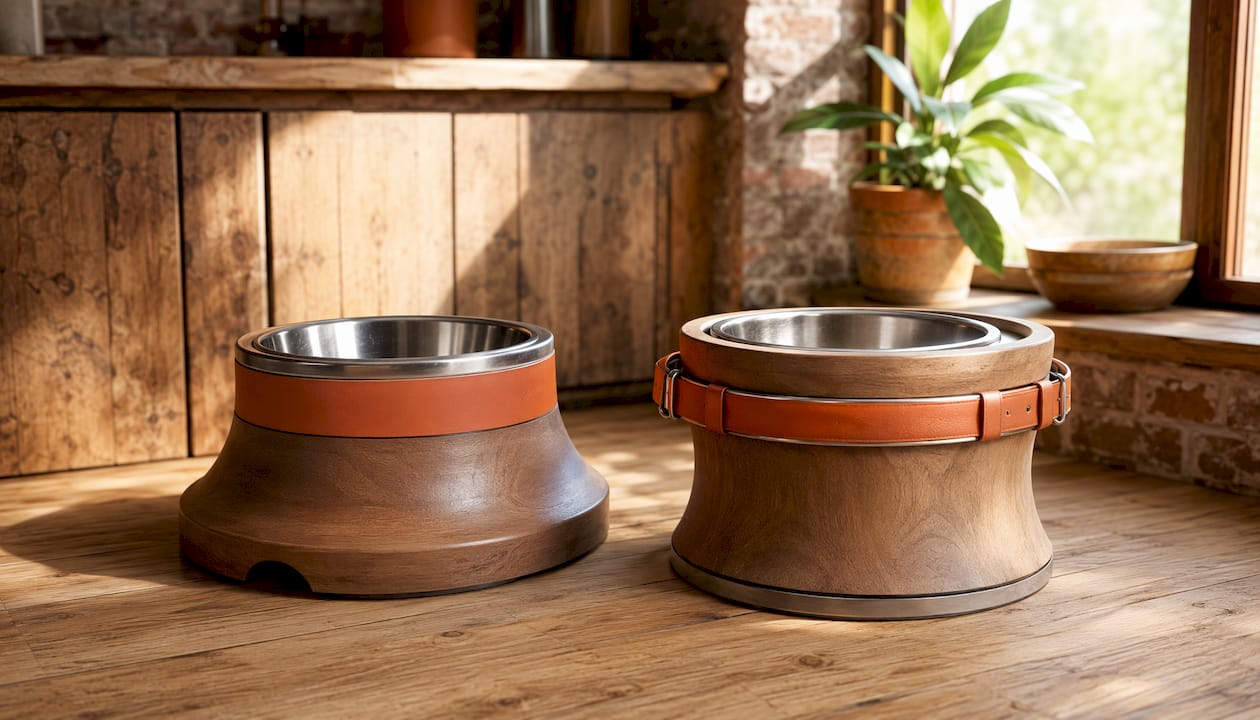
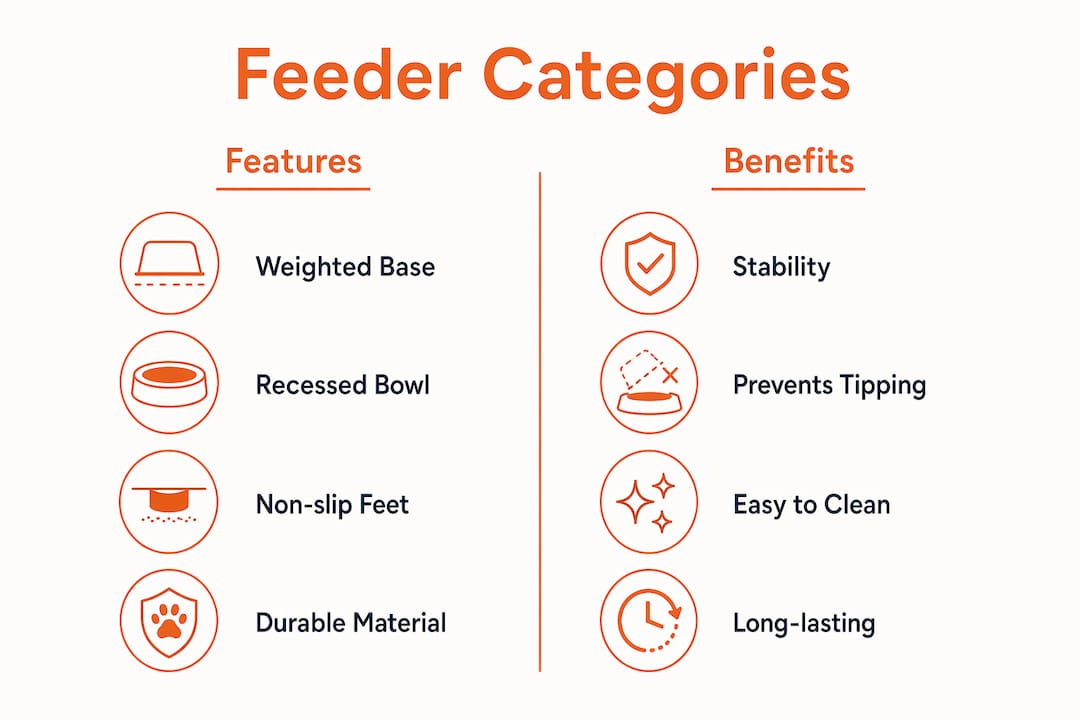
Weighted base and low center of gravity. Mass close to the floor is the single most effective passive anti-tip feature. A heavy base keeps the feeder planted even when your dog pushes or noses the bowl. Bite-resistant, low-center-of-gravity feeders reduce the need for constant supervision with enthusiastic large dogs.
Bowl retention mechanisms. Recessed bowl holders, locking rings, and twist-lock designs physically prevent the bowl from being lifted out. Gravity feeders with magnetized doors, like those on the Chow Hound line from Miller Manufacturing, use a magnetized door and angled chute to keep food contained and the bowl seated.
Non-slip interfaces. Rubber feet on the stand legs grip smooth floors well. Suction-cup bases work on tile and hardwood but lose grip on textured surfaces. A dedicated anti-skid mat under the entire feeder adds a second layer of resistance and protects your floor.
Lip and profile design. A shallow, wide bowl with a rolled lip is harder for a large muzzle to lever upward than a tall, narrow bowl. Deep maze patterns, on the other hand, can frustrate large-muzzle dogs and provoke flipping behavior. A LickiMat-style lick pad paces eating without that frustration.
Materials and durability. Stainless steel bowls resist chewing and are easy to sanitize. Powder-coated metal stands hold up to daily use and outdoor conditions. Food-grade materials with no sharp edges are non-negotiable for safety.
Pro Tip: Run your hand under the feeder base after placing it on your floor. If it rocks even slightly, add a rubber mat or shim the legs. A stable base before your dog even approaches the bowl is the foundation everything else builds on.
Which feeder category works best for large breeds?
Different types of tipping call for different solutions. Here is how the main categories compare.
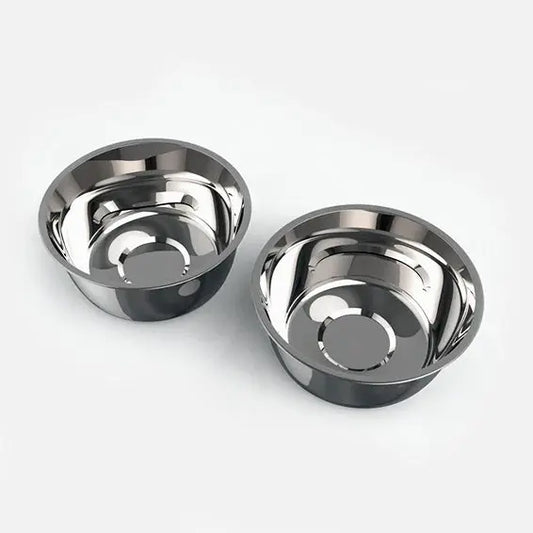
Heavy-weight stainless-steel bowls are the lowest-cost entry point. A genuinely heavy bowl resists sliding and nosing but can still be lifted by a determined dog.
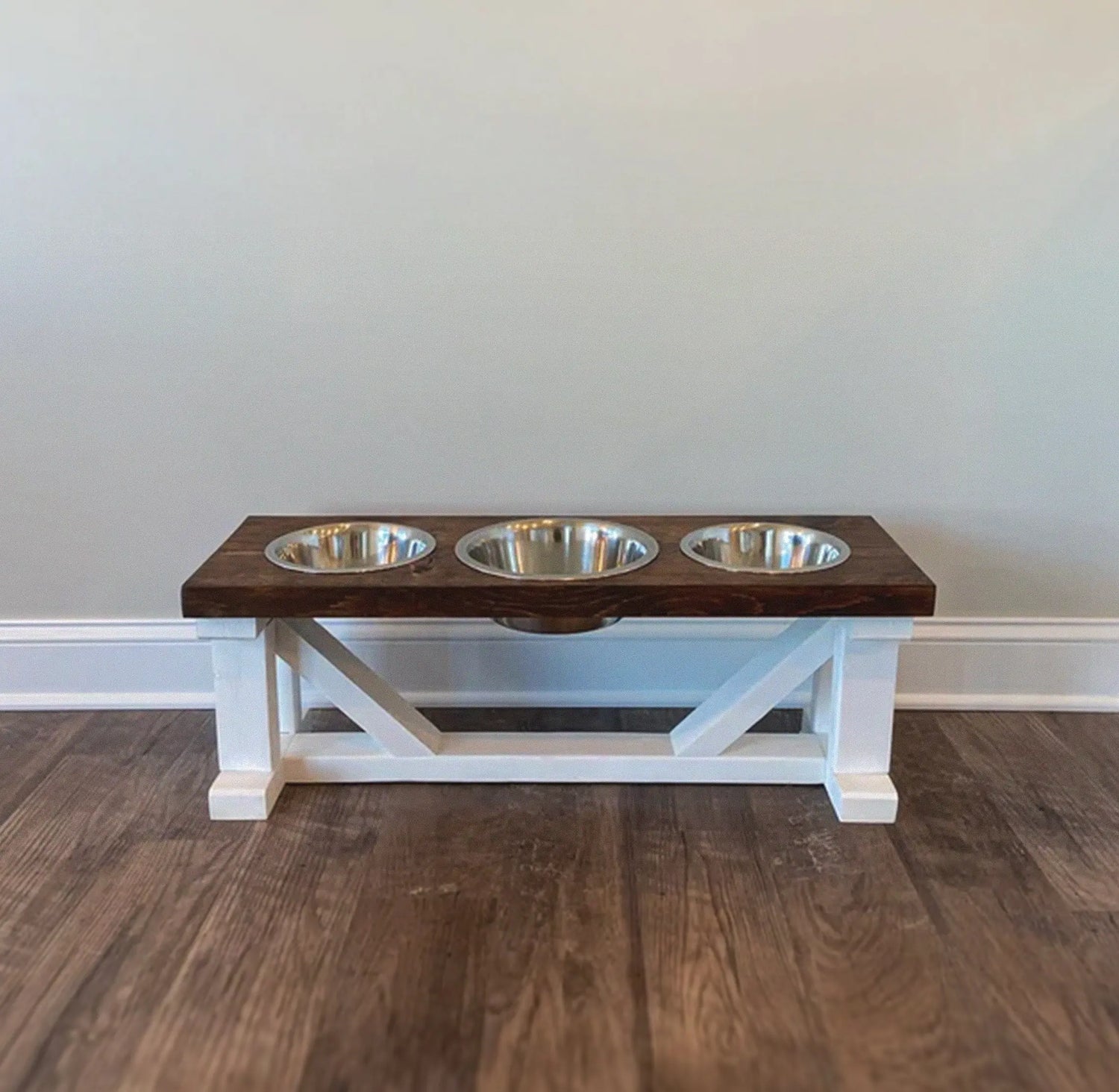
Elevated stands with recessed bowl holders are the most reliable all-around solution for large breeds. The bowl sits in a recessed cradle that prevents lifting, and the stand’s weight and rubber feet prevent sliding. Adjustable-height models add spill guards and let you match the stand height to your dog’s shoulder measurement.

Locked or gravity feeders (such as galvanized steel units with magnetized doors) work well for large-capacity households but require more counter space and are harder to clean thoroughly.
LickiMat-style pacing surfaces are not a replacement for a secure bowl, but they are an excellent complement. The LickiMat Slomo XL, for example, features deep pockets and a non-slip rubber base designed for large and XL dogs eating dry kibble, wet food, or raw food. It slows consumption without the maze frustration that provokes flipping.
Bolted or anchored feeding stations are the most permanent fix. A station bolted to a wall bracket or floor anchor will not move regardless of how hard your dog pushes. These suit households where tipping has caused floor damage or injury.
| Feature | Heavy-weight bowl | Elevated recessed stand | Gravity/locked feeder | LickiMat surface | Bolted station |
|---|---|---|---|---|---|
| Effectiveness at preventing tipping | Moderate | High | High | Low (pacing only) | Very high |
| Durability / material | Stainless steel | Metal/powder coat | Galvanized steel | TPR rubber | Steel/hardware |
| Ease of cleaning | Easy | Easy to moderate | Moderate | Dishwasher safe | Moderate |
| Best for type of tipping | Nosing/sliding | Pawing and lifting | Lifting/displacement | Gulping/frustration | All types |
| Typical price range | $15 | — | — | — | — |
| Large-breed portion fit | Good | Excellent (12-cup bowls) | Excellent (12–20 lb) | Good for wet/raw | Excellent |
How to set up your feeding area so tipping stops
The right feeder in the wrong spot still tips. Setup matters as much as the product itself.
- Choose the right surface. Place the feeder on a non-slip rubber mat on any smooth floor. Tile, hardwood, and laminate all allow sliding. The mat should extend at least six inches beyond the feeder’s footprint on all sides.
- Position away from walls and furniture. Leave at least 12 inches of clearance on the sides your dog approaches. Tight corners cause your dog to angle into the bowl, increasing lateral force.
- Anchor if needed. For dogs that lift and flip, use a feeder with a recessed bowl holder. If the stand itself moves, place a non-slip mat under it or use hook-and-loop fasteners to secure the mat to the floor.
- Measure for the right elevation. Stand your dog naturally and measure from the floor to the bottom of the chest (just below the elbow). The top of the bowl should sit roughly at that height, or 1–2 inches below. Raised feeders at the correct height reduce neck strain and distribute your dog’s weight more evenly, which also reduces the forward push that tips bowls.
- Size the bowl correctly. A bowl that is too small forces your dog to chase food around the edges, increasing pawing. For most large breeds, a bowl large enough to comfortably hold ample food gives enough room to eat without crowding.
- Keep the feeding area calm. Feeding in a low-traffic spot reduces excitement-driven pawing. If your dog is fed near a door or a high-activity area, move the station.
Pro Tip: For giant breeds like Great Danes or Mastiffs, a taller stand height is typically the right fit. For large breeds like Golden Retrievers or German Shepherds, a moderately tall stand usually works well. When in doubt, measure first and buy second.
Short training steps to calm mealtime behavior
Hardware solves the physical problem. Training addresses why your dog is pawing or flipping in the first place. These steps work best in the first two weeks alongside a new feeder setup.
- Set fixed mealtimes. Feed at the same times every day. Purina’s feeding guidance recommends removing uneaten food after a short period to reinforce meal timing and reduce scavenging behavior between meals.
- Ignore pawing completely. When your dog paws or noses the bowl, turn away and say nothing. Any reaction, even a correction, rewards the behavior with attention. Wait for a pause, then calmly place the bowl down.
- Reward calm behavior. When your dog approaches the bowl without pawing and begins eating normally, quietly praise or offer a small treat beside the bowl. You are reinforcing the calm approach, not the eating itself.
- Use a LickiMat for high-energy meals. If your dog is most frantic at the first meal of the day, start with a lick mat spread with wet food or a small amount of peanut butter. It slows the pace and reduces the frustration that leads to flipping.
- Practice “wait” before the bowl goes down. Ask your dog to sit or wait, place the bowl, then release. Even 10 seconds of calm waiting before eating begins builds the habit of approaching the bowl without excitement.
Timeline: Most dogs show noticeable improvement within 24–72 hours of consistent ignoring of pawing behavior. By the end of week one, the majority of calm-approach rewards will be landing. By week two, the behavior is usually stable. If you see no change after two weeks, escalate to a hardware-only approach.
Pro Tip: If your dog shows growling, stiffening, or snapping around the food bowl at any point, stop training and consult a certified professional dog trainer or veterinary behaviorist. Food-related aggression needs professional guidance, not a DIY fix.
Should you fix the hardware or train the behavior first?
For most large dogs, start with hardware. A secure, recessed elevated feeder stops the physical tipping immediately, which removes the reinforcement loop where flipping the bowl produces scattered food. Training then works on a calmer dog with fewer opportunities to practice the unwanted behavior.
Go hardware-first when:
- Your dog lifts and fully flips the bowl (not just slides it)
- Spilled food or debris poses an ingestion or choking risk
- Tipping is damaging your floors or creating a slip hazard
- Your schedule does not allow consistent training sessions right now
Start with training when:
- The bowl only slides slightly on a smooth floor
- Your dog is young and the behavior is new
- You already have a reasonably stable feeder and just need to refine behavior
Red flags that justify immediate hardware:
- Repeated frantic eating that raises bloat risk
- Chewing or destroying the bowl itself
- Tipping that has caused injury (cut paws from broken ceramic, for example)
Pro Tip: A non-slip mat costs under $15 and is the fastest interim fix you can make today. It will not stop a determined lifter, but it eliminates sliding and buys you time to choose the right elevated feeder.
Why Bearwoodessentials elevated feeders solve the anti-tip problem
Bearwoodessentials builds its handmade metal elevated feeders specifically with the stability needs of large breeds in mind. The design choices are deliberate, not decorative.
Anti-tip features that matter for large dogs:
- Heavy metal base with a low center of gravity that stays planted under push and paw force
- Recessed bowl holders that prevent lifting, even from dogs that actively try to remove the bowl
- Stainless-steel bowls that resist chewing, hold large portions, and clean easily
- Adjustable height options to match your dog’s elbow-to-floor measurement precisely
- Rubber feet on all stand legs for grip on hardwood, tile, and laminate
- Durable powder-coated finish that holds up to daily use and the occasional enthusiastic nose
The two-bowl elevated feeder gives large breeds separate food and water stations in one stable stand, which reduces the back-and-forth movement that can tip a single bowl. For households with multiple dogs, the three-bowl elevated feeder maintains the same stability design at a larger footprint.
Pro Tip: Match the feeder height to your dog’s breed size before ordering. Bearwoodessentials offers multiple height options, and choosing the right one the first time means your dog eats comfortably without craning down or stretching up, which also reduces the forward lean that pushes bowls forward.
Key Takeaways
A weighted, recessed elevated feeder combined with a non-slip mat and scheduled mealtimes is the fastest and most reliable way to stop large dogs from tipping their feeders.
| Point | Details |
|---|---|
| Hardware first for lifters | Dogs that fully flip bowls need a recessed or locked feeder before training will stick. |
| Non-slip mat as an immediate fix | A rubber mat under the feeder eliminates sliding on smooth floors for under $15. |
| Measure before you buy | Match feeder height to your dog’s elbow-to-floor measurement for comfort and stability. |
| LickiMat for pacing | A lick mat reduces gulping and frustration-driven flipping without the maze problems that large muzzles struggle with. |
| Bearwoodessentials elevated feeders | Handcrafted metal stands with recessed bowl holders, rubber feet, and adjustable height built for large-breed stability. |
The design details that actually make a difference
Most anti-tip feeders on the market treat stability as an afterthought. A rubber sticker on the bottom of a lightweight plastic stand is not the same as a genuinely heavy base with recessed bowl retention. The difference shows up the first time a 90-pound Labrador decides the bowl is in the wrong spot.
What actually works is mass low to the ground combined with a bowl that cannot be lifted out. Those two features together stop the vast majority of tipping behaviors in large breeds, regardless of whether the dog is a pacer, a pusher, or a full-on flipper. Training matters, but it works faster and sticks longer when the hardware removes the physical opportunity to tip in the first place.
The aesthetic side of a feeder matters too, especially for owners who care about their home. A well-made metal stand with a clean finish belongs in a kitchen or dining area without looking out of place. That is not a luxury consideration. It is what keeps owners from reverting to a cheap plastic bowl on the floor after a week, which is where the tipping problem started.
Bearwoodessentials elevated feeders: a stable, long-term solution
If you want to solve the tipping problem once and not revisit it, the Bearwoodessentials handmade metal elevated feeder is built for exactly that. It combines a heavy metal base, recessed stainless-steel bowl holders, and rubber-grip feet into a single stand that handles large-breed force without sliding, rocking, or tipping.
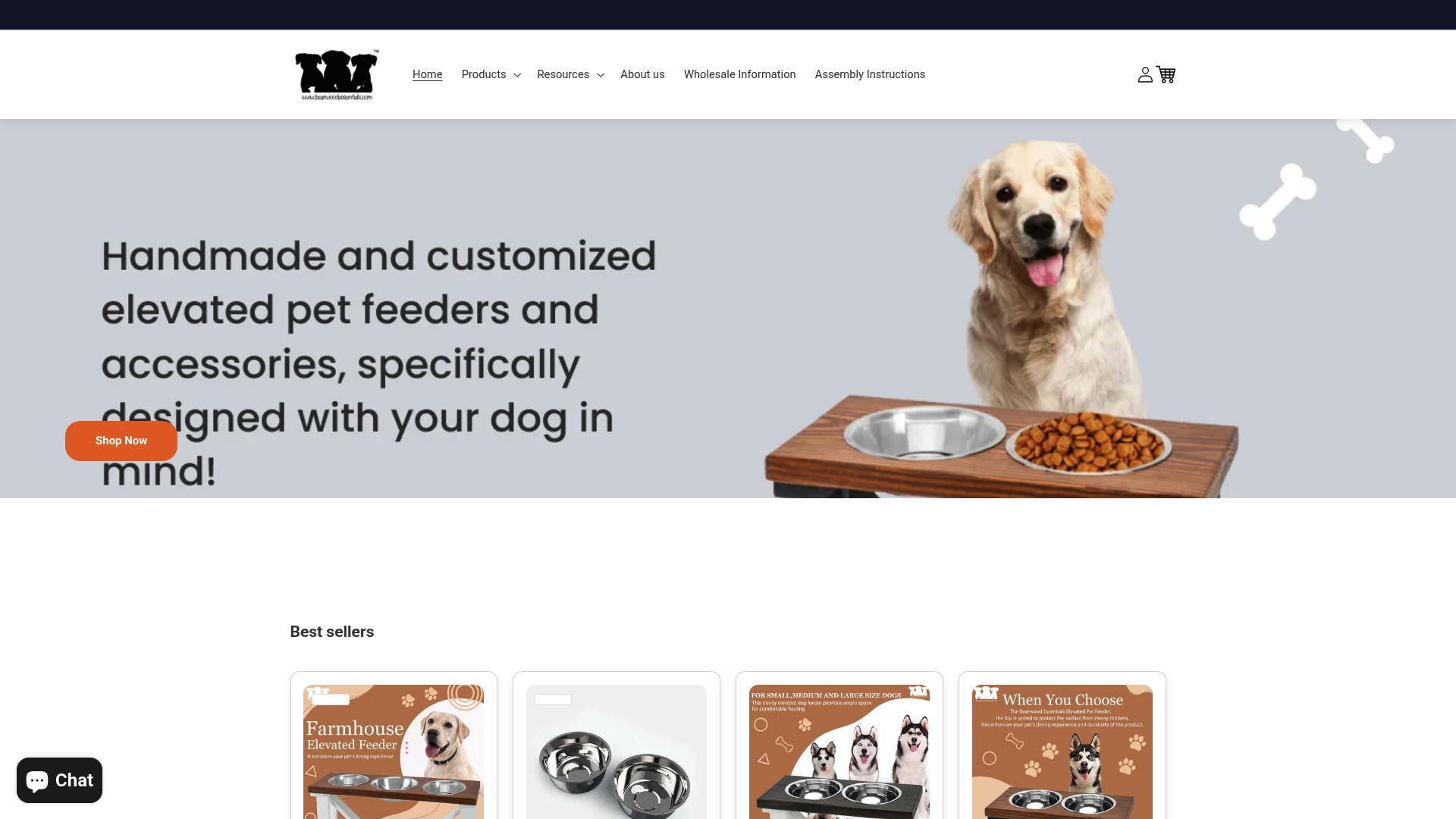
The feeder is available in multiple heights to fit breeds from large to extra-large, ships free within the US on qualifying orders, and is handcrafted to last well beyond the lifespan of a mass-produced plastic alternative. Visit the Bearwoodessentials store to browse the full range of elevated feeders and find the right fit for your dog’s size and your home’s style. Order directly from the product page and your dog’s mealtime mess stays in the past.
Further reading and sources
- Gastric Dilatation-Volvulus (GDV) in dogs — Cornell Riney Canine Health Center
- Free feeding vs. scheduled feeding — Purina
- Chow Hound automatic dog feeder specs — Miller Manufacturing Company
- Adjustable anti-spill raised feeder for large dogs — Likinpaws
- Bite-resistant feeder buying guide — DogCareStory
- LickiMat Slomo XL product page — LickiMat USA
- Handmade metal dog bowl feeder — Bearwoodessentials
- How raised feeders prevent regurgitation in dogs — Bearwoodessentials blog
- How feeder base design prevents tipping — Bearwoodessentials blog