
Raised feeders prevent regurgitation by positioning your dog upright during meals, allowing gravity to move food directly into the stomach rather than letting it pool in the esophagus and back up. This mechanism, known clinically as gravity-assisted esophageal transit, is the foundation of veterinary feeding management for dogs with conditions like megaesophagus. The right feeder height, combined with full-body upright posture, reduces aspiration risk and makes every meal safer. Understanding how raised feeders prevent regurgitation gives you a concrete tool to protect your dog’s health starting at the next feeding.
How raised feeders prevent regurgitation: the core mechanism
Regurgitation is defined as the passive expulsion of undigested food from the esophagus, before it ever reaches the stomach. It differs from vomiting, which involves active abdominal contractions and partially digested stomach contents. Dogs with megaesophagus, a condition where the esophagus loses normal muscle tone and motility, are the most common candidates for regurgitation, though any dog with esophageal dysfunction can experience it.
Raised feeders work by using gravity as a substitute for the esophageal muscle contractions that are weakened or absent. When your dog stands or sits with their body angled upward, food travels downward through the esophagus toward the stomach with minimal resistance. Gravity assists food passage into the stomach and reduces the risk of food pooling in the dilated esophagus. That pooling is exactly what leads to regurgitation and, in severe cases, aspiration pneumonia.
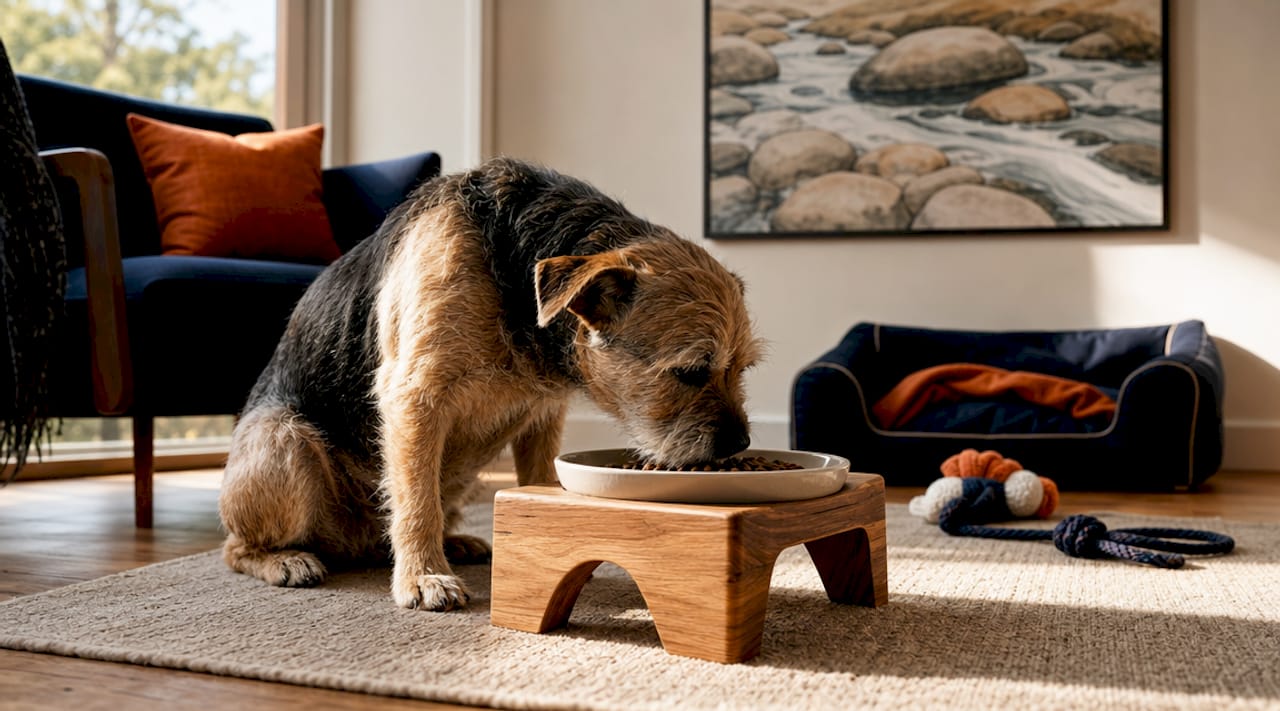
The raised feeders benefits extend beyond just the angle of the bowl. Proper elevation encourages your dog to adopt a more upright neck and chest position naturally, reducing the horizontal stretch that makes esophageal transit harder. Dogs eating from floor-level bowls must crane their necks downward, which works directly against gravity and increases the chance of food sitting in the esophagus. A well-designed raised pet bowl stand corrects this posture automatically.
Vets recommend elevated feeders for dogs with esophageal issues precisely because the structural benefit is immediate and requires no medication. The feeding posture change alone can reduce regurgitation episodes significantly when applied consistently at every meal.
Does bowl height alone solve the problem?
The most common misconception about elevated dog feeding solutions is that simply raising the bowl a few inches is enough. It is not. Full body elevation matters far more than bowl height alone, and confusing the two leads to continued regurgitation even when owners believe they are doing everything right.
Here is why the distinction matters. In a dog with megaesophagus, the esophagus is dilated and lacks the peristaltic contractions that push food downward. Food sits in the esophagus like water in a tilted pipe. If only the bowl is raised but the dog’s body remains horizontal, the food still has to travel through a horizontal or slightly angled esophagus with no muscular assistance. The result is the same pooling and backflow.
Veterinary guidance specifies a 45 to 90 degree angle for the dog’s entire body during meals and for 15 to 30 minutes afterward. This means the dog’s hindquarters are lower than their head and chest, creating a true downhill path for food. A raised bowl placed on the floor in front of a standing dog does not achieve this angle for the body.
The Bailey chair is the gold standard device for achieving full upright positioning. Bailey chair design seats the dog with their bottom on a lower platform and their front paws on a shelf, holding the body fully vertical throughout the meal. This is a more extreme solution than most owners need, but it illustrates the principle clearly. For dogs with moderate esophageal issues, a properly sized raised feeder combined with encouraging the dog to sit or stand upright achieves a meaningful improvement.
-
Full upright posture means the dog’s spine is angled at 45 to 90 degrees, not just the neck.
-
Bowl height should match the dog’s shoulder height so they are not bending down or stretching up awkwardly.
-
Post-meal positioning is as important as mealtime posture. Keep your dog upright for at least 15 minutes after eating.
-
Bailey chairs are recommended for severe megaesophagus cases where standard raised feeders are insufficient.
Pro Tip: After meals, use a gentle hold or a supportive harness to keep your dog in an upright position for 15 to 30 minutes. This post-meal window is when gravity continues working on food that is still in transit.
How do raised feeders compare to other feeding methods?
Understanding how raised feeders improve digestion requires comparing them directly to the alternatives most owners try first.
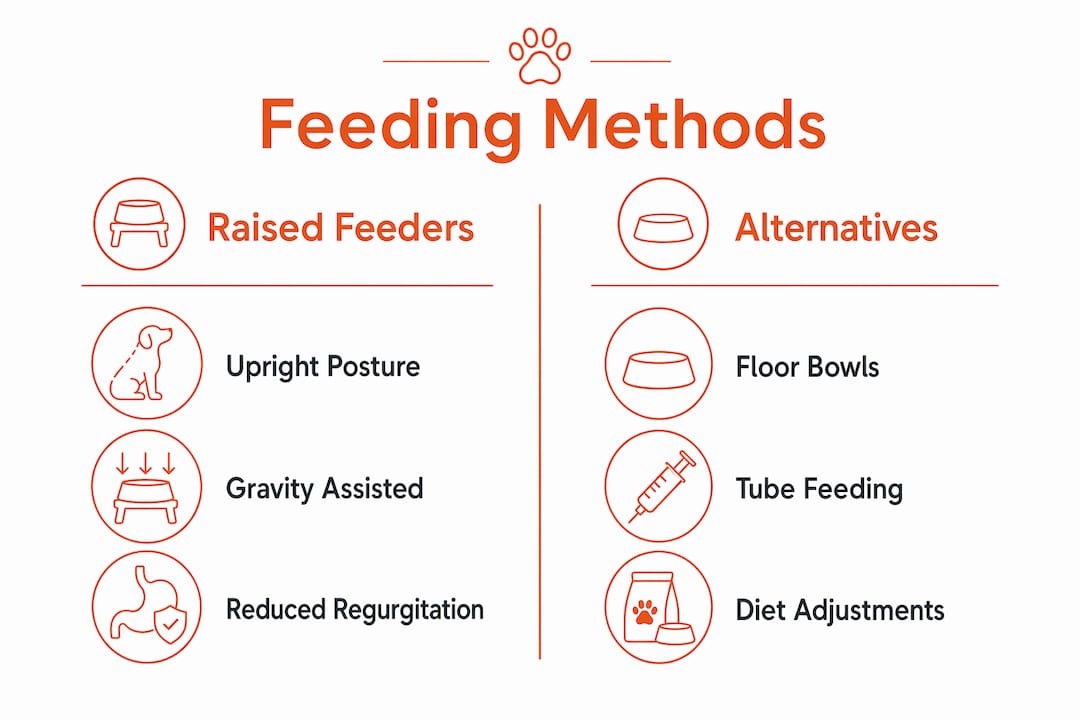
| Feeding method | Posture support | Regurgitation risk | Practical ease |
|---|---|---|---|
| Floor-level bowl | None | Highest | Very easy |
| Raised bowl (standard) | Partial neck elevation | Moderate | Easy |
| Raised feeder at shoulder height | Good neck and chest angle | Lower | Easy |
| Full upright feeder or Bailey chair | Full body vertical | Lowest | Requires training |
| Tube feeding | Complete bypass | Minimal | Requires vet guidance |
Floor feeding is the worst option for dogs prone to regurgitation. The dog bends their entire neck downward, food must travel uphill through the esophagus, and air ingestion increases because dogs tend to eat faster in a scavenging posture. Raised feeders at the correct height eliminate the downward neck bend and reduce air swallowing, which also reduces bloating and discomfort.
Tube feeding bypasses the esophagus entirely and is used in severe cases where regurgitation cannot be controlled by posture alone. It is not a practical long-term solution for most owners and carries its own risks. Upright feeding with a Bailey chair or a well-fitted raised feeder is the preferred approach for managing esophageal conditions at home.
Diet texture also plays a significant role alongside feeder height. Texture trials using canned meatballs, blended slurries, or moistened kibble help some dogs move food through the esophagus more efficiently. The right texture depends on the individual dog, and pairing texture adjustments with a raised feeder produces better outcomes than either change alone.
Pro Tip: Try feeding small, frequent meals rather than one or two large ones. Smaller food volumes create less pressure in the esophagus and reduce the chance of regurgitation even when posture is not perfect.
Effective management combines upright feeding with diet texture adjustments and hydration changes. No single intervention works in isolation, but the raised feeder is the most accessible starting point for most owners.
What to look for when choosing a raised feeder
Selecting the right raised feeder for your dog involves more than picking the tallest option available. The goal is to match the feeder’s height and design to your dog’s specific size, build, and feeding behavior.
-
Measure your dog’s shoulder height. The bowl rim should sit at or just below shoulder level. This keeps the neck in a neutral or slightly upward position, which supports esophageal transit without forcing an awkward stretch.
-
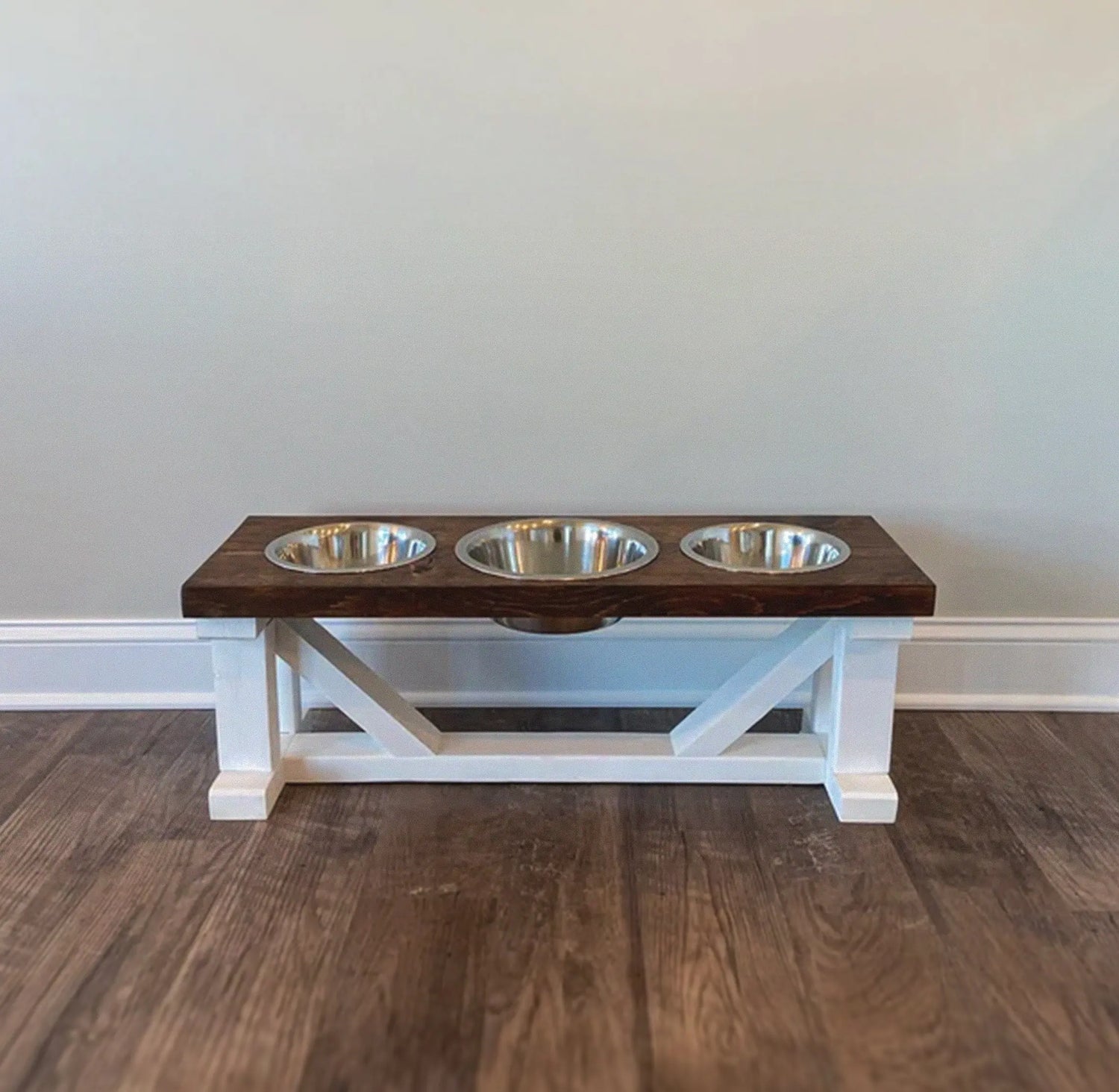
Choose a stable base. A feeder that slides or tips during meals defeats the purpose. Look for non-slip feet, a wide base, or a weighted design. Bearwoodessentials’ handmade metal and wooden feeders are built with stability as a core design requirement, not an afterthought.
-
Check bowl size and depth. Shallow, wide bowls slow eating pace and reduce air ingestion. Deep narrow bowls can cause dogs to push their snouts down and forward, partially negating the elevation benefit.
-
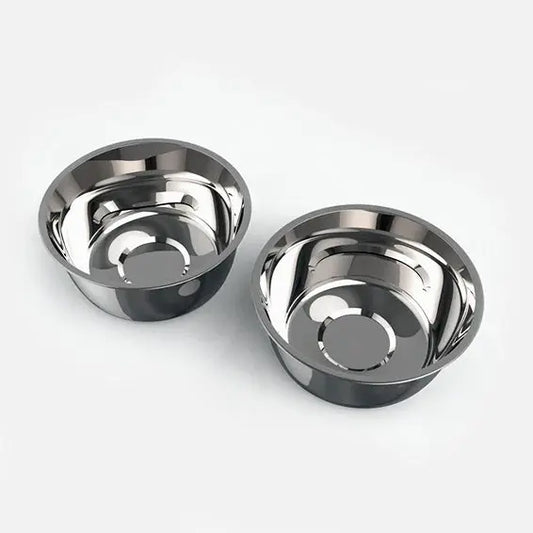
Consider material durability. Stainless steel bowls resist bacteria and are easy to clean. Wooden stands add weight and stability while keeping the feeder in place on hard floors.
-
Plan for post-meal positioning. The feeder itself is only part of the solution. You need a way to keep your dog upright after eating. Some owners use a corner of the room or a supportive vest to maintain the angle during the post-meal window.
-
Train gradually. Some dogs resist raised feeders at first, particularly if they have eaten from the floor their entire lives. Switching to a raised feeder safely involves introducing the new height over several days, using treats and encouragement to build positive associations.
For senior dogs, the considerations shift slightly. Arthritis and reduced mobility make bending to floor bowls painful, and elevated feeding for senior dogs addresses both regurgitation risk and joint comfort simultaneously.
Common misconceptions about raised feeders and regurgitation
Raised feeders are not a cure-all, and several persistent myths lead owners to either over-rely on them or dismiss them entirely.
Myth 1: Any raised feeder prevents aspiration pneumonia. Aspiration pneumonia results from repeated regurgitation episodes where food or liquid enters the airway. A raised feeder reduces regurgitation frequency but does not eliminate the risk entirely, especially if posture is inconsistent. Owners should monitor for coughing, labored breathing, or fever, which are signs of aspiration pneumonia requiring immediate veterinary attention.
Myth 2: Raised feeders cause bloat in large breeds. The relationship between raised feeders and gastric dilatation-volvulus (GDV, or bloat) in large breeds has been studied, and current evidence does not establish raised feeders as a direct cause. The bloat risk in large breeds is primarily linked to genetics, eating speed, and meal size. Slow-feeder bowls and smaller meal portions address bloat risk more directly than feeder height.
Myth 3: Regurgitation and vomiting are the same problem. Regurgitation is passive and lacks the heaving, nausea, and stomach involvement of vomiting. Treating regurgitation with anti-nausea medications designed for vomiting is ineffective. The correct response is postural management, not medication targeting stomach contractions.
-
Raised feeders work best as part of a multi-factor feeding strategy that includes diet texture, meal frequency, and post-meal positioning.
-
Inconsistent upright positioning significantly increases regurgitation and aspiration risk, even when the right feeder is in place.
-
Always work with your veterinarian to confirm the cause of regurgitation before assuming a raised feeder alone will resolve it.
Key takeaways
Raised feeders reduce regurgitation by using gravity to move food through a compromised esophagus, but full-body upright posture during and after meals is what makes the difference.
| Point | Details |
|---|---|
| Gravity is the mechanism | Upright posture lets gravity substitute for weakened esophageal muscle contractions. |
| Bowl height is not enough | The dog’s entire body must be angled at 45 to 90 degrees, not just the neck. |
| Post-meal positioning matters | Keep your dog upright for 15 to 30 minutes after every meal to reduce aspiration risk. |
| Combine strategies | Pair raised feeding with small frequent meals and diet texture trials for best results. |
| Consistency is non-negotiable | Skipping upright positioning even occasionally increases cumulative aspiration pneumonia risk. |
What I’ve learned from watching dogs eat the wrong way
I have spent years looking at how dogs interact with their food bowls, and the single most overlooked detail is what happens after the meal ends. Owners invest in a quality raised feeder, see improvement, and then let their dog wander off and lie down immediately after eating. That post-meal window is where a lot of the benefit gets lost.
The transition to a raised feeder is also harder than most guides admit. Dogs that have eaten from the floor for years often treat the new feeder with suspicion. The fix is not patience alone. It is pairing the feeder with something the dog already loves, placing high-value food in the bowl for the first week, and keeping the sessions short. Most dogs adapt within five to seven days when the transition is handled deliberately.
One thing I find genuinely underappreciated is how much a raised feeder improves a dog’s comfort beyond regurgitation control. Dogs with neck stiffness, arthritis, or just a naturally upright build eat with noticeably less tension when the bowl meets them at the right height. The health benefits of raised bowls go well beyond esophageal management, and that broader comfort case is worth making to any dog owner, not just those dealing with regurgitation.
My honest recommendation: treat the raised feeder as the foundation, not the finish line. Add texture trials, reduce meal size, keep your dog upright after eating, and check in with your vet regularly. The feeder does its job best when everything else is working alongside it.
— Kim
Find the right raised feeder for your dog at Bearwoodessentials
If your dog is dealing with regurgitation, the feeder you choose matters as much as how you use it. Bearwoodessentials designs handcrafted raised feeders in both wood and metal, built for stability, the correct feeding height, and daily durability.
The wooden raised feeder with stainless steel bowls is a popular choice for medium and large breeds, combining a weighted base with easy-clean bowl inserts. For smaller dogs, the compact metal feeder delivers the same upright feeding posture in a size that fits the dog and the space. Every feeder is made to support the feeding posture your dog needs, not just to look good in your kitchen. Browse the full collection at Bearwoodessentials and find the fit that works for your dog’s size and feeding routine.
FAQ
What angle should a dog be at to prevent regurgitation?
Dogs should be positioned at a 45 to 90 degree angle during meals and remain upright for 15 to 30 minutes afterward. This angle allows gravity to move food through the esophagus into the stomach without pooling.
Is a raised bowl enough for a dog with megaesophagus?
A raised bowl alone is usually not sufficient. The dog’s entire body must be vertical, not just the neck, which is why devices like Bailey chairs are recommended for severe megaesophagus cases.
How is regurgitation different from vomiting in dogs?
Regurgitation is passive and involves undigested food from the esophagus, with no heaving or nausea. Vomiting involves active stomach contractions and partially digested contents, and the two conditions require different management approaches.
Can a raised feeder help prevent aspiration pneumonia?
Yes, consistent upright feeding reduces regurgitation frequency, which lowers the cumulative risk of food or liquid entering the airway and causing aspiration pneumonia. It does not eliminate the risk entirely, so monitoring for respiratory symptoms remains important.
How do I choose the right height for my dog’s raised feeder?
Measure your dog’s shoulder height and select a feeder where the bowl rim sits at or just below that level. This keeps the neck in a neutral or slightly upward position that supports esophageal transit without forcing an uncomfortable stretch.