
An anti-tip feeder design is a feeding vessel engineered with a low center of gravity and a wide, stable base so your dog cannot easily push, slide, or flip their food bowl. The result: less wasted food, a calmer mealtime, and a cleaner feeding area with fewer opportunities for pests or mold to take hold. Ground-level feeders remove the leverage points animals use to flip traditional bowls, and anti-tip feeders extend that same logic to your dog’s daily routine.
At a glance, a well-designed anti-tip feeder delivers:
-
Reduced feed waste by keeping food in the bowl where it belongs
-
Lower pest and mold risk because spilled food on the floor attracts both
-
More natural feeding posture that reduces neck and jaw strain
-
Calmer mealtimes by eliminating the tipping behavior itself
Look for these three signals when evaluating any bowl: a footprint noticeably wider than the bowl diameter, a heavy or weighted base, and a low bowl placement close to the ground.
Table of Contents
-
Why do anti-tip feeders benefit your dog’s health and your wallet?
-
Bearwoodessentials’ Unspillable Pet Bowl: built for exactly this
How does anti-tip feeder design actually work?
The physics are straightforward. A feeder tips when a lateral force, your dog’s nose, paw, or chin, pushes the center of gravity outside the support area defined by the base. Anti-tip design works by keeping the center of gravity well inside a wide footprint, so even a determined nudge cannot generate enough tipping moment to flip the bowl.
Picture a simple three-part sketch: a broad, flat base on the ground; a shallow bowl sitting low at the center; and a tipping vector (the force your dog applies) pointing sideways. The wider the base and the lower the bowl, the longer the distance that force must travel before the center of gravity crosses the edge. That distance is the feeder’s passive resistance.
The geometry does the work. Modern well-designed feeders rely on wide footprints and material mass, not anchors or chains, to stay in place under lateral force. When the support area is large and the bowl sits low, even a strong, persistent nudger cannot generate the leverage needed to tip the feeder.
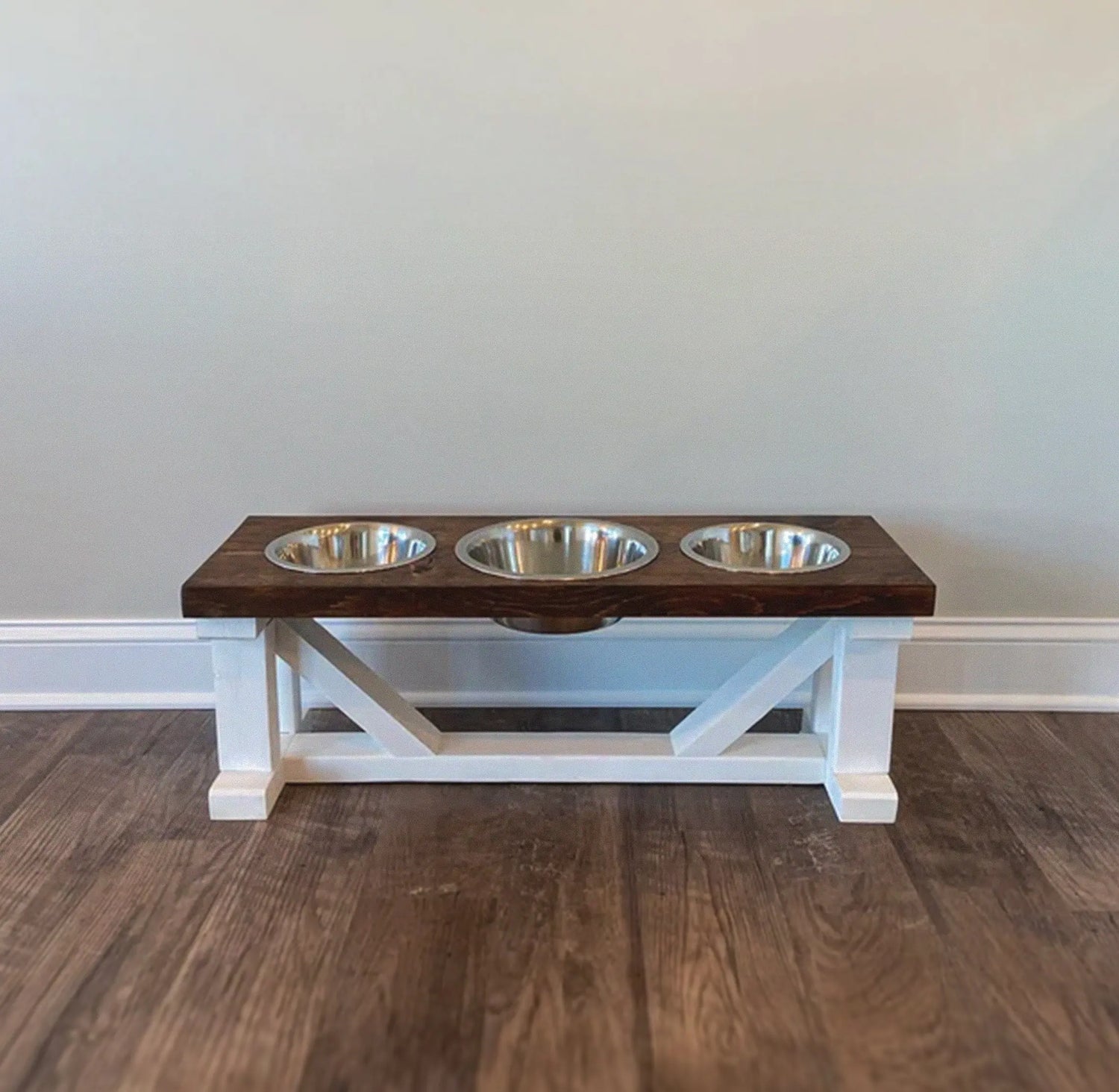
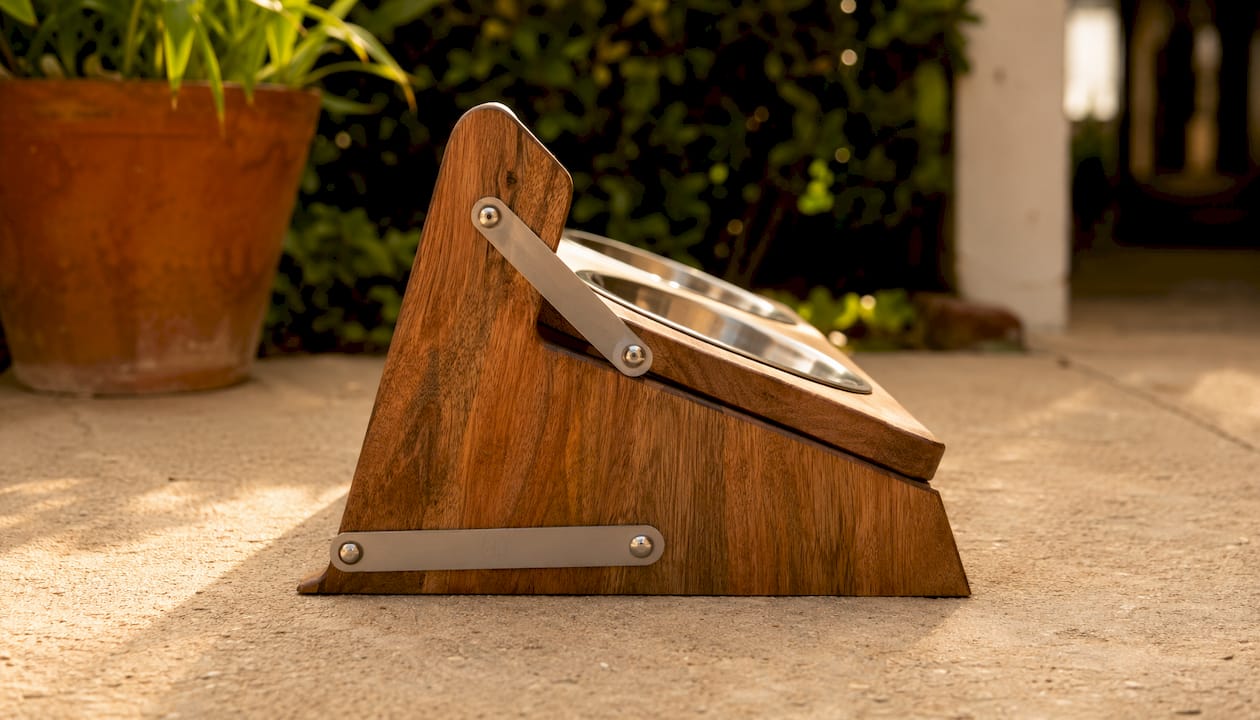
Common geometry choices that achieve this include wide flanged bases, V-shaped or trough-style bowls that keep food centered, and deep low basins that lower the food’s own weight closer to the ground. A-frame bases with low troughs on each side, like those used in anti-tip trough designs, illustrate how spreading the support area cuts waste and resists tipping simultaneously.
Pro Tip: Ground-level placement usually outperforms modestly elevated stands for pure anti-tip performance. Raising a bowl increases the lever arm, meaning even a stable stand can become tip-prone for a strong dog. Reserve elevated feeders for dogs with specific health needs, not as a default stability choice.

What features should you look for in an anti-tip feeder?
Not every “heavy-looking” bowl is actually stable. A thick-walled plastic bucket can appear durable but tip easily because its footprint is no wider than the bowl itself. The features that genuinely matter are listed below.
-
Wide base footprint: The base should extend well beyond the bowl’s outer diameter. A footprint that matches the bowl diameter offers almost no tipping resistance.
-
Low bowl depth: A shallower bowl placed close to the ground keeps the food’s center of mass low.
-
Heavy or weighted base: Stainless steel and weighted polymer bases resist sliding and tipping through mass alone. Light plastic relies entirely on geometry, which is rarely enough.
-
Anti-slip pads or textured bottom: Rubber feet or a textured underside prevent the whole feeder from sliding across tile or hardwood before tipping.
-
Bowl retention systems: A lip, inset recess, or integrated frame keeps the bowl from being lifted out separately, which is a common workaround for determined dogs.
-
Weather and pest-resistant materials: Stainless steel resists mold and is easy to sanitize; smart feeder geometry can also limit ant and pest access.
| Feature | Best material/form | Helps most with |
|---|---|---|
| Wide footprint | Flanged base, A-frame | Nudgers, large breeds |
| Low bowl depth | Shallow inset or trough | Pawers, scoopers |
| Weighted base | Stainless steel, dense polymer | Sliding on smooth floors |
| Anti-slip bottom | Rubber feet, textured base | Tile, hardwood, slick surfaces |
| Bowl retention | Lip, recess, or frame | Dogs that lift bowls out |
Pro Tip: For dogs that paw at their bowl rather than nudge it, prioritize bowl retention (a recessed inset or lip) over footprint alone. A pawer can lift a loose bowl out of even a wide-base stand.
Why do anti-tip feeders benefit your dog’s health and your wallet?
The core payoff is threefold: less wasted food, lower hygiene risk, and a more comfortable eating position. Anti-tip feeders reduce feed waste, lower pest attraction, and encourage a more natural, ergonomic feeding posture that reduces neck and jaw strain. For dog owners, those benefits compound over time.
-
Less soiled food: Food that stays in the bowl does not touch the floor, so it stays cleaner and safer.
-
Reduced mold and pest risk: Spilled kibble on the floor is an open invitation for ants, rodents, and mold. Keeping food contained cuts that risk significantly.
-
Calmer mealtimes: When a dog cannot tip the bowl, the tipping behavior stops. Many dogs tip or play with feeders because the bowl’s position forces an awkward head angle. Correct the geometry, and the behavior often disappears on its own.
-
Better posture: A bowl at the right height and depth supports a natural neck angle. For older or arthritic dogs, proper feeding ergonomics can meaningfully reduce daily discomfort.
Over months and years, the food saved from not hitting the floor adds up to a real cost reduction, and the reduction in pest attraction lowers biosecurity risk for households with multiple pets.
How to test your current feeder and fix it if it fails
Run this quick five-step test before buying anything new.
-
Place the feeder on your dog’s usual feeding surface (tile, hardwood, or mat).
-
Push the rim of the bowl sideways with moderate hand pressure, simulating a nose nudge.
-
Push from the front edge, simulating a chin-rest or paw press.
-
Lift one side of the base slightly and release, simulating a tip attempt.
-
Check whether the bowl can be lifted cleanly out of any retention system.
If the feeder fails any step, try these DIY fixes before replacing it:
-
Add a non-slip mat under the entire feeder to stop sliding.
-
Build a snug wooden frame around the base so it cannot shift laterally.
-
Add external weight (a sandbag or weighted ring around the outside) without placing anything inside the bowl that could contaminate food.
-
Use a bungee or strap anchor to a fixed point if the feeder is used outdoors.
-
Switch to a ground-level tray with a recessed bowl inset for persistent tippers.
Pro Tip: Never place rocks, coins, or loose objects inside the bowl to add weight. Use sealed external weights or a weighted frame only. Contaminated food is a bigger problem than a tipped bowl.
If the feeder still tips after fixes, look for these failure modes: the base is too narrow relative to the bowl, the feeder sits too tall, or the floor surface is too slick for any rubber foot to grip.
How to choose the right anti-tip feeder for your dog
Match the feeder’s footprint and base weight to your dog’s size and feeding style. A toy breed that gently laps water needs far less base mass than a 90-pound Lab that bulldozes its bowl across the kitchen.
-
Toy and small breeds (under 25 lbs): A moderate footprint with rubber feet and a shallow bowl is usually enough. Stainless steel is preferred over plastic for hygiene. The Small Single Feeder P901 from Bearwoodessentials is sized for this range.
-
Medium breeds (25–60 lbs): Prioritize a footprint at least 1.5x the bowl diameter and a weighted base. Bowl retention becomes more important here.
-
Large breeds (60+ lbs): Go for the heaviest base available, a wide flanged or A-frame design, and a recessed bowl. The Large Single Feeder P899 addresses this size class with a footprint and bowl depth scaled for bigger dogs.
On price, basic weighted stainless bowls with rubber feet typically start around $15–$30. Purpose-built anti-tip feeders with integrated retention systems run $30–$80. Handcrafted or specialty designs sit above that range and add aesthetic value alongside function. Plastic options at the low end often look stable but tip easily because geometry alone cannot substitute for mass.
For dogs with arthritis or mobility issues, a modest raise can help. Read the raised bowl trade-offs before committing to an elevated stand, since height gains anti-tip leverage for strong dogs.
How Bearwoodessentials approaches anti-tip feeder design
Bearwoodessentials builds anti-tip principles directly into its Unspillable Pet Bowl line and related feeders. The design choices map precisely to the mechanics covered above.
-
Weighted 18/8 stainless steel construction provides inherent mass that resists sliding and tipping without requiring external anchors.
-
Integrated lip and inset bowl retention prevents dogs from lifting the bowl out of the stand separately.
-
Wide base geometry keeps the center of gravity inside the support area even under lateral force.
Kim, who contributes pet feeding design content for Bearwoodessentials, focuses on the intersection of ergonomics and stability, helping owners understand why a feeder’s geometry matters as much as its material.
Pro Tip: If you have already tried DIY fixes and your dog still tips the feeder, an integrated product solution like the Unspillable Pet Bowl removes the guesswork. The weight, retention, and footprint are engineered together rather than patched separately.
Key Takeaways
Anti-tip feeder design works by keeping a wide base footprint and low center of gravity so pets cannot generate the leverage needed to flip or slide their bowl.
| Point | Details |
|---|---|
| Core mechanism | A wide footprint and low center of gravity keep the feeder stable under lateral force. |
| Top features to check | Prioritize footprint width, base weight, bowl retention, and anti-slip pads over visual bulk. |
| Ground-level advantage | Ground-level placement gives the best passive stability; elevation increases tipping leverage. |
| At-home test | Run the five-step nudge and lift test before buying a replacement feeder. |
| Bearwoodessentials option | The Unspillable Pet Bowl combines weighted stainless steel, integrated retention, and wide base geometry in one ready-to-use design. |
The part most owners overlook
Most owners focus on whether a bowl looks heavy. It rarely is. A thick-walled plastic bucket can weigh less than a thin stainless bowl of the same diameter, and its footprint is almost never wider than the bowl itself. The visual impression of durability has almost nothing to do with actual tipping resistance.
The other mistake is buying an elevated stand to “solve” tipping. Elevation can help with posture for dogs that need it, but it actively works against anti-tip performance by raising the center of gravity and giving your dog more leverage. If your dog tips bowls, start at ground level and add height only when a specific health reason calls for it.
Treat your feeder as a long-term investment in hygiene and calm mealtimes, not just a bowl holder. The right geometry and weight, chosen once, pays back in less wasted food, fewer pests, and a dog that simply eats without the drama.
Bearwoodessentials’ Unspillable Pet Bowl: built for exactly this
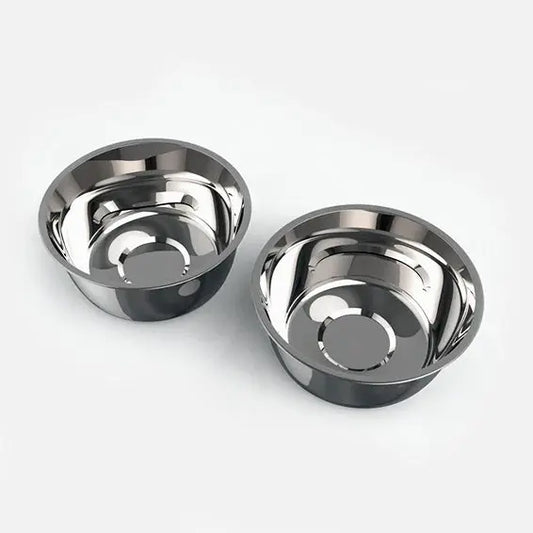
If you have read this far and your dog is still winning the bowl-tipping battle, Bearwoodessentials offers a direct solution. The Unspillable Pet Bowl is made from 18/8 stainless steel with a weighted base, integrated bowl retention, and a footprint engineered to resist the nudges, paws, and chin-rests that defeat ordinary bowls. No DIY patches needed.
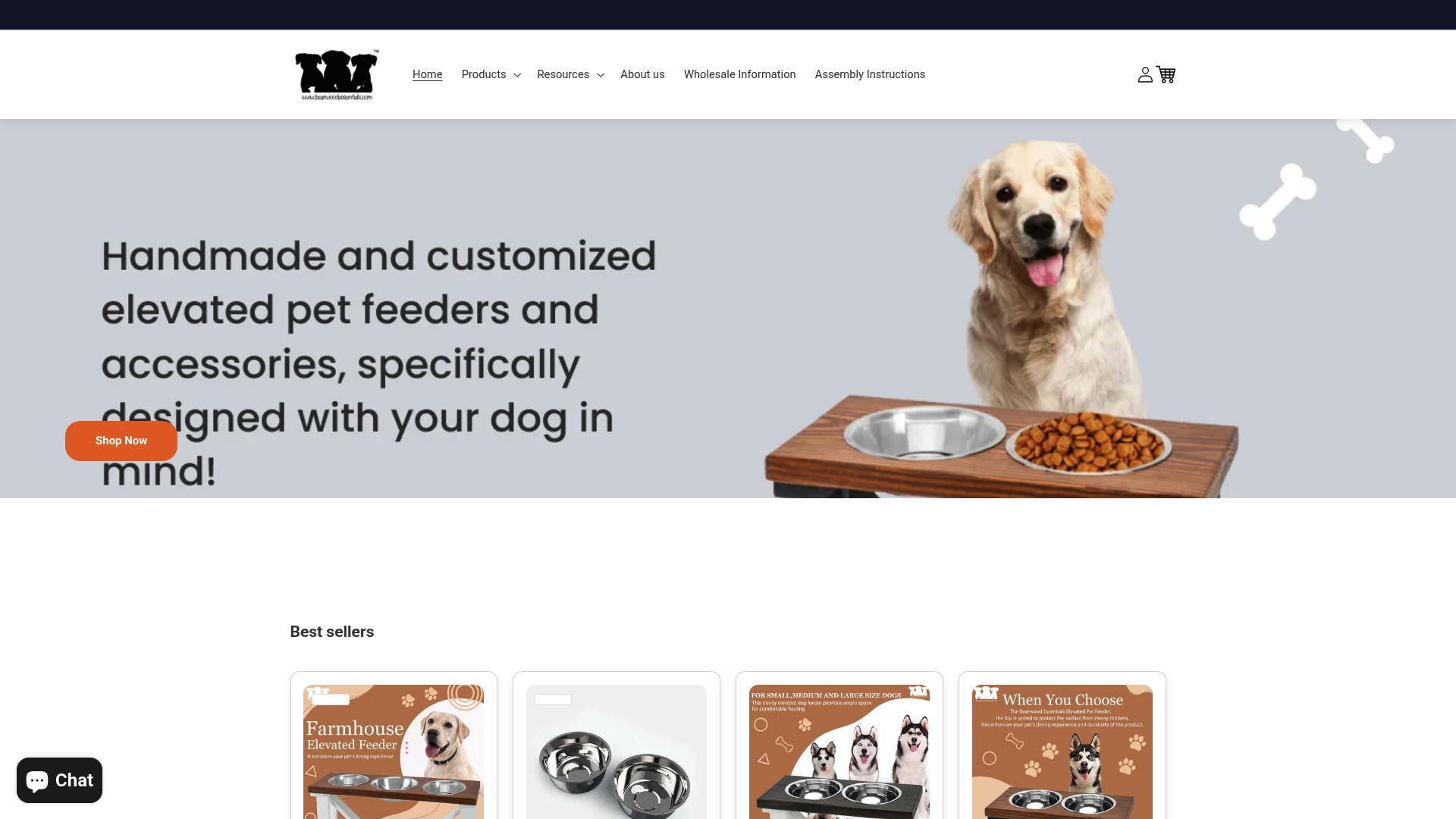
Bearwoodessentials ships free across the U.S. on qualifying orders, and the Unspillable Pet Bowl is available in multiple sizes to match toy through large breeds. If you need replacement bowls for an existing stand, the pet feeder replacement bowls are a practical, lower-cost option. Browse the full feeder line at Bearwoodessentials and find the size and style that fits your dog’s feeding habits today.