
The natural feeding position for dogs is defined as a stance that keeps the spine neutral, the neck relaxed, and the head at or near chest height during meals. This posture reduces strain on the neck, shoulders, and front joints while supporting efficient swallowing and digestion. Getting this right matters more than most dog owners realize. The setup you choose today directly affects your dog’s comfort, joint health, and long-term wellbeing. Whether you feed your dog on the floor or use a raised feeder, understanding the mechanics behind a healthy feeding posture gives you the knowledge to make the right call.
What is the natural feeding position for dogs?
The natural feeding posture for dogs centers on one principle: minimal strain across the neck, spine, and front limbs during eating. When a dog stands comfortably with its head lowered just enough to reach the bowl, without craning or stretching, that is the target position. Veterinary musculoskeletal experts describe this as a neutral spine alignment, where the head, neck, and back form a gentle, unforced line.
Wild canines eat at ground level, but they do so briefly and with full body movement. Domestic dogs, by contrast, stand still over a bowl for minutes at a time. That sustained posture changes everything. A dog holding its neck flexed downward for several minutes per meal places repeated stress on the cervical vertebrae and surrounding muscles.

The distinction between “natural dog feeding habits” in the wild and what works best for a pet at home is worth noting. For domestic dogs, the best position to feed them is one that mirrors a relaxed standing posture, not necessarily a floor-level one.
How does feeding posture affect musculoskeletal health and digestion?
Feeding a dog on the floor forces significant weight onto the front legs and flexes the neck downward, creating musculoskeletal stress. This is especially hard on older dogs, arthritic dogs, and large breeds with longer necks. The front carpal joints absorb extra load every single meal, and over time, that adds up.
Digestion is also affected by feeding posture. When a dog’s head is angled too far down, the swallowing mechanics become less efficient. Food and water travel against a slight gravitational disadvantage, which can slow the process and, in some cases, increase the risk of aspiration.
A feeding station at chest height promotes a neutral spine and reduces neck stretching, which supports both comfort and swallowing efficiency. The dog does not have to reach up or bow down. The bowl meets the dog where it naturally stands.
-
Neck and cervical spine: Downward flexion during floor feeding strains the cervical muscles and vertebrae over time.
-
Front limb joints: Weight shifts forward when a dog lowers its head, loading the carpal and elbow joints.
-
Swallowing efficiency: A neutral head position allows food to travel more smoothly through the esophagus.
-
Older and arthritic dogs: These dogs feel the effects of poor feeding posture most acutely, since their joints already have reduced tolerance for stress.
Pro Tip: If your dog is a senior or has been diagnosed with arthritis, read about elevated feeding for senior dogs before choosing a feeder height. The guidance is specific and practical.
Floor feeding vs. elevated feeders: which is better?
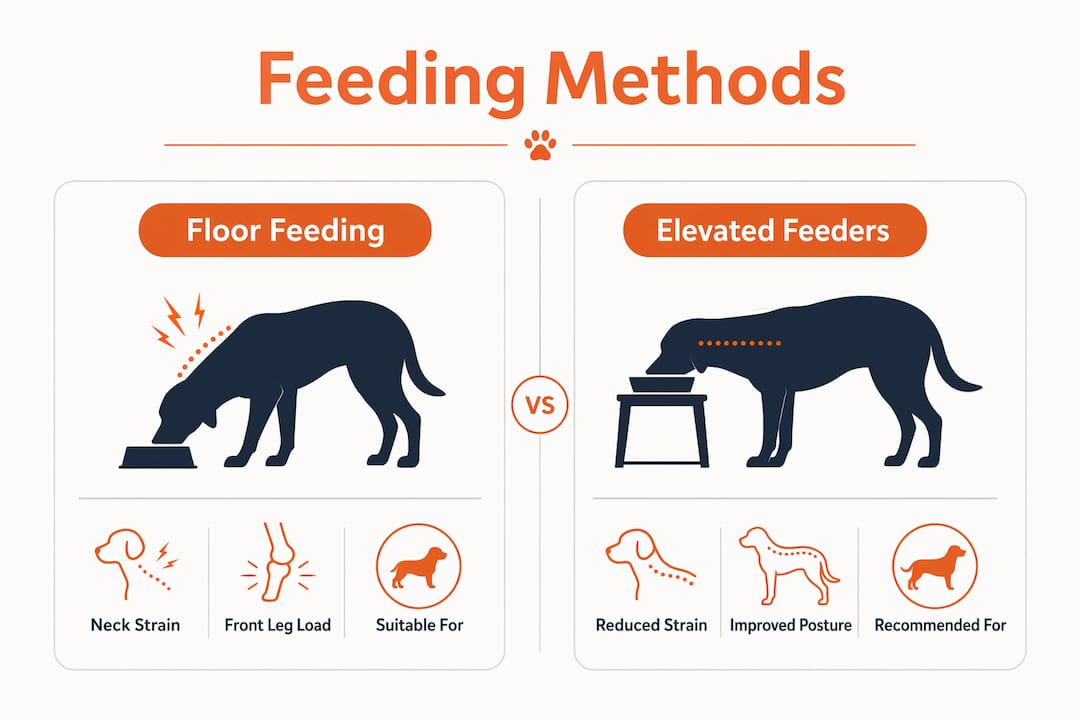
Both floor feeding and elevated feeders have a place in dog care, but the right choice depends on your dog’s size, age, and health. Neither option is universally superior. What matters is whether the setup supports a comfortable, neutral posture for your specific dog.
Floor feeding
Floor feeding is the default for most dog owners and works reasonably well for young, healthy dogs with no joint issues. The main limitation is sustained neck flexion. A dog that eats quickly and moves on faces less cumulative strain than one that grazes slowly over several minutes.
Elevated feeders
Raised feeders reduce strain on the neck, shoulders, and front carpal joints when set to the correct height. Dogs with back, neck, or joint problems benefit most. The key word is “correct.” A feeder set too high causes upward neck strain. A feeder set too low replicates the same problem as floor feeding.
| Feature | Floor feeding | Elevated feeder |
|---|---|---|
| Neck strain | Higher, especially with prolonged eating | Lower when height is correctly matched |
| Front limb load | Increased due to forward weight shift | Reduced at proper height |
| Best suited for | Young, healthy dogs with no joint issues | Senior dogs, large breeds, dogs with arthritis |
| Risk of incorrect setup | Minimal | High if feeder is too tall or too short |
| Digestion support | Adequate for most healthy dogs | Better swallowing efficiency at neutral height |
Pro Tip: Measuring your dog at the withers on a level surface gives you the most reliable starting point for feeder height. The bowl rim should sit at roughly chest height, not shoulder height.
The correct feeder height is about chest level, not maximized for height. Owners who assume taller is better often create a new problem while trying to solve the original one.
How does the feeding environment shape your dog’s eating posture?
Feeder height is only part of the equation. A dog’s feeding environment directly influences whether it can relax into a natural, comfortable posture during meals. A dog that feels anxious or exposed while eating will shift its body, crane its neck, or eat too fast. None of those behaviors support good posture.
Secure, low-traffic feeding areas where dogs can maintain 360-degree awareness reduce mealtime anxiety and promote relaxed, natural feeding posture. Dogs are instinctively alert to their surroundings while eating. Placing a bowl in a busy hallway or near a door forces the dog to divide attention between eating and monitoring its environment.
A dog that feels safe at its feeding station will naturally settle into a comfortable, balanced stance. A dog that feels exposed will rush, shift, and compensate physically. The feeding environment is not a secondary concern. It is a direct input into feeding posture and digestive comfort.
Here is how to set up an environment that supports natural eating posture:
-
Choose a quiet corner with low foot traffic and no sudden noise sources nearby.
-
Position the bowl against a wall or in a corner so the dog can face outward and monitor the room without turning its body.
-
Keep the area consistent. Dogs eat more calmly in familiar spots. Moving the bowl frequently increases anxiety.
-
Use a non-slip mat under the feeder so the dog does not shift its stance while eating.
-
Avoid placing the bowl near other pets’ feeding stations if your dogs compete for food. Competition triggers rushed eating and tense body posture.
Peripheral vision and clear sight lines are critical for dogs to feel secure during feeding. Low-profile feeder designs that do not block the dog’s view of the room support this instinct well.
How to spot signs your dog’s feeding position is causing discomfort
Dogs rarely vocalize pain during meals. Instead, they show it through behavior. Recognizing these signals early lets you adjust the setup before the problem becomes a chronic issue.
Behavioral signs of feeding discomfort include hesitation at the bowl, eating while lying down, lifting the chin sharply while swallowing, or avoiding the bowl’s edge. Each of these signals that the current position is not working for the dog’s body.
-
Hesitation before eating: The dog approaches the bowl but pauses or backs away. This often signals neck or shoulder discomfort when lowering the head.
-
Eating while lying down: Dogs that eat lying down may have mobility or comfort issues. This position slows swallowing and can increase aspiration risk.
-
Chin lifting while swallowing: The dog tips its head back after each bite. This compensates for difficulty swallowing in a downward position.
-
Excessive stretching after meals: Repeated stretching of the neck and front legs after eating suggests the posture during the meal was strained.
-
Reduced appetite or slow eating: Pain during eating causes dogs to eat less or more slowly than usual.
Subtle behavioral changes, like reduced reach to the bowl or unusual eating positions, often signal pain related to feeding posture and deserve attention.
Pro Tip: If your dog shows two or more of these signs consistently, consult your veterinarian before changing the feeder height. Some signs overlap with conditions like megaesophagus or dental pain that require medical assessment, not just a new feeder.
Transitioning to a raised feeder should be gradual. Place the new feeder next to the old one for a few days so the dog can explore it without pressure. Then move meals fully to the elevated station once the dog shows comfort with the new setup. Check the functional dog feeding station checklist for a step-by-step guide to getting the transition right.
Key Takeaways
The most effective feeding setup for dogs combines a neutral spine posture, a correctly measured feeder height at chest level, and a calm, secure feeding environment.
| Point | Details |
|---|---|
| Natural posture defined | A neutral spine and relaxed neck at chest height minimize strain during meals. |
| Floor feeding limitations | Sustained downward neck flexion loads the front joints and reduces swallowing efficiency. |
| Elevated feeder height | Match the bowl rim to the dog’s chest height, not shoulder height, for best results. |
| Environment matters | A quiet, low-traffic feeding area reduces anxiety and supports relaxed, natural posture. |
| Discomfort signals | Hesitation, lying down to eat, and chin lifting all indicate the current setup needs adjustment. |
What I’ve learned watching dogs eat in the wrong position
Most dog owners focus on what goes into the bowl, not how the dog reaches it. I spent years watching dogs eat from floor-level bowls with no apparent issues, and I assumed posture was a minor concern. Then I started paying attention to the subtle stuff: the slight hesitation before lowering the head, the quick chin lift after each swallow, the way a large breed dog would shift its weight forward and lock its front legs just to reach the water bowl.
The research on musculoskeletal stress from floor feeding confirmed what I was seeing. But the bigger misconception I encounter is the opposite one. Owners who switch to elevated feeders sometimes go too high, thinking more elevation equals more benefit. It does not. A feeder set above chest height creates a new strain pattern in the opposite direction. The goal is neutral, not elevated.
The other thing I have come to believe strongly: no single feeder height works for every dog, even within the same breed. Body proportions vary. A dog recovering from a neck injury needs a different setup than a healthy dog of the same size. Individualizing the feeding station is not overthinking it. It is the right approach.
Start by measuring your dog at the withers, set the bowl at chest height, and then watch how your dog eats for a week. The body language will tell you whether the adjustment is working. Gradual observation beats guessing every time.
— Kim
Feeders built for the way dogs naturally eat
If you have read this far, you already understand that the right feeder height and setup make a real difference for your dog’s comfort. Bearwoodessentials designs handcrafted elevated feeders with exactly that in mind.

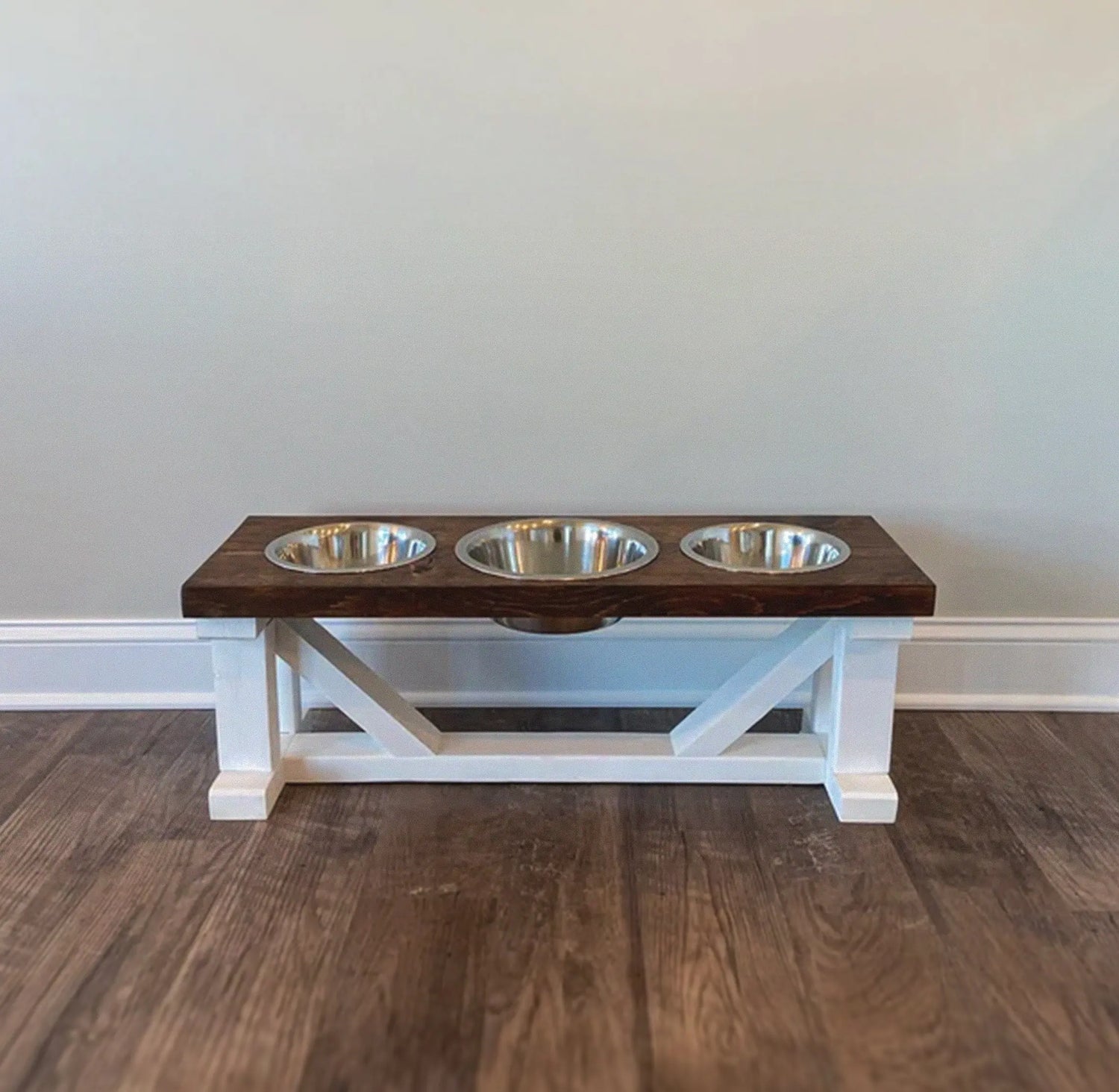
Each feeder is built from quality wood and metal to support a neutral feeding posture for dogs of all sizes. The wooden raised dog feeder and the handcrafted metal feeder are two of the most popular options, both designed to bring the bowl to the right height without sacrificing style. Bearwoodessentials ships free across the U.S. on qualifying orders, so getting the right setup for your dog is straightforward and affordable.
FAQ
What is the natural feeding position for dogs?
The natural feeding position for dogs is a neutral stance where the head, neck, and spine align comfortably with minimal strain. The bowl should sit at roughly the dog’s chest height to support this posture.
Is it bad to feed dogs on the floor?
Floor feeding is not harmful for young, healthy dogs eating quickly. For older dogs, large breeds, or dogs with joint issues, sustained floor-level eating causes musculoskeletal stress on the neck and front limbs.
How do I measure the correct feeder height for my dog?
Measure your dog at the withers (the top of the shoulder blades) while it stands on a level surface. The bowl rim should align with the dog’s chest height, which typically falls a few inches below the withers measurement.
Can elevated feeders cause problems if set too high?
Yes. A feeder set above chest height forces the dog to crane its neck upward, which creates strain in the opposite direction from floor feeding. Optimal feeder height balances spine alignment with ease of eating.
What signs show my dog is uncomfortable while eating?
Hesitation at the bowl, eating while lying down, lifting the chin sharply while swallowing, and excessive post-meal stretching all indicate that the current feeding position is causing discomfort.