
Specialty dog bowl shapes are defined by their ergonomic function: each shape addresses a specific feeding challenge, whether that is eating speed, body posture, or facial anatomy. The three main categories are slow/puzzle feeders, angled bowls, and breed-specific depth designs. Slow feeders use raised ridges to prevent gulping. Angled bowls at 45 degrees reposition food to support natural posture. Breed-specific bowls match bowl depth and width to muzzle length. Choosing the right shape from this specialty dog bowl shapes list directly affects your dog’s digestion, comfort, and long-term health.
1. What are specialty dog bowl shapes?
Specialty dog bowls, also called ergonomic or functional pet dishes, are feeding vessels designed around a dog’s physical needs rather than simple convenience. Standard round bowls serve most dogs adequately, but they ignore eating speed, facial structure, and posture entirely. Specialty designs correct those gaps with purpose-built geometry.
The three categories cover most feeding problems dog owners face:
-
Slow/puzzle feeders: Interior obstacles that force dogs to eat around ridges, mazes, or raised patterns
-
Angled bowls: A tilted surface, typically at 45 degrees, that keeps food accessible without requiring the dog to strain its neck
-
Breed-specific depth bowls: Shallow and wide for flat-faced breeds, deep and narrow for long-muzzled dogs
Each category solves a different problem. Picking the wrong one does not just waste money. It can make feeding more frustrating for your dog.
2. Slow feeder bowl shapes and how they benefit dogs
Slow feeder bowls are the most visually distinct entries on any specialty pet dish shapes list. Their interiors feature raised ridges, walls, and obstacles that force a dog to work around the food rather than scoop it up in one motion. This slows eating speed and reduces the risk of bloat, regurgitation, and digestive discomfort.
Popular slow feeder interior patterns include:
-
Maze: Long winding channels that require nose and tongue navigation
-
Heart and bone: Symmetrical raised shapes that signal slow feeder function at a glance
-
Pineapple and honeycomb: Tighter cell patterns that work well for smaller dogs
-
Star: Radiating ridges that distribute food across the bowl surface
Slow feeder capacities typically range from 360ml to over 1 liter, with materials including polypropylene (PP) plastic and stainless steel. Stainless steel versions hold up better over time and resist bacteria more effectively than plastic. You can also find slow feeder designs that incorporate silicone bases to prevent sliding during use.
Pro Tip: Slow feeder bowls have significantly more surface area than standard bowls. Clean them thoroughly after every meal. Bacteria collect in corners and ridges faster than on flat surfaces, and a quick rinse is not enough.
3. How angled dog bowl shapes improve posture and digestion
Angled bowls tilt the food surface toward the dog, typically at a 45-degree angle, so the dog does not have to push its nose into a flat surface or crane its neck downward. This single design change reduces air intake during eating, which is a primary cause of bloating and post-meal discomfort.
Flat-faced breeds like French Bulldogs and Pugs benefit most from angled designs. Their shortened muzzles make flat bowl eating physically awkward. Senior dogs also benefit because the angled surface reduces neck and shoulder strain during meals. Dogs with arthritis or joint stiffness find floor bowl feeding particularly difficult, and an angled bowl at an elevated stand addresses both problems at once.
Key benefits of angled bowl shapes:
-
Keeps food pooled at the front of the bowl where it is easiest to reach
-
Reduces the amount of air swallowed with each bite
-
Supports a more natural neck and spine position during eating
-
Decreases mess and food scatter around the bowl
Pro Tip: Choose an angled bowl over a slow feeder when your dog’s primary issue is posture or muzzle shape rather than eating speed. Slow feeders can increase frustration for dogs that already struggle to reach their food comfortably.
4. What breed-specific specialty dog bowl shapes exist and why
Matching bowl shape to muzzle length is the most overlooked factor in bowl selection. Professional trainers consistently report that muzzle anatomy drives the best bowl choice more than eating speed or any other behavioral factor.
Wide, shallow bowls serve flat-faced breeds like Bulldogs, Boxers, and Shih Tzus. A deep bowl forces these dogs to press their cheeks against the sides, which causes discomfort and discourages eating. A shallow dish lets them access food without facial pressure.
Deep, narrow bowls serve long-muzzled breeds like Greyhounds, Collies, and German Shepherds. A wide shallow bowl causes these dogs to scatter food and eat awkwardly. A deeper bowl contains the food within the natural reach of their muzzle. Bowl depth affects not just comfort but also how much food a dog actually consumes per meal.
Breed-specific bowl features to look for:
-
Flat-faced breeds: Wide diameter, low walls, smooth interior with no deep ridges
-
Long-muzzled breeds: Taller walls, narrower opening, smooth interior to prevent food scatter
-
Floppy-eared breeds: Narrow, tapered opening to keep ears out of the food
5. How to choose the right specialty dog bowl shape for your dog
The right bowl shape depends on four factors: eating speed, facial structure, age, and any existing digestive issues. Observe your dog for one week before buying. Watch for gulping, food scatter, post-meal vomiting, or reluctance to eat. Each symptom points to a different bowl solution.
Follow these steps to narrow your choice:
-
Assess eating speed. If your dog finishes a full meal in under 30 seconds, a slow feeder is the right starting point.
-
Check muzzle length. Flat-faced dogs need wide, shallow bowls. Long-muzzled dogs need deeper ones.
-
Evaluate posture during eating. If your dog strains its neck downward or eats sideways, an angled bowl or elevated stand will help.
-
Consider age and mobility. Senior dogs and dogs with joint issues benefit from elevated feeders that reduce neck strain.
-
Match bowl capacity. A well-sized bowl holds 1.5 to 3 times the meal volume. Too small and the dog eats off the rim. Too large and food spreads too thin for slow feeders to work.
Pro Tip: Start with one specialty bowl shape and observe your dog for two weeks before adding a second. Changing too many variables at once makes it impossible to know what is actually helping.
6. Specialty dog bowl materials: safety, durability, and maintenance
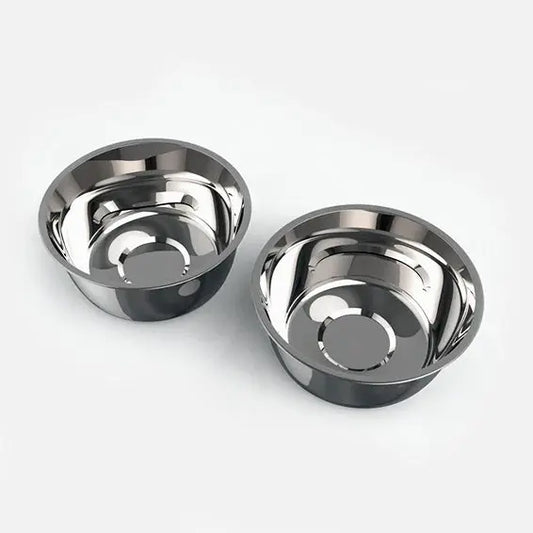
Bowl shape only works as intended when paired with the right material. The safest materials for specialty dog bowls in 2026 are 304/18-8 grade stainless steel, platinum-cured food-grade silicone, tempered glass, and lead-free ceramic. Plastic rates poorly for both safety and durability, particularly in slow feeder designs where bacteria collect in ridges and corners.
Ceramic bowls must be lead-free or Prop 65 compliant. Standard ceramic glazes can contain lead that accumulates in a dog’s system over time. Chipped glaze poses a risk that many owners do not notice until significant exposure has already occurred.
| Material | Safety rating | Durability | Best for |
|---|---|---|---|
| 304 stainless steel | Excellent | Excellent | All specialty shapes |
| Food-grade silicone | Excellent | Good | Slow feeders, travel bowls |
| Tempered glass | Excellent | Moderate | Angled and standard bowls |
| Lead-free ceramic | Good | Moderate | Breed-specific depth bowls |
| Plastic (PP) | Poor | Poor | Avoid for long-term use |
Non-porous surfaces like stainless steel prevent bacterial adhesion in the intricate channels of slow feeder designs. Complex puzzle patterns trap food particles in ways that smooth bowls do not. Dishwasher-safe stainless steel slow feeders are the most practical choice for owners who want both function and easy cleaning.
Pro Tip: Inspect ceramic bowls monthly for chips or cracks. A hairline crack in the glaze is enough to harbor bacteria and expose your dog to lead from the underlying material.
Key takeaways
The most effective specialty dog bowl shape is the one matched to your dog’s muzzle length, eating speed, and posture needs, because no single design solves every feeding problem.
| Point | Details |
|---|---|
| Three core shape categories | Slow feeders, angled bowls, and breed-specific depth designs each solve a different feeding problem. |
| Muzzle length drives bowl choice | Flat-faced breeds need wide, shallow bowls; long-muzzled breeds need deeper, narrower ones. |
| Angled bowls beat slow feeders for posture | Dogs with muzzle or joint issues benefit more from a 45-degree angled bowl than a puzzle feeder. |
| Material safety matters as much as shape | Stainless steel and lead-free ceramic are the safest materials for specialty bowl designs. |
| Cleaning frequency is non-negotiable | Slow feeder ridges trap bacteria faster than flat bowls and require thorough cleaning after every meal. |
What I have learned from watching dogs eat
After spending years looking at how dogs interact with their feeding setups, the pattern that stands out most is this: owners almost always buy a slow feeder first, regardless of what their dog actually needs. It is the most marketed specialty bowl category, so it gets the most attention. But a slow feeder does nothing useful for a Pug that physically cannot reach the food in a standard bowl. It can actually make mealtime worse.
The insight that changed how I think about bowl selection is that posture problems and muzzle issues are root causes, not symptoms. Slow feeders treat a behavioral symptom (fast eating) without addressing why the dog is eating the way it is. An angled bowl or a properly sized breed-specific dish often resolves the behavior without any puzzle design at all.
Material choice is the second thing owners underestimate. Switching from plastic to stainless steel is not just a durability upgrade. It is a health decision. Plastic slow feeders in particular accumulate bacteria in their ridges in ways that are genuinely difficult to clean out. Stainless steel with a silicone base gives you the best of both worlds: safe material, stable bowl, and easy cleaning.
My honest recommendation is to observe your dog eating for a full week before buying anything. Note the speed, the posture, the mess, and the after-meal behavior. That observation tells you more than any product description will.
— Kim
Ergonomic feeding starts with the right feeder
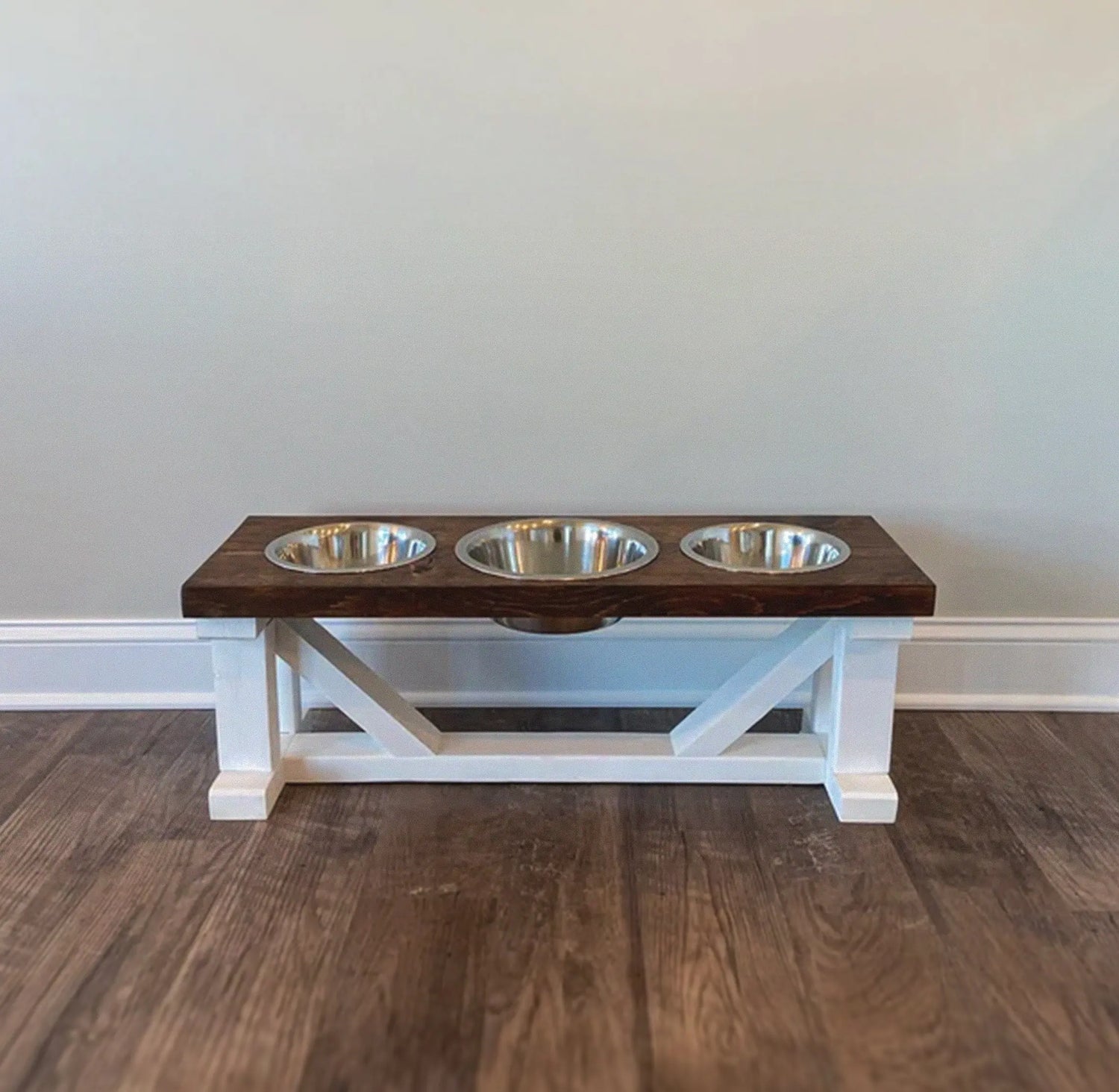
Choosing the right bowl shape is only half the equation. The height and angle of the feeding station matter just as much for your dog’s posture and comfort. Bearwoodessentials handcrafts elevated feeders in metal and wood that pair naturally with specialty bowl shapes, giving your dog a stable, correctly positioned meal every time.
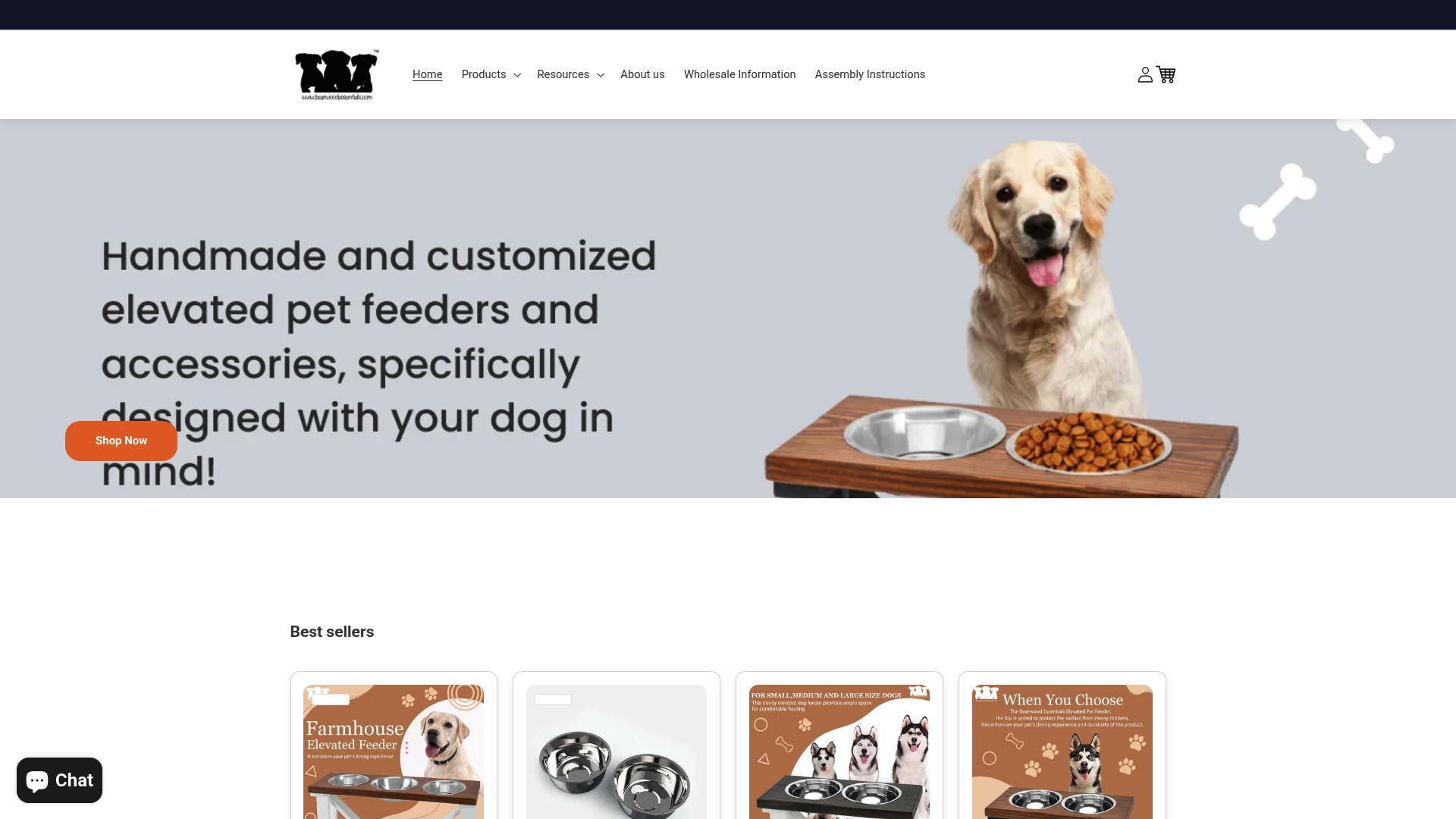
Each handmade metal feeder from Bearwoodessentials is built to support proper neck alignment and reduce strain during eating. The wooden raised feeder with stainless steel bowls combines safe materials with functional elevation, making it a natural complement to any specialty bowl shape you choose. Free U.S. shipping is available on qualifying orders.
FAQ
What are the main specialty dog bowl shapes?
The three main categories are slow/puzzle feeders, angled bowls, and breed-specific depth bowls. Each shape addresses a different feeding challenge: eating speed, posture, or facial anatomy.
Are slow feeder bowls safe for all dogs?
Slow feeders are safe for most dogs but can increase frustration for flat-faced breeds or dogs with muzzle issues. Dogs that struggle to reach food in a standard bowl often do worse with slow feeder obstacles.
What bowl shape is best for French Bulldogs and Pugs?
Wide, shallow bowls are best for flat-faced breeds like French Bulldogs and Pugs. Deep bowls press against their cheeks and make eating uncomfortable, which can discourage regular meals.
How often should specialty dog bowls be cleaned?
Specialty bowls, especially slow feeders, need thorough cleaning after every meal. Ridges and channels trap food particles and bacteria faster than flat-surfaced bowls do.
Is stainless steel the safest material for specialty dog bowls?
304 grade stainless steel rates highest for both safety and durability among all specialty bowl materials. It is non-porous, dishwasher-safe, and does not harbor bacteria in the way plastic or chipped ceramic does.